
Trump Weighs 'Annihilation' vs. Economic Rot as Iran War Enters Seventh Month
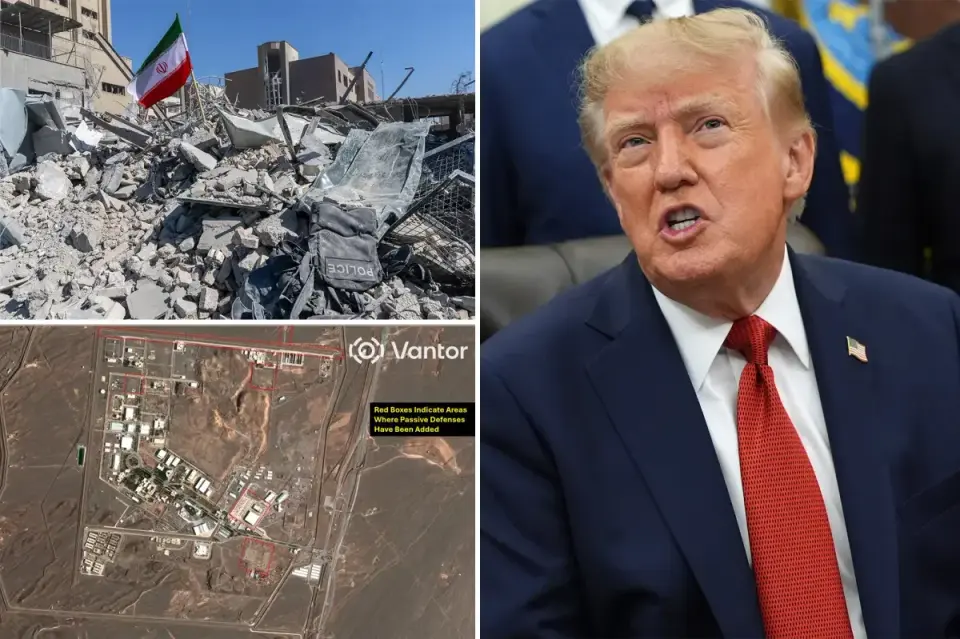
President Donald Trump is facing a critical decision on whether to resume massive military strikes against Iran or continue economic pressure, as the conflict enters its seventh month. While Trump claims direct talks are underway, Tehran insists on enforcing the collapsed June Memorandum of Understanding. The US has rejected a proposed seven-day ceasefire, and regional allies are being consulted to determine the next phase of the war.
Key points
- Trump outlined three options: a peace deal, letting Iran 'rot economically,' or 'blowing them up entirely,' stating a decision is imminent.
- The US rejected Iran’s proposal for a seven-day ceasefire that would reopen the Strait of Hormuz in exchange for lifting the naval blockade.
- Iranian President Masoud Pezeshkian confirmed readiness to negotiate nuclear limits under the Non-Proliferation Treaty but cited an 'atmosphere of distrust' with Washington.
- The Pentagon updated its casualty tally to 861 wounded US service members, including 37 new injuries, during the ongoing conflict.
- Oil prices remain high as the Strait of Hormuz stays largely blocked, while Houthi attacks on Saudi infrastructure continue to disrupt Red Sea shipping routes.
Background
The US-Iran conflict has stalled for six months, with the Strait of Hormuz remaining closed and US munitions stocks strained. Previous attempts at diplomacy, including a Pakistan-brokered Memorandum of Understanding, collapsed in August. Trump previously predicted the war would end after the November midterms, but the current stalemate has led to a 'neither-war-nor-peace' situation. Recent sanctions have tightened Iran’s economic grip, while regional tensions have expanded to include Houthi attacks in Yemen and Saudi Arabia.
How outlets are covering it
The New York Post emphasizes Trump’s ultimatum, framing the choice as between total military annihilation or economic suffocation. Axios highlights the strategic hesitation, noting that Trump is seeking buy-in from Gulf allies before resuming combat and that the US military cannot sustain its current holding pattern indefinitely. Al Jazeera points to a diplomatic disconnect, noting that while Trump claims direct contact with Tehran, Iranian officials reject this, insisting that no talks will occur until the June deal is honored. Iran International reports on the rejection of a ceasefire proposal and the continued hardline stance on uranium enrichment, while the Washington Post provides the updated casualty figures, underscoring the human cost of the prolonged conflict.
Why it matters
The outcome of this decision will determine whether the conflict escalates into a full-scale war or shifts to a prolonged economic siege. The status of the Strait of Hormuz directly impacts global oil prices and energy security. Furthermore, the resolution of this standoff will shape US foreign policy in the Middle East for the remainder of Trump’s term and influence regional stability, particularly regarding Israel and Gulf states.
What to watch
Trump is expected to meet with leaders from Saudi Arabia, the UAE, Qatar, Bahrain, Kuwait, and Oman at the UN General Assembly to gauge support for renewed military action. The US military is maintaining its current force levels until the end of the year, but officials warn that a decision on the 'end game' must be made soon. Iran continues to demand the enforcement of the June deal, while the US monitors potential Houthi attacks in the Red Sea.
- Trump reveals Iran options as prez says decision is coming soon: ‘When do I blow the entire nation up?’ New York Post
- Live - Trump weighs next move on Iran, signals major decision soon Iran International
- Trump tells Axios he's approaching major crossroads in Iran war axios.com
- Trump tells NewsNation ‘we’ll see’ on whether to ‘annihilate’ Iran NewsNation
- Trump claims direct talks with Iran: Is diplomacy picking up again? Al Jazeera
Want the full story? Read the original reporting
Read on New York Post