
European Protests Escalate as Youth and Workers Reject Austerity and War
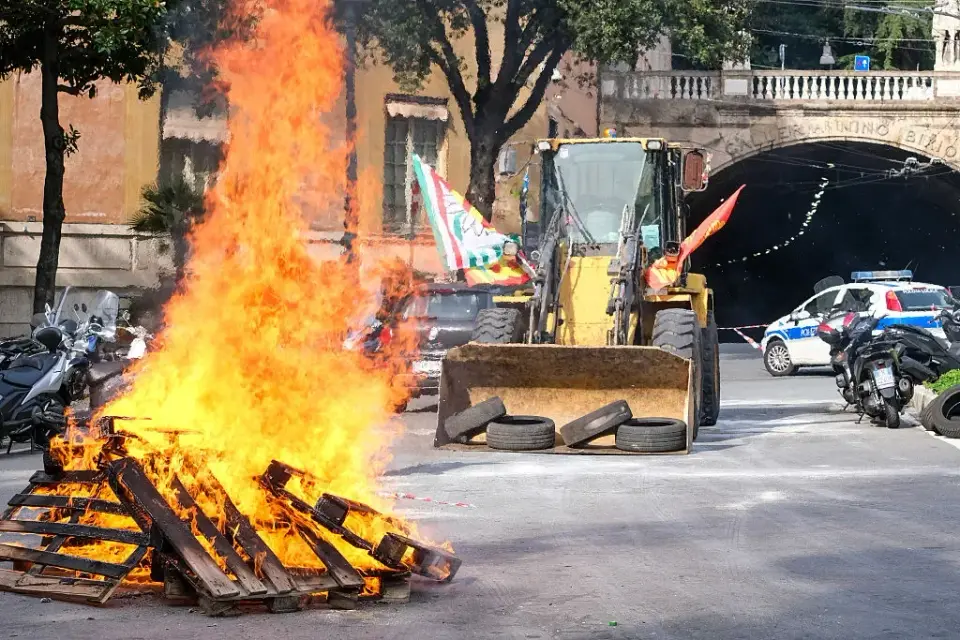
A wave of protests is sweeping across Europe, driven by soaring living costs, housing crises, and opposition to military spending. In Italy, truckers and farmers block roads over fuel prices, while in France, students and teachers clash with police over education funding. Spain and Belgium see similar unrest over housing and austerity. Analysts link these movements to a broader rejection of Atlanticist foreign policy and domestic fiscal constraints.
Key points
- Italy: Truck drivers in Calabria and Sicily began blocking motorways in late September after diesel prices exceeded €2.30 per liter. The protests spread to farmers and fishermen, with a national demonstration scheduled for October 27 in Rome. The government's failure to extend fuel tax cuts or return VAT revenues has fueled anger.
- France: Protests began in September in high schools in working-class suburbs, spreading to universities nationwide. On October 6, up to 450,000 people demonstrated. Clashes with police have resulted in over 6,500 arrests and injuries. Demands include better school infrastructure, more teachers, and an end to discrimination in admissions.
- Spain: The eviction and subsequent death of 87-year-old Maricarmen Abascal sparked mass protests against housing speculation. Occupations of Madrid's Puerta del Sol have led to calls for a general strike on November 11, with unions CCOO and UGT joining the call.
- Belgium: Student protests over education fees escalated into violent clashes in Brussels and Liège. Police used water cannons, and Interior Minister Bernard Quintin labeled the protesters 'rioters.'
- Germany: Over 45,000 students mobilized in about 100 cities in September against plans for compulsory military service, challenging the militarization of European society.
Background
Recent archive coverage highlights the rapid escalation of these tensions. On October 17, 2026, France saw its largest turnout yet, with 550,000 participants and the near-total destruction of the Limoges town hall. Earlier in October, French left-wing leader Jean-Luc Mélenchon declared the 'Bastille retaken' after massive student demonstrations, noting over 6,600 arrests. The death of Maricarmen Abascal in Spain intensified housing crisis protests, leading to the collapse of government emergency measures and snap elections.
How outlets are covering it
UnHerd frames the unrest as a revolt against 'Atlanticism,' arguing that European governments' support for US-led wars in Iran and Ukraine, combined with increased military spending, has drained resources from the welfare state and raised energy costs. NDTV presents a broader global context, noting similar protests in Portugal, Albania, and the US, but emphasizes that the European unrest is primarily driven by inflation, housing costs, and public service cuts. Left Voice interprets the movements as a new generation of rebellion, comparable to May 1968, where youth are challenging austerity and militarism. They highlight the potential for these struggles to converge with working-class movements, such as railway workers joining student protests in France. The outlets differ in emphasis: UnHerd focuses on geopolitical causes, NDTV on economic triggers, and Left Voice on the potential for radicalization and class struggle.
Why it matters
These protests signal a deepening crisis in European democracies, where governments face growing public anger over the cost of living and perceived failures in addressing housing, education, and energy affordability. The unrest challenges the status quo and could lead to significant political shifts, especially ahead of elections in France and Spain. The potential for these movements to converge with working-class struggles raises the possibility of broader social and economic disruption.
What to watch
A national demonstration is scheduled for October 27 in Rome, Italy. In Spain, a general strike is planned for November 11. In France, student unions are calling for further strikes on October 13 and 17. The outcome of these events will depend on the ability of protesters to sustain mobilization and forge alliances with workers and other sectors of society.
Want the full story? Read the original reporting
Read on UnHerd