
Trump's Iran Strategy Shifts from War to Delay as Iran Strikes US Bases in Bahrain
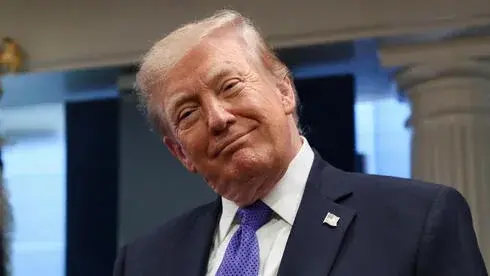
U.S. President Donald Trump has reversed his stance on Iran, moving from declaring that 'no deal is needed' to seeking a 'permanent' agreement, while delaying major military decisions until 2027. This shift follows a trilateral summit in China with leaders of Russia and China. Meanwhile, Iran’s Islamic Revolutionary Guard Corps claims it launched missiles and drones at U.S. Patriot radar sites in Bahrain, calling its airspace a 'red line.' The U.S. maintains a naval blockade, and Israel is pressing for renewed joint strikes, but analysts suggest neither side currently desires a return to all-out war.
Key points
- Trump told Fox News he seeks a 'permanent' deal with Iran, reversing his statement from 10 days ago that the U.S. did not need an agreement.
- Iran’s IRGC claims it attacked U.S. Patriot radar systems at Al-Riffa and Awali bases in Bahrain, while Bahrain reported intercepting the attacks with no injuries.
- Trump told Israeli media he is 'not rushing' to decide on military action and may wait until 2027, despite pressure from Prime Minister Benjamin Netanyahu for a new offensive.
- Vice President JD Vance withdrew from negotiations after the U.S. midterm elections, blaming the Iran war for Republican losses, but later stated his role is to support the President’s decisions.
- Iran’s Deputy Foreign Minister warned that the U.S. economic blockade would be treated as an act of war, while Iranian officials denied claims regarding chemical or biological weapons development.
Background
The U.S. and Israel launched strikes on Iran in late February 2026, leading to a naval blockade and economic pressure. The conflict has caused global energy price spikes and contributed to a 0.4% dip in fossil fuel emissions. Recent diplomatic efforts include Qatari mediation and a trilateral summit in China involving Trump, Xi Jinping, and Vladimir Putin, where Iran’s nuclear status was discussed. The U.S. Senate recently rejected a resolution to limit Trump’s war powers, with only three Republicans supporting the measure.
How outlets are covering it
Outlets highlight the contradiction in Trump’s rhetoric. YnetGlobal and AP News note his shift from declaring 'no deal needed' to seeking a 'permanent' agreement, while CBS News emphasizes his delay of decisions until 2027. The Times of Israel focuses on the political fallout, noting Vance’s initial blame of the war for Republican midterm losses versus his later support for Trump. Analysts cited by AP and CBS suggest that while tensions are high, neither side has the appetite for renewed all-out conflict, with Iran’s attacks on Bahrain and Kuwait seen as limited signaling rather than full-scale escalation. Iranian officials, per CBS and YnetGlobal, frame U.S. economic pressure as an act of war and reject allegations of chemical weapons development as a 'fraudulent script' similar to the 2003 Iraq invasion.
Why it matters
The uncertainty in U.S. policy creates volatility in global energy markets and regional security. The ongoing naval blockade and economic pressure continue to strain Iran’s economy, while the threat of renewed strikes by the U.S. or Israel could escalate into a broader regional conflict. The lack of a clear diplomatic path forward, combined with Iran’s aggressive posturing and U.S. indecision, risks prolonging the economic and political instability in the Middle East and affecting global energy supplies.
What to watch
Trump is expected to defer major decisions on Iran until after the new year, potentially into 2027. Diplomatic efforts may continue through Qatari and other Gulf state mediators, seeking a partial deal to reopen the Strait of Hormuz in exchange for limited sanctions relief. Iran may continue limited strikes on U.S. allies in the Gulf to signal strength without triggering a full-scale response. The U.S. will likely maintain its naval blockade and economic pressure campaign while monitoring Iran’s nuclear and missile capabilities.
- ‘No deal needed’ to ‘permanent deal’: Trump's Iran zigzag Ynetnews
- Live Updates: Trump says he wants "permanent" deal with Iran; warns next move may not come until 2027 CBS News
- Trump Pushes for Nobel Prize Again, Slams Iran Over ‘Fake’ Deal to End War Newsweek
- Trump insists Iran won’t make an ‘acceptable’ deal as concerns grow about next steps AP News
- Trump says Iran wants deal but terms unacceptable; Vance sidesteps question on his approval of war The Times of Israel
Want the full story? Read the original reporting
Read on Ynetnews