
Ukraine's 'Operation Vivaldi' Uses Air-Dropped Robots to Reclaim 48 Square Miles in Donetsk
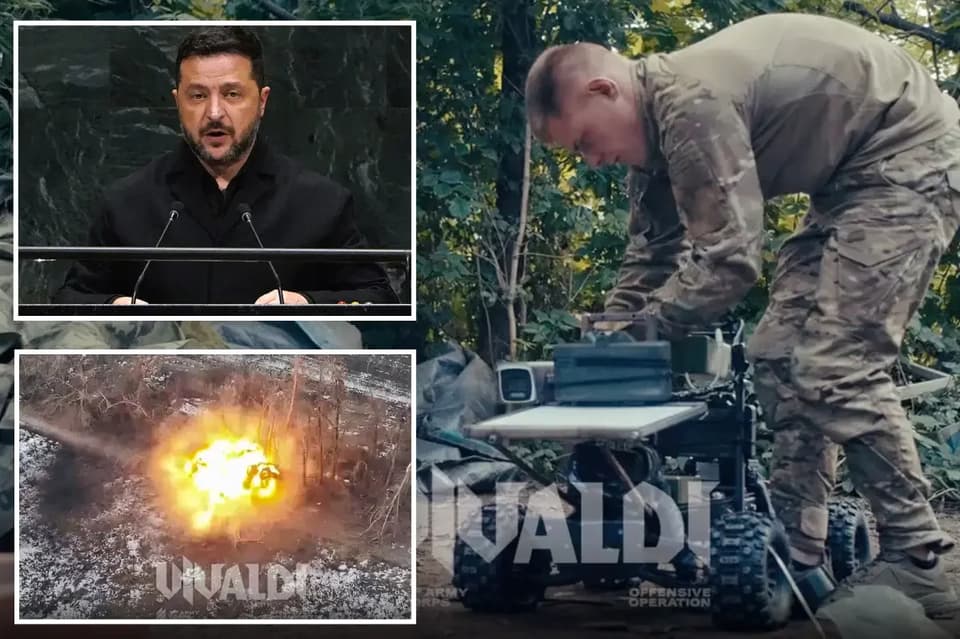
Ukraine's Third Army Corps announced the conclusion of 'Operation Vivaldi,' a secret military campaign that utilized air-dropped ground robots to kill 3,000 Russian soldiers and reclaim 48 square miles of territory in Donetsk. The operation, which began in May 2026, involved dropping unmanned ground vehicles up to 9 miles behind enemy lines to target command posts and logistics hubs. This tactical shift, described by officials as a 'historic moment,' helped break a Russian pincer movement and reclaimed five villages and three settlements, marking a significant operational breakthrough in the eastern front.
Key points
- Ukraine's Third Army Corps concluded 'Operation Vivaldi' in late September 2026, claiming the elimination of 3,000 Russian troops and the recapture of 48 square miles of territory in Donetsk.
- The operation utilized 'kamikaze ground robots' airdropped by heavy bomber drones up to 9 miles behind Russian frontlines to bypass defenses and strike rear-area targets.
- Ground robots also cleared over 18 miles of minefields, a task that would typically require two sapper companies, allowing Ukrainian infantry to advance safely.
- The campaign successfully disrupted a Russian pincer movement aimed at encircling Ukraine's 'Fortress Belt' cities in eastern Ukraine.
- Ukrainian officials described the use of airborne ground robots as a 'world-first' tactic, emphasizing the surprise element against Russian forces expecting threats from the sky.
Background
This development follows earlier reports in September 2026 regarding Ukraine's use of air-dropped ground robots near Lyman, where initial estimates suggested the recapture of 125 square kilometers. The current announcement provides a more detailed account of the operation's scope, including specific casualty figures and the strategic impact on Russian logistics. It also builds on previous coverage of Russian manpower strains, such as the isolation of troops on the Kinburn Peninsula, highlighting a broader trend of Ukraine leveraging technology to offset manpower disadvantages.
How outlets are covering it
The New York Post emphasizes the scale of the operation, highlighting the 3,000 Russian casualties and the 'historic' nature of the air-dropped robots. Ars Technica provides a more technical perspective, detailing the use of heavy bomber drones to deliver robots up to 9 miles behind the front and the role of robots in clearing 18 miles of minefields. Ars Technica also notes the strategic context, including the defeat of a Russian pincer movement and the impact on Russian electronic warfare systems due to fuel shortages. The Telegraph was inaccessible, and Yahoo's content was not relevant to the core story, focusing instead on mine-laying drones. The New York Post and Ars Technica agree on the core facts but differ in emphasis, with the former focusing on the dramatic impact and the latter on the technical and strategic implications.
Why it matters
This operation demonstrates a significant shift in Ukrainian military tactics, moving from attritional warfare to operational-level breakthroughs using advanced robotics. The success of 'Operation Vivaldi' not only reclaimed territory but also disrupted Russian logistics and command structures, potentially altering the balance of power in the eastern front. It highlights the growing role of autonomous systems in modern warfare and their potential to offset manpower disadvantages.
What to watch
Ukraine is expected to continue leveraging robotic systems in future operations, particularly in the Donetsk region. Russia is likely to adapt its tactics, potentially increasing the use of anti-drone systems and electronic warfare to counter Ukrainian robotic advances. The success of 'Operation Vivaldi' may also influence international support for Ukraine, as it demonstrates the effectiveness of advanced technology in achieving military objectives.
- Ukraine airdrops killer robots behind enemy lines to take out 3K Russian troops: ‘historic moment’ New York Post
- Revealed: Secret robot offensive that ‘killed 3,000 Russians’ The Telegraph
- Robots make combat airdrops, clear mines as Ukraine defeats Russian pincer Ars Technica
- Drones only need 2 nights to lay a minefield that would take troops 2 weeks: Ukrainian corps Yahoo
- Ukraine develops ground robot for operations behind Russian lines – video, photo Українська правда
Want the full story? Read the original reporting
Read on New York Post