
UNFPA reports 123% surge in forced marriages and sexual violence in Gaza
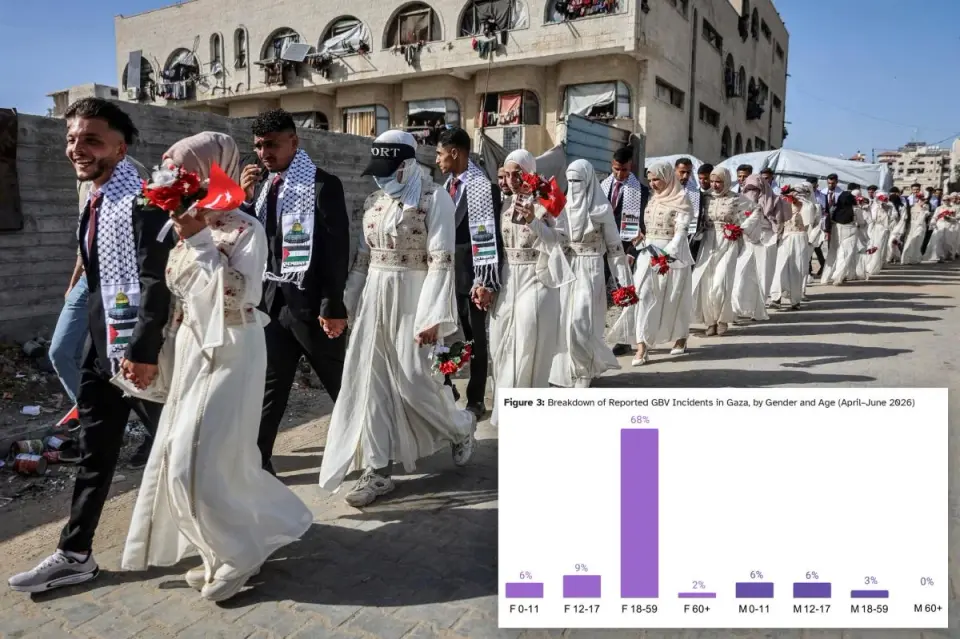
The UN Population Fund (UNFPA) reports a 123% increase in early and forced marriages in Gaza’s second quarter of 2026, driven by extreme poverty and displacement. Testimonies from 230 women describe girls being traded for food or married to rapists to avoid stigma. While the UNFPA attributes this to war-induced collapse of social structures, the Jerusalem Post criticizes the report for ignoring Hamas’s role in sexual exploitation, noting that women fear retaliation from armed groups.
Key points
- UNFPA data shows a 123% rise in early and forced marriage cases in Q2 2026, with women aged 18-59 accounting for 68% of gender-based violence (GBV) reports.
- Testimonies from 230 women in Gaza City and Khan Younis reveal girls as young as 14 being married off in exchange for food or to avoid shame after rape.
- Sexual violence cases rose 61% in absolute numbers from April to June 2026, though they remain underreported due to stigma and fear of retaliation.
- Nearly 25% of households in Gaza are now headed by women, double the pre-war rate, increasing vulnerability to exploitation and sexual abuse.
- Aid agencies call for improved sanitation, lighting, and shelter quality to reduce risks, while Israel restricts items deemed dual-use for military purposes.
Background
This crisis follows the ongoing Israel-Hamas war that began in October 2023, which has displaced nearly all 2.1 million Palestinians and collapsed public services. Recent UN warnings in August 2026 noted that the ceasefire was fragile, with continued strikes and incomplete Hamas disarmament threatening stability. The current GBV surge is part of a broader humanitarian collapse, where previous UN reports on rubble clearance and missing persons highlight the erasure of evidence and protection mechanisms for civilians.
How outlets are covering it
The New York Post and BBC emphasize the humanitarian catastrophe, citing UNFPA data on the 123% surge in forced marriages and the trade of girls for food. They highlight the collapse of social structures and the vulnerability of orphans. The Jerusalem Post, however, criticizes the UNFPA report for attributing violence primarily to Israel’s military response and aid restrictions, arguing it ignores documented sexual exploitation by Hamas and aid workers. Israel Hayom aligns with the UNFPA findings on the surge in domestic violence and child marriage but focuses on the breakdown of legal safeguards and the doubling of female-headed households. All sources agree on the severity of the crisis but differ on the primary attribution of blame and the role of armed groups.
Why it matters
The surge in gender-based violence indicates a total collapse of social and legal protections in Gaza, with long-term consequences for women’s health, education, and safety. The 123% increase in forced marriages and 61% rise in sexual violence cases signal that humanitarian aid is insufficient to prevent exploitation. This crisis underscores the need for international intervention, as the UNFPA’s findings may influence the $2.45 billion first-phase recovery plan announced by Trump’s Board of Peace, which includes infrastructure and security measures.
What to watch
The UNFPA and aid agencies will push for improved humanitarian conditions, including better shelters, sanitation, and lighting, to reduce violence. Israel is expected to face pressure to allow dual-use items for humanitarian purposes. The Board of Peace’s $2.45 billion plan, unveiled at the UN General Assembly, will focus on infrastructure and security, but its impact on GBV prevention remains to be seen. Long-term campaigns against child marriage and domestic violence are planned, but the immediate crisis requires urgent action.
- Women in Gaza are being traded for food, forced to marry their rapists: UN New York Post
- Reports of violence against women in Gaza surge, UN agency finds BBC
- UNFPA report links Gaza aid shortages, displacement to sexual exploitation The Jerusalem Post
- Domestic violence against women surges in Gaza, UN agency reports www.israelhayom.com
- Gender-Based Violence Safety Audit Report: Gaza Strip (September 2026) ReliefWeb
Want the full story? Read the original reporting
Read on New York Post