
CT Scans Reveal New Crocodile Species in Sphinx Limestone
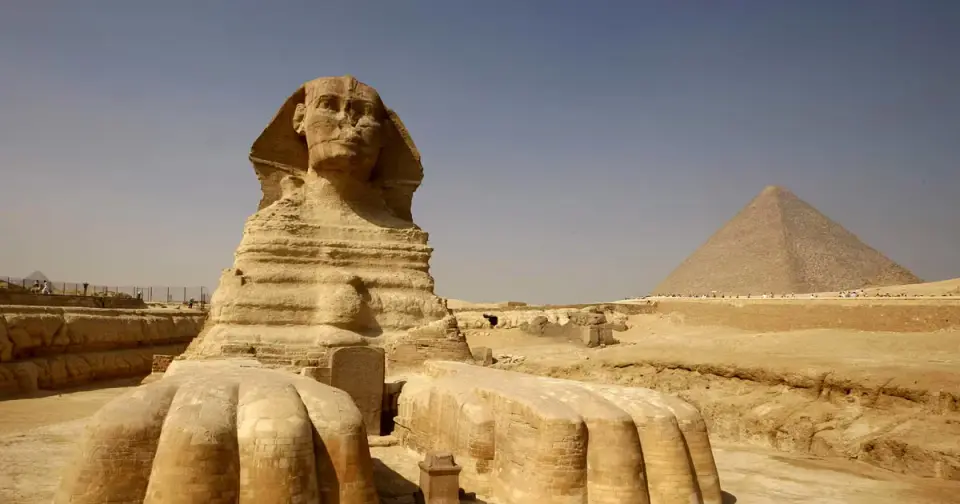
Researchers identified a new extinct crocodile species, Herugavialis cairensis, from a fossil in the limestone used to build the Sphinx. Advanced CT scans and evolutionary analysis showed it was distinct from the false gharial, correcting a century-old misclassification.
Key points
- A fossil from the Mokattam hills, the same rock used for the Sphinx, was reclassified as a new species, Herugavialis cairensis.
- The fossil, originally identified as a false gharial in 1927, was analyzed using micro-CT scans and 331 anatomical measurements.
- The new species is an early-branching gavialoid, distinct from the living false gharial and Indian gharial.
- The discovery highlights a broader pattern of crocodile diversity in the Mediterranean, which declined due to the Messinian salinity crisis.
Background
This discovery follows a trend of using advanced imaging and AI to re-evaluate historical fossils, as noted in our September 27, 2026, coverage of AI co-scientists. It also adds to a series of recent new species discoveries, including a new monkey and penguin species reported in 2026.
How outlets are covering it
The Daily Beast and Yahoo emphasized the 'jaw-dropping' nature of the find and its connection to the Sphinx. The Washington Post focused on the scientific correction of a century-old misclassification. Sci.News provided the most technical detail, including the specific anatomical measurements and the evolutionary analysis of 152 species. All sources agree on the new species name and the use of CT scanning, but differ in their emphasis on the historical context versus the technical methodology.
Why it matters
This discovery corrects a century-old misclassification and provides new insights into the diversity and distribution of crocodiles in the Mediterranean region during the Eocene and Paleogene periods. It also highlights the value of advanced imaging techniques in paleontology.
What to watch
Researchers will likely continue to analyze other fossils from the Mokattam formation and other Mediterranean regions to further understand the diversity and decline of crocodiles in the area. The findings may also inform future studies on the impact of climate change on ancient ecosystems.
- Scientists Make Jaw-Dropping Discovery in Rock Used to Build Sphinx The Daily Beast
- Scientists identify a crocodile they never knew existed The Washington Post
- In 2,500 B.C.E., Work on Egypt’s Great Sphinx Began. Now, the Same Rock Used in Construction Has Revealed a New Crocodile Species Yahoo
- 45-Million-Year-Old Crocodile Skull from Egypt Gets New Name: Herugavialis cairensis Sci.News
- Scientists identify ancient Egyptian crocodile whose skull is missing its nose like the Sphinx Euronews.com
Want the full story? Read the original reporting
Read on The Daily Beast