
Houthis Claim Riyadh Aramco Strike as Saudi Coalition Launches 97 Counter-Operations
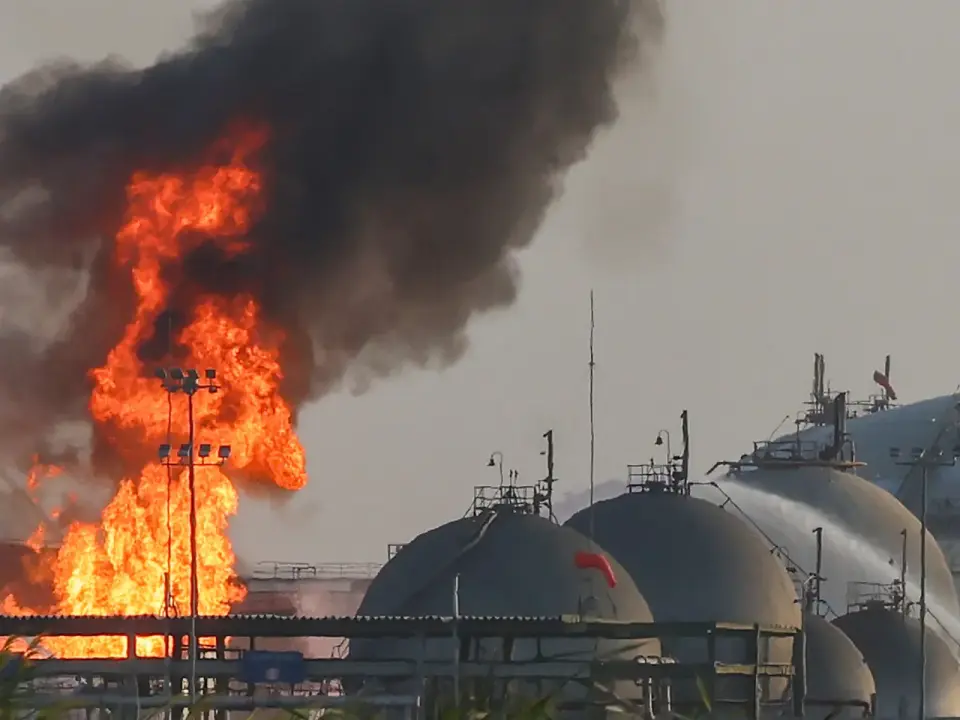
Yemen’s Iran-aligned Houthis claimed on October 3, 2026, that they struck an Aramco facility in Riyadh using ballistic missiles and drones, causing visible fires. Saudi coalition spokesman Turki al-Maliki dismissed the claims as 'misleading.' The Saudi-led coalition responded with 97 strikes against Houthi positions in Taiz and Tor al-Baha, claiming to have killed 260 fighters and destroyed 44 vehicles. This escalation follows the collapse of a 2022 truce in July and intensifies a broader conflict that has displaced hundreds of thousands and threatened Red Sea shipping routes.
Key points
- Houthi spokesman Yahya Saree claimed a 'precise' missile and drone attack on an Aramco site south of Riyadh, citing visible smoke and fire.
- Saudi coalition spokesman Turki al-Maliki rejected the Houthi claims as 'misleading,' while Saudi authorities had not confirmed damage to the facility.
- The Saudi-led coalition conducted 97 'precise targeting operations' on Houthi reinforcements in the Taiz and Tor al-Baha fronts, using aircraft, drones, and artillery.
- Yemeni government forces claimed the coalition strikes killed at least 260 Houthi fighters and disabled 44 military vehicles.
- The conflict has intensified since a fragile 2022 truce collapsed in July, leading to the Houthi seizure of the Mocha port and Bab al-Mandeb islands.
- The World Food Programme warned that three-quarters of Yemen’s population cannot meet basic food needs, with hundreds of thousands displaced since fighting resumed.
Background
The current escalation follows a fragile truce that held from 2022 until July 2026. Fighting reignited after an Iranian flight to Sanaa contravened Saudi airspace protocols, prompting Riyadh to strike Sanaa airport. Since then, the Houthis have launched a lightning offensive, seizing the Red Sea port of Mocha and strategic islands in the Bab al-Mandeb strait. Previous archive coverage from September 2026 noted Houthi strikes on Saudi energy hubs and King Khalid airbase, as well as significant displacement, with the IOM reporting 86,000 people displaced in recent weeks. The conflict has also raised maritime security risks, including a tanker boarding off Yemen’s coast.
How outlets are covering it
Al Jazeera and NBC News both reported the Houthi claim of a strike on an Aramco facility in Riyadh, noting visible smoke and fire. However, Al Jazeera highlighted the Saudi coalition’s dismissal of the claims as 'misleading,' while NBC News noted that Saudi authorities and Aramco had not immediately confirmed the attack. France 24 provided additional context, reporting that Houthi-affiliated Al-Masirah TV claimed Saudi aircraft struck Sanaa with 26 strikes, and that the Houthis accused Saudi forces of pounding their stronghold in Saada. The Independent’s coverage, while largely obscured by technical code, referenced the broader Iran-US war context and Tehran’s warnings regarding the Strait of Hormuz, suggesting the Yemen conflict is part of a wider regional escalation. All sources agreed on the intensification of hostilities since the July truce collapse, but differed in emphasis: Al Jazeera and NBC focused on the Riyadh strike, while France 24 highlighted the humanitarian crisis and the battle for Taiz.
Why it matters
The claimed strike on an Aramco facility in Riyadh represents a significant escalation, as it targets Saudi Arabia’s capital and its primary oil company. This could disrupt global oil supplies and energy prices, given Aramco’s role in global production. The conflict also threatens the Bab al-Mandeb strait, a vital route for global oil shipments, with the Houthis having seized key islands and the Mocha port. The humanitarian toll is severe, with the World Food Programme warning that three-quarters of Yemen’s population faces food insecurity, and hundreds of thousands displaced. The broader regional implications include potential spillover into the Iran-US conflict, as the Houthis are Iran-aligned, and Saudi Arabia has reportedly requested US assistance, which President Trump has so far rebuffed.
What to watch
The Saudi-led coalition is likely to continue its 'precise targeting operations' against Houthi positions, particularly in the Taiz and Tor al-Baha fronts, to counter the Houthi offensive. The Houthis may escalate further, potentially targeting more Saudi infrastructure or shipping in the Red Sea. Diplomatic efforts may intensify, with Saudi Arabia potentially seeking further US support, although President Trump has so far rebuffed such requests. The humanitarian situation is expected to worsen, with the World Food Programme warning of severe food insecurity. Monitoring of the Bab al-Mandeb strait will be critical, as any further Houthi seizures or blockades could disrupt global oil shipments. The battle for Taiz city, Yemen’s third-largest, will be a key indicator of the conflict’s trajectory, as the Houthis have yet to take control of it despite conquering swathes of territory.
- Houthis claim strike on Aramco site as Yemen fighting intensifies Al Jazeera
- Yemen’s Houthis say they attacked Aramco facility in Riyadh with missiles, drones NBC News
- Saudi-led coalition dismisses ‘misleading’ Houthi claim of Riyadh attack Al Jazeera
- Iran-US war live: Tehran threatens to keep Hormuz shut until US meets conditions The Independent
- Houthis claim strike on oil facilty near Riyadh, accuse Saudi forces of pounding Yemen's capital France 24
Want the full story? Read the original reporting
Read on Al Jazeera