
Purja’s Body Recovered; Rescue Teams Face High Risks for Remaining Broad Peak Victims
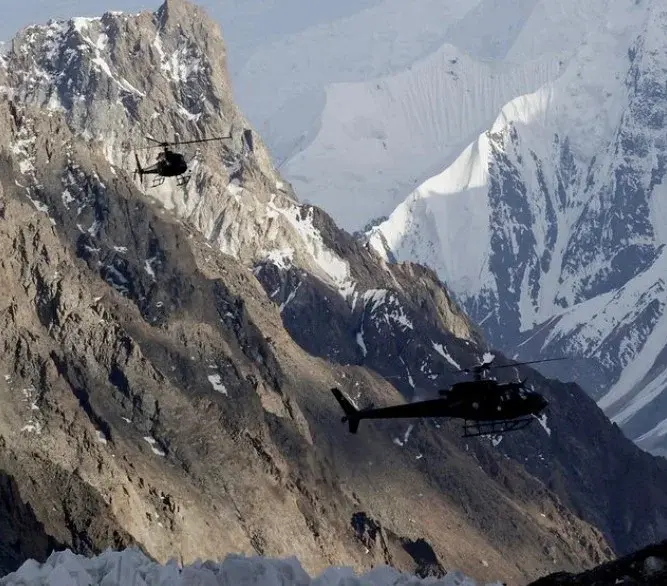
Nirmal Purja’s body has been recovered from the site of a deadly avalanche on Broad Peak in Pakistan, which killed ten climbers on July 30. While rescuers have located eight of the ten victims, three bodies remain on the mountain due to hazardous terrain. The recovery operation faces significant risks, with rescuers requesting a helicopter long-line retrieval that military authorities may deny due to safety concerns.
Key points
- An eight-member ground team located Nirmal Purja’s body at 5,700m and transported it to Camp 1, but it has not yet been moved to base camp.
- Three other bodies, including those of Wang Zhong and Nima Sherpa, remain on difficult terrain at approximately 5,000m, while a ninth body was identified as Gyalu Sherpa.
- Rescuers have requested a helicopter long-line operation from the Pakistan Army to retrieve the remaining bodies, but military pilots may refuse due to safety risks and strict regulations on civilian operations.
- Two climbers, Nawang Thindu Sherpa and Sohail Sakhi, have not yet been located; the family of Sohail Sakhi has already performed final rituals assuming his body will not be found.
- Rescuer Sirbaz Khan, a renowned mountaineer, described the conditions as extremely dangerous, noting that avalanches occur daily and that he witnessed a body being pushed away by snow.
Background
The avalanche struck on July 30, 2026, during the tail end of the optimal climbing season for Broad Peak. Initial reports confirmed four deaths, but Pakistani authorities later confirmed all ten climbers were killed. The expedition included notable figures such as Pur Bahadur Gurung, who had summited Everest ten times, and Kili Pemba Sherpa, a veteran of the 2021 winter K2 ascent. Purja, a former British special forces soldier, was celebrated for his 2019 record of climbing all 14 8,000-meter peaks in six months and for advocating for Sherpa guides, though he faced sexual misconduct allegations in 2024 which he denied.
How outlets are covering it
Explorersweb emphasizes the logistical and safety challenges of the recovery, highlighting that military pilots in Pakistan are generally prohibited from performing civilian long-line rescues due to risk assessments. CNN focuses on the emotional toll on rescuers, particularly Sirbaz Khan, who is grieving the loss of his student and neighbor, and notes the use of drones and helicopters in the search. BBC provides a broader cultural context, detailing the mourning in Nepal, tributes from the Prime Minister, and the legacy of the other deceased climbers, such as Pur Bahadur Gurung and Kili Pemba Sherpa. While all sources confirm the death of all ten climbers, Explorersweb and CNN differ in their focus on the immediate rescue mechanics versus the human impact and legacy, respectively.
Why it matters
The recovery of Nirmal Purja’s body marks a significant milestone in the aftermath of one of the deadliest mountaineering disasters in recent years. The ongoing efforts to retrieve the remaining bodies highlight the extreme risks faced by rescue teams in high-altitude environments, where safety protocols often conflict with the desire to return the deceased to their families. The incident also underscores the complex relationship between military authorities and civilian rescue operations in Pakistan, where safety concerns may prevent the use of advanced retrieval techniques like long-line helicopter operations. Additionally, the tragedy has sparked global mourning and reflection on the legacy of Purja and other prominent climbers, while also raising questions about the limits of rescue efforts in hazardous conditions.
What to watch
Rescue teams are awaiting a decision from the Pakistan Army regarding the feasibility of a helicopter long-line operation to retrieve the remaining bodies. If the military deems the operation too risky, the bodies may remain on the mountain. Search efforts for the two missing climbers, Nawang Thindu Sherpa and Sohail Sakhi, will continue, though the family of Sohail Sakhi has already performed final rituals. The recovery of the remaining bodies will depend on weather conditions and the availability of safe access routes, with rescuers facing daily risks from additional avalanches.
- Purja’s Body Found; Safety Concerns for Broad Peak Searchers Explorersweb »
- World-renowned mountaineer Nirmal Purja among 10 killed in Pakistan avalanche CNN
- Broad Peak: Mingma G Determined to Get Purja’s Body Down, Despite the Risk Explorersweb »
- Ten Climbers Dead After Avalanche on Pakistan Mountain WSJ
- 'Your legacy will live forever': Nepal mourns climber Nirmal Purja BBC
Want the full story? Read the original reporting
Read on Explorersweb »