
Shenzhen APEC Summit: Trump, Xi, and Putin Hold Historic Trilateral Amid AI and Trade Tensions
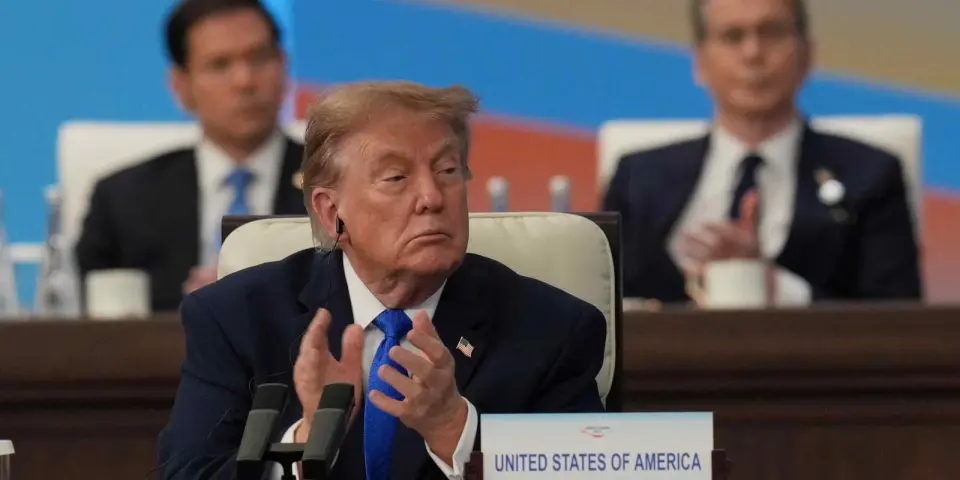
US President Donald Trump, Chinese President Xi Jinping, and Russian President Vladimir Putin held their first-ever trilateral meeting in Shenzhen, China, during the Asia-Pacific Economic Cooperation (APEC) summit. The gathering, compared by some to the 1945 Yalta Conference, focused on artificial intelligence (AI) regulation, trade stability, and nuclear non-proliferation. While the leaders engaged in warm diplomatic gestures, including a group photo and bilateral talks, analysts remain skeptical about substantive breakthroughs due to conflicting interests and the absence of European and Ukrainian representatives. The summit also highlighted ongoing tensions over AI chip restrictions and trade policies, with Trump vowing to protect US AI innovation while Xi advocated for free trade and regional cooperation.
Key points
- Trump, Xi, and Putin held their first trilateral meeting in Shenzhen, with Trump also engaging in bilateral talks with Xi and Putin.
- Trump warned against 'robust' AI regulation, calling AI 'almost completely good' but emphasizing the need to manage its 'bad elements.'
- Xi called for cooperation on AI, supply chains, and free trade, proposing 'four key pillars' for regional development and pledging $20 million for digital and clean energy initiatives.
- Putin emphasized Russia's role in regional energy security and criticized 'former dominant powers' for suppressing other nations' development.
- The summit occurred amid heightened tensions over AI chip restrictions, with the US imposing new rules to curb China's access to advanced technology.
- Trump and Xi discussed AI and trade, with Trump mentioning former Nvidia CEO Jensen Huang's affair with Alice Huang, though he denied calling her a spy.
Background
The APEC summit in Shenzhen follows a series of earlier meetings and tensions between the US and China, including a trade war that sent tariffs above 100% in 2025. The summit also comes amid concerns over AI chip restrictions and the potential for a Trump-Kim Jong Un meeting, which remains uncertain. The gathering is seen as a significant shift in US foreign policy, moving away from the post-Cold War strategy of driving a wedge between Moscow and Beijing.
How outlets are covering it
Nikkei Asia emphasizes the technological and economic aspects of the summit, highlighting Xi's push for free trade and AI cooperation, while CBS News focuses on the diplomatic interactions and the potential for a Trump-Kim meeting. Bloomberg highlights Trump's stance on AI regulation, contrasting it with the US's new restrictions on AI chip access. All sources agree on the historic nature of the trilateral meeting but differ in their emphasis on the potential outcomes, with Nikkei Asia and CBS News noting the warm diplomatic gestures, while Bloomberg focuses on the regulatory tensions.
Why it matters
The summit signals a shift in global power dynamics, with the US, China, and Russia engaging in direct dialogue on critical issues like AI, trade, and nuclear non-proliferation. The outcome of these talks could influence future trade policies, AI regulations, and regional security, particularly in the Asia-Pacific region. The absence of European and Ukrainian representatives raises concerns about the potential for concessions that ignore their security interests.
What to watch
The next major event is the G20 Summit in Miami, where Trump and Xi are expected to meet again. The outcome of the APEC summit will likely influence future trade and AI policies, with the US and China continuing to negotiate over chip restrictions and trade agreements. The potential for a Trump-Kim meeting remains uncertain, but the summit has set the stage for further diplomatic engagements.
- APEC live: Trump says US has been 'Pacific power for hundreds of years' Nikkei Asia
- Trump, Xi and Putin live: Leaders speak at APEC plenary ahead of unprecedented trilateral summit Reuters
- Trump Warns Against Regulations That Would ‘Stifle’ AI Industry Bloomberg
- Trump and Xi speak at APEC summit ahead of rare joint meeting with Putin CBS News
- MOMENTS AGO: President Trump joins APEC Leaders’ Family Photo and Plenary Session Fox News
Want the full story? Read the original reporting
Read on Nikkei Asia