
Spain Train Crash Kills 68 After Signaling Failure
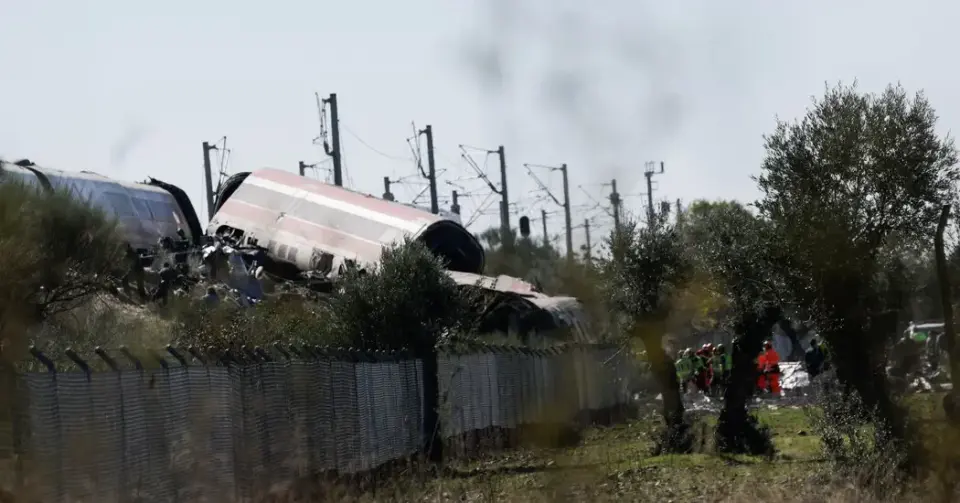
At least 68 people died and over 50 were injured when a high-speed Renfe train rear-ended a stationary Iryo train near Toledo, Spain, on October 28. Officials cited a signaling system failure that allowed the Renfe train to proceed at 200 km/h despite a red signal. This is the second fatal crash involving these operators this year, prompting Prime Minister Pedro Sánchez to declare three days of mourning and vow strict accountability for any negligence.
Key points
- The collision occurred near Urda in Toledo province at approximately 8:30 a.m. local time, killing at least 68 people and injuring more than 50.
- Transport Minister Óscar Puente stated that a computer failure in the LZB signaling system triggered an automatic stop, but a control center error authorized the Renfe train to proceed without speed restrictions.
- The Renfe train traveled 25 kilometers at approximately 200 km/h before striking the stationary Iryo train, which had 146 passengers, while the Renfe train carried 397.
- Prime Minister Pedro Sánchez declared three days of official mourning and vowed that any negligence or safety failures would be addressed with utmost firmness.
- The crash is the second involving Renfe and Iryo this year, following a January incident near Adamuz that killed 46 people, raising concerns about Spain’s rail safety systems.
Background
This incident follows a January 2026 crash near Adamuz involving the same operators, which killed 46 people and was Spain’s worst rail disaster since 2013. A third fatal rail incident occurred in 2025 near Barcelona. The current crash occurred about a month before national elections, potentially impacting the political campaign.
How outlets are covering it
The New York Times and ABC News emphasized the high death toll and the emotional impact on families, noting the crash as one of the deadliest in Spanish history. CNN focused on the technical cause, highlighting Transport Minister Óscar Puente’s description of the control center’s decision as 'inexplicable' and 'truly implausible.' International leaders, including those from the EU, France, and the US, offered condolences, with European Commission President Ursula von der Leyen calling the news 'devastating.' The New York Times noted the political implications for Prime Minister Pedro Sánchez, while CNN highlighted the promise of accountability.
Why it matters
The crash underscores ongoing concerns about the safety of Spain’s high-speed rail network, which is the second-longest in the world. The recurrence of fatal crashes involving the same operators within a year has intensified scrutiny of signaling systems and maintenance practices. The incident also has significant political implications, occurring shortly before national elections and potentially affecting the reputation of the current government.
What to watch
Investigations by the Independent Commission on Rail Accidents and network operators will determine the precise cause and any negligence. The Madrid-Andalusia rail line remains suspended, and Iryo services are canceled. Authorities are working to identify victims through DNA samples at Civil Guard offices in Madrid, Seville, Córdoba, and Toledo. Further safety measures may be implemented to rebuild public confidence in the rail system.
- Live Updates: At Least 68 Killed in Train Crash in Spain, Officials Say The New York Times
- Spain train crash kills at least 68 as witnesses describe devastating scenes CNN
- How Two Trains Collided in Spain The New York Times
- Wednesday's Copa Del Rey matches postponed after fatal Toledo train crash ESPN
- At least 64 killed in train collision on high-speed line in Spain ABC News - Breaking News, Latest News and Videos
Want the full story? Read the original reporting
Read on The New York Times