
Spain’s housing crisis: From one eviction to a national emergency
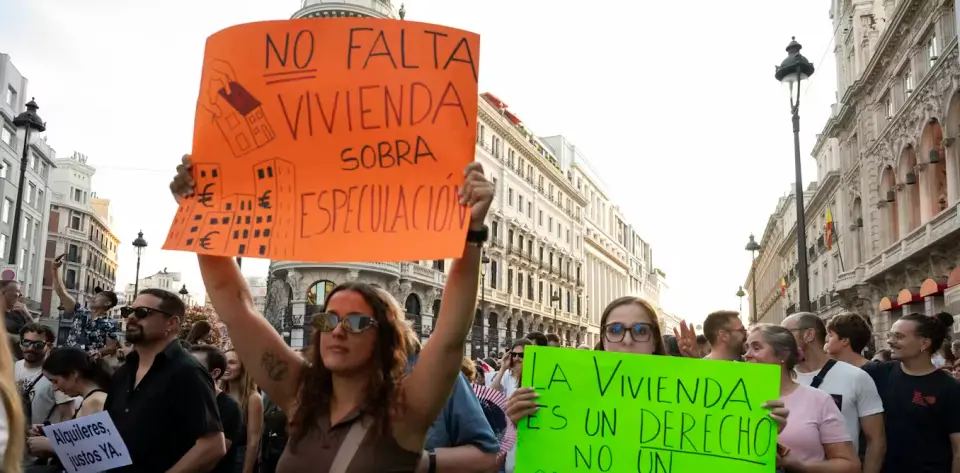
The forced eviction of 87-year-old Maricarmen Abascal from her Madrid home has triggered a national housing crisis in Spain, leading to mass protests and emergency government legislation. While Abascal has reached a preliminary deal to return to her apartment, the incident has exposed deep structural flaws in Spain’s housing market, including a severe shortage of homes and soaring rents. The government is now pushing for sweeping reforms, including a ban on evictions until 2030, but faces significant political hurdles in a fragmented parliament.
Key points
- Maricarmen Abascal, an 87-year-old disabled pensioner, was forcibly evicted from her Madrid home on September 23, 2026, after her rent was increased by 230% by investment firm Urbagestión.
- The eviction sparked massive nationwide protests, including a tent camp in Madrid’s Puerta del Sol, which pressured Prime Minister Pedro Sánchez’s government to act.
- Abascal has reached a preliminary agreement with Urbagestión to return to her home under a new eight-year tenancy, paying approximately €500 per month, though the deal is not yet signed.
- In response to the crisis, the Spanish government has agreed to propose two decrees: one banning evictions until 2030 and rolling over rental contracts until 2028, and another targeting 'vulture funds' in the housing market.
- The proposed measures face significant political opposition, with right-wing parties and some coalition partners criticizing the blanket approach as unfair to small landlords and ideologically driven.
- Spain faces a severe housing shortage, with the Bank of Spain estimating a deficit of 700,000 homes, and rents in Madrid rising by 9.7% in 2025 alone.
Background
Spain’s housing crisis has deep roots, stemming from a post-Franco housing model that prioritized home ownership over social rental. The 2008 financial crash exposed the fragility of this system, leading to a wave of evictions and a long-standing debate about the right to housing. While Article 47 of the Spanish Constitution recognizes the right to 'decent and adequate' housing, the country has a very small social housing sector, estimated at 1.5% to 3.3% of the total housing stock. The current crisis is a culmination of decades of underinvestment and inaction, with rising rents and limited social housing making housing increasingly difficult to access across Europe.
How outlets are covering it
The Conversation emphasizes that Spain’s housing crisis is a warning for all of Europe, arguing that formal legal declarations of rights are meaningless without strong institutions and sustained public investment to enforce them. The outlet highlights the decentralization of housing policy in Spain, noting that regions like Catalonia and Madrid have adopted different approaches, with Madrid favoring a market-oriented model. BBC News focuses on the human impact of the crisis, detailing the plight of other tenants facing eviction, such as Esmeralda Tejero in Zaragoza, and the emotional toll on firefighters who are sometimes called to assist in evictions. NBC News, on the other hand, highlights the political maneuvering behind the government’s response, noting the fragmented nature of the Spanish parliament and the opposition from right-wing parties and some coalition partners to the proposed measures. The outlets agree on the severity of the crisis but differ in their emphasis: The Conversation on structural issues, BBC on human impact, and NBC on political dynamics.
Why it matters
The Maricarmen Abascal case is a microcosm of a broader European housing crisis, where rising rents, limited social housing, and speculative investment are making housing increasingly unaffordable. The Spanish government’s response, while significant, is seen by many as a temporary fix that does not address the root causes of the crisis. The outcome of the parliamentary vote on the proposed decrees will be a crucial test for the government’s ability to implement meaningful housing reforms and protect the rights of vulnerable tenants. The crisis also highlights the need for sustained public investment and strong institutions to ensure that the right to housing is not just a formal declaration but a reality for all.
What to watch
The Spanish government is expected to release the details of its new housing agreement on Tuesday, with the measures to be voted on in parliament on Friday. The outcome of the vote will depend on the support of key coalition partners, including the Catalan pro-independence party Junts, which has expressed reservations about the blanket approach to evictions. The Madrid encampment and other protests across Spain are expected to continue until the full demands of the protesters are met. The case of Maricarmen Abascal will likely serve as a catalyst for further debate and action on housing rights in Spain and across Europe.
- Spain’s housing crisis is a warning for all of Europe – rights mean nothing if they’re not enforced The Conversation
- Spain agrees on measures to fix housing crisis, ban eviction DW.com
- Protesters camped out across Spain demand passage of housing measures Reuters
- Evicted Spanish pensioner can move back home, lawyer says BBC
- Spain proposes ban on evictions as ousted 87-year-old accepts offer to return home NBC News
Want the full story? Read the original reporting
Read on The Conversation