
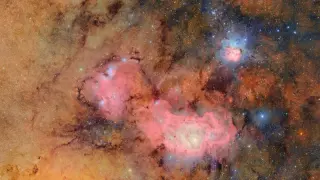
Rubin Observatory launches decade-long cosmic survey
The Vera C. Rubin Observatory in Chile has officially begun the decade-long Legacy Survey of Space and Time (LSST), snapping color-rich images of the southern sky every night (and roughly every 40 seconds with its 6,600‑pound camera) to create a living map of objects—from asteroids to distant galaxies—and to probe dark matter and dark energy. The project will generate about seven million alerts each night and, after data processing, release billions of objects for scientists and the public, with thousands of new asteroids already spotted during testing and NSF/DOE funding backing the effort.