science-space212.615 min read
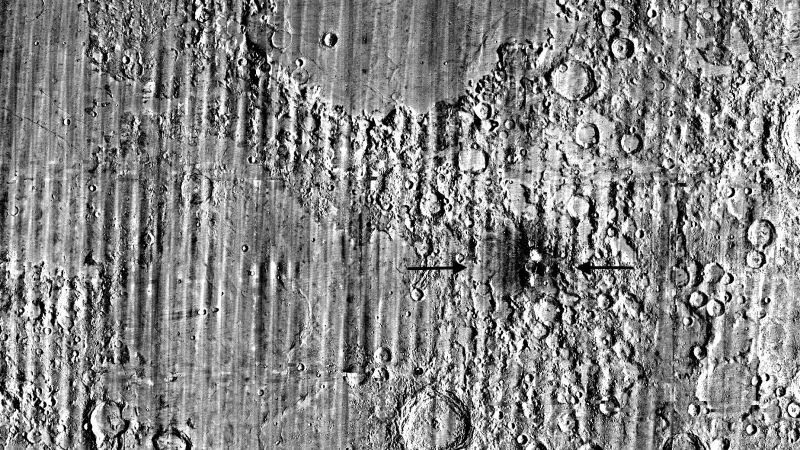
Moon reveals largest fresh crater spotted by orbiting LRO
19 days ago•Source: CNN

The latest science space stories, each synthesized from multiple sources with added background and context.

US Air Force Secretary Troy Meink said the United States has on-orbit space control weapons deployed to defend the joint force, but offered no details or deployment timeline. The admission signals a more assertive space-defense posture amid concerns about China and Russia’s space capabilities, with the Outer Space Treaty banning nuclear weapons in space but not conventional space weapons. The story also references Trump’s Space Force-era ambitions and a planned 2028 missile-defense test, noting ongoing discussion about space-based weapons and related programs without specifics.
CNN•1 month ago
Space Daily•1 month ago
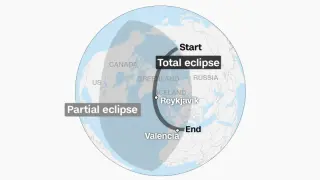
A CNN Science/Space article explains how eclipse cartographers map the path of totality for the August 12, 2026 solar eclipse. EclipseAtlas founder Michael Zeiler uses centuries of observations and high-precision modeling—including the saros cycle and Delta T corrections—to predict where the Moon’s shadow will fall, helping observers choose optimal viewing spots, sometimes at the edge of totality to catch phenomena like Baily’s Beads. Totality will be visible from Greenland, Iceland, northern Spain and northeastern Portugal, with partial views across Europe, Africa and North America; timings vary (Reykjavík ~1:48, León ~2:28). Maps and resources like Time and Date aid planning, and the piece notes that continued refinements in measurements keep eclipse predictions advancing toward kilometer-scale accuracy, with next total eclipses in 2027 and 2044 anticipated for observers.
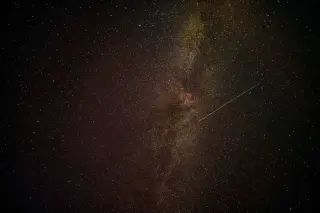
A silicon carbide grain embedded in the 1969 Murchison meteorite fell in Victoria and has been dated to about seven billion years old, indicating it condensed in the outflow of a dying star before the Sun formed. The age is an exposure-based neon-21 clock, not the meteorite’s age, and represents one of the oldest solid materials on Earth, pointing to a burst of star formation in the Milky Way around seven billion years ago. Recent Bennu samples also contain presolar grains, confirming interstellar stardust survives to become part of solar system bodies. The method carries uncertainties and is not yet a galaxy‑wide consensus.
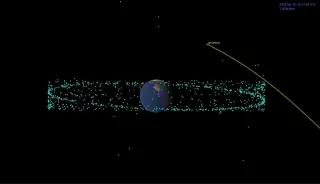
In April 2029, asteroid 99942 Apophis will pass about 32,000 km above Earth — closer than geostationary satellites — and NASA’s OSIRIS-APEX will watch from afar and then trail the asteroid to map how Earth’s gravity changes its orbit, rotation and surface. The mission will use cameras, spectrometers and a laser altimeter to characterize Apophis’s shape and composition, with a close ground-proximity pass later used to study surface changes, while Earth provides a well-understood gravitational test for a potentially hazardous, rubble-pile body.
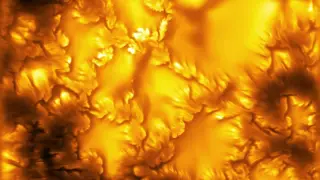
Using the Daniel K. Inouye Solar Telescope near Maui, scientists captured the Sun’s visible surface in unprecedented detail, revealing Kelvin-Helmholtz instabilities—tiny swirling vortices along magnetic boundaries—that could explain why the Sun’s outer atmosphere (the corona) is hotter than its surface and how magnetic energy is built, released and transported to drive solar flares and coronal mass ejections. The observations align with advanced simulations and may improve space-weather forecasting that affects satellites and power grids.
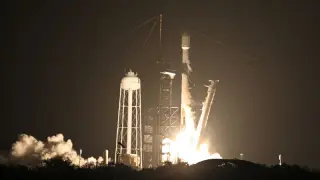
A SpaceX Falcon 9 upper stage carrying two lunar landers is on a collision course with the Moon, expected to strike near Einstein Crater around 2:35 a.m. ET. NASA and independent astronomers confirm the trajectory; there is no danger to Earth. The impact should create a crater about 65–90 feet (20–30 meters) in diameter and may be visible only through telescopes, with the Korean Pathfinder Lunar Orbiter and NASA’s Lunar Reconnaissance Orbiter aiming to image the site afterward. Scientists hope to gain insights into the lunar surface and debris behavior, informing future Artemis-era missions and lunar-debris mitigation strategies.
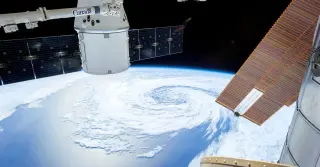
Earthrise (1968) and the later Blue Marble helped people see Earth as a finite, borderless world; astronauts report a persistent 'overview effect'—a mindshift toward seeing Earth as a fragile, connected system and feeling protective toward it. The evidence is largely anecdotal; researchers are only beginning to measure it, with VR and awe studies offering early hints, and whether it will spread to the public remains an open question.
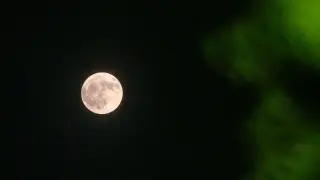
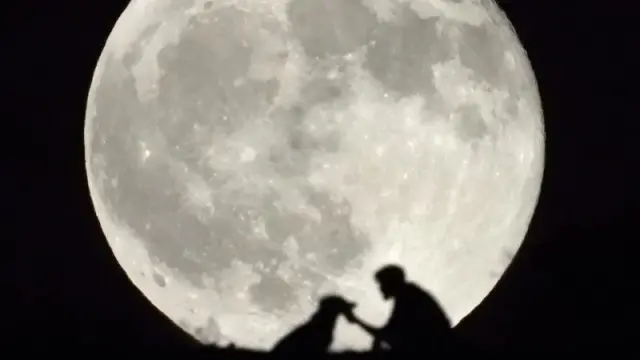
July’s buck moon rises in the east and peaks at 10:36 a.m. ET on Wednesday, offering skywatchers a chance to view a bright full Moon from dark, clear skies; the Moon may appear reddish due to smoke from Canadian wildfires, Indigenous groups have different traditional names for it, and the event echoes the ongoing connection to space exploration and NASA’s Artemis II mission.
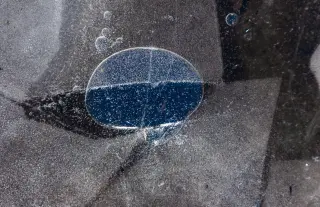
A growing body of evidence suggests several outer‑solar‑system moons—Europa, Ganymede, Callisto, Enceladus and Titan among the strongest cases—may harbor global oceans beneath ice, inferred from magnetic, gravitational and geological signals. Mimas, Triton and some Uranian moons remain plausible additions. Archived mission data continue to yield insights, and future missions like Europa Clipper and ESA’s Juice will further test these ocean models, even as not every frozen moon is expected to host liquid water.
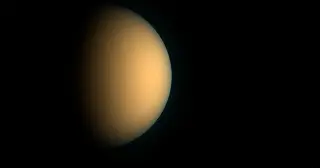
Saturn’s moon Titan, about 5,150 km across, is wider than Mercury and is the Solar System’s second-biggest moon after Jupiter’s Ganymede, though its mass is only about 40% of Mercury’s due to its icy composition. Titan also boasts a thick nitrogen atmosphere and stable surface liquids (methane/ethane) with Earth-like features such as rivers and lakes, highlighting how size and nature can diverge: a world that looks planet-like but remains a moon. The distinction is orbital, not dimensional, and missions like Cassini–Huygens and the future Dragonfly continue to study Titan’s unique geology and weather.
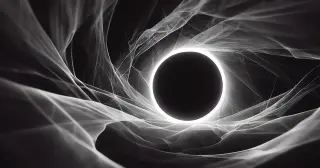
Black holes warp time as well as space: near the event horizon, a distant observer sees infalling matter slow and freeze at the edge due to gravitational time dilation, while the object itself experiences finite proper time to cross the horizon. This freezing is a coordinate effect, not a literal halt in the falling object’s reality. Gravitational time dilation has been measured on Earth and in GPS systems, confirming relativity beyond black holes. Observations like the Event Horizon Telescope and LIGO support horizon physics but do not show a literal frozen image, and quantum-gravity effects (e.g., Hawking radiation) remain unobserved and unresolved.