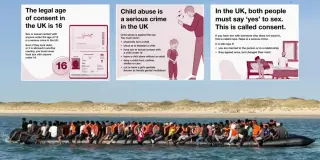
The Home Office released guidance for asylum seekers/migrants in Britain detailing how not to rape women, including a note that child rape is illegal even if a person looks older or if it might be legal in another country, a move described as alarming and controversial by critics.
Britain's Home Office released a nine-page guide for asylum seekers outlining expected conduct in the UK—covering gender equality, consent, and anti-harassment—and warning that rape is a crime with penalties and possible consequences for asylum claims, along with advice that women can work, study, and make their own life choices.
The Home Office released a nine-page online booklet outlining UK laws and social norms for asylum seekers, covering respect in public, gender equality, and sex and consent, with warnings that violations could jeopardize asylum claims or lead to removal; the move comes as asylum applications for 2025-26 fell about 12% to around 93,500 and amid political criticism from Conservative and Reform UK figures.
An opinion piece claiming Belfast’s June riots followed a stabbing by a Sudanese asylum seeker and highlight a broader pattern of immigration-driven tension. The author argues Western media and leaders obscure the policy causes of social unrest, urging introspection on immigration vetting, integration, and policy choices rather than blaming “fascist” street violence. The piece asserts that elite narratives suppress honest inquiry into root causes and warns that ignoring grievances could fuel further conflict.
EU negotiators reached a deal to speed up deportations, allowing member states to send those ordered to leave to “return hubs” outside the bloc, with some provisions taking effect immediately and others after a year. The package includes stricter rules for security threats, potential home searches, longer detentions, entry bans and penalties for non-cooperation, drawing praise for restoring EU control but drawing sharp criticism from rights groups over risks to detainees and minors. The EU Council and Parliament still need to approve the measure.
CBS News examines the South Texas Family Residential Center in Dilley, Texas, where a Congolese family and other asylum seekers describe harsh conditions—water quality, meals, 24/7 lights—and argue they are being held like criminals despite no criminal liability. The piece notes Olivia, 19, remained detained for months while her relatives were released, questions over Flores Settlement compliance, and calls from lawmakers to shut down Dilley. The center is defended by DHS, ICE, and CoreCivic, which say conditions meet standards, while oversight and access remain restricted for reporters. Olivia’s release and family reunion underscore ongoing controversy over family detention policy.
The UK will pilot an AI facial-age estimation tool at border checks next year to identify adults posing as unaccompanied minors. A £322,000 contract awarded to Akhter Computers Ltd will develop and test the system ahead of a mid-2027 rollout. Home Office officials say the tool will help prevent gaming the system, while rights groups like Human Rights Watch warn it is unproven and could undermine protections for children. Age assessments now rely on documents and medical tests, with the AI serving as an additional aid rather than a replacement for human decision-making.
A federal court blocked the Trump administration from deporting Hayam El Gamal and her five children after their 10‑month detention, but days after their release they were re-detained by immigration authorities who sought to deport them, prompting an emergency court order to halt removal and highlighting tensions between court rulings and immigration policy.
A federal appeals court ruled that President Trump’s declaration of an “invasion” at the U.S.–Mexico border was unlawful, effectively reopening the United States to migrants seeking asylum.
A 5-year-old nonverbal boy with developmental delays, Gael, held for about three weeks at the Dilley ICE processing center, has been released with his Colombian family after concerns over his deteriorating health and a viral Zoom call with children’s entertainer Ms. Rachel. His immigration attorney said the family plans to return to El Paso and pursue asylum with regular ICE check-ins as their case progresses. Advocates have criticized Dilley’s conditions, while DHS says care is appropriate; the release follows medical concerns raised by the family and renewed attention from media coverage.
The Trump administration continues to pursue the deportation of Liam Conejos Ramos, a 5-year-old detained in Minneapolis during a January sweep, by pressuring to end his family's asylum case without a full hearing. After Liam and his father were released from a Texas family detention center, federal authorities moved to end the asylum proceedings, with the Board of Immigration Appeals now weighing the case. If denied, the family could be deported to Ecuador. Advocates argue they deserve a proper hearing, noting that the government is leveraging expedited removal—expanded to cover inside-the-country arrivals within two years—to speed up deportations despite public backlash over Liam’s detention.
Three days after a crackdown in Maine, ICE says it has arrested more than 100 people as part of a broader target list of about 1,400, drawing criticism from the governor and immigrant-rights groups over transparency and potential racial profiling, and fueling fear and disruptions in Portland and Lewiston, including reports of people with no criminal records detained and communities worried about impact on daily life.
A running digest of ICE activity in Minnesota (St. Paul, Minneapolis, Willmar) from Jan 19–22, highlighting detentions of workers and students, hospital-access restrictions, Indigenous patrols and community organizing, personal detainee stories, and escalating legal and political pushback, plus mutual-aid efforts and a solidarity benefit concert as residents mobilize against the crackdown.
The Trump administration has significantly increased efforts to dismiss asylum cases and deport individuals to countries where they have no connections, including new agreements with nations like Honduras and Uganda to process asylum claims there, amid a surge in motions to dismiss cases in immigration courts.
Nearly 540 asylum seekers from various countries were rescued off Crete by Greek coastguard, with their claims to be processed after health checks. The incident highlights ongoing migration challenges in Greece, especially on islands like Crete and Gavdos, amid EU efforts to manage increased migration through new policies. Human rights groups criticize these measures for risking asylum seekers' rights.