From a nuclear-test detector to a cosmic beacon: the first gamma-ray burst discovered in 1967
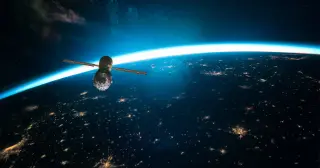
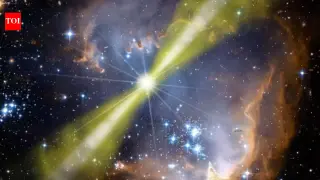
Discovered by the Vela satellites in 1967 while monitoring for nuclear tests, the flash proved to be the first gamma-ray burst, a mysterious deep-space event whose origin puzzled scientists for decades. Subsequent missions—BATSE on the Compton Observatory, the Interplanetary Network, and BeppoSAX—established GRBs as extragalactic and extraordinarily energetic, sometimes releasing more energy in seconds than the Sun does in its entire lifetime. By linking long-duration bursts to the deaths of massive stars and black-hole formation, researchers unveiled the GRB connection to supernovas, while later observations of high-energy afterglows have driven new questions about their underlying physics.