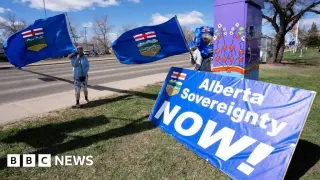
Albertans vote on October 19 on whether to initiate legal steps toward independence from Canada. Polls show 66% favor remaining in the federation, but separatists argue the vote forces federal concessions. Prime Minister Mark Carney warns of division, while separatists court US support.
Alberta separatists have vowed to continue their campaign for independence regardless of the outcome of Monday's non-binding referendum, arguing that a victory for unity would fail to address long-standing grievances and fuel further separatist momentum. While polls indicate a majority of Albertans favor remaining in Canada, pro-independence groups have mobilized heavily in the final days, organizing rallies in Edmonton and Calgary. Prime Minister Mark Carney has urged voters to reject secession, warning that the vote occurs at a critical time for national stability. The referendum includes ten questions, with the primary query asking whether to initiate the legal process for a binding secession vote.
Alberta holds a non-binding referendum on October 19 to decide whether to pursue independence from Canada. While separatists argue the province would save C$47 billion annually by retaining federal tax contributions, federalist reports warn of C$170 billion in transition costs and significant economic disruption. Polls show 20-25% support for a binding separation vote, driven by grievances over federal fiscal transfers and pipeline restrictions.
The Parti Québécois (PQ) won the October 2026 Quebec provincial election but failed to secure a majority, forming a minority government under leader Paul St-Pierre Plamondon. While the PQ promised a future independence referendum, polls show only 30% support for sovereignty. The result creates a new challenge for Prime Minister Mark Carney, who must balance national unity against US pressure with a separatist provincial government. The outcome follows the collapse of the ruling Coalition Avenir Québec and precedes an Alberta vote on separation.