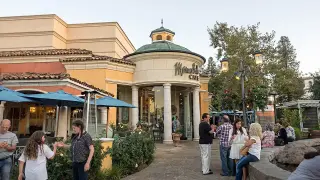
True Food Kitchen has filed for Chapter 11 bankruptcy and closed 12 locations across nine states. The chain, backed by Oprah Winfrey, retains 34 restaurants and is seeking a long-term partner through a court-supervised sale.
True Food Kitchen has filed for Chapter 11 bankruptcy in Texas, closing 12 locations and reducing its footprint to 34 restaurants across 14 states. The company, backed by Oprah Winfrey, cites $42 million in debt, management turnover, and pandemic impacts as key factors. It is pursuing a court-supervised sale while securing $20 million in financing to continue operations.
Brightline’s parent entities are filing for Chapter 11 bankruptcy to restructure approximately $5.5 billion in debt. The move secures $490 million in new capital from stakeholders while keeping the operating company and Tampa expansion rights intact. Although trains will continue running, the filing introduces uncertainty for the long-delayed Tampa connection, which remains years away due to infrastructure dependencies.
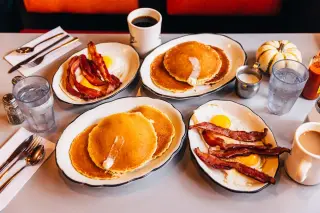
A 68-year-old operator of a breakfast cafe franchise has filed for Chapter 11 bankruptcy. The filing reflects ongoing financial pressures in the casual dining sector, where rising costs and operational challenges continue to strain independent operators and smaller chains.
A 68-year-old operator of a breakfast cafe franchise has filed for Chapter 11 bankruptcy. The filing marks the latest instance of financial distress in the casual dining sector, following recent reorganizations by other food service operators. While specific details regarding the franchisee's identity, location, or debt levels are not provided in the available source, the move aligns with broader industry trends of rising costs and operational challenges.
Meritage Hospitality Group, a major Wendy’s franchisee, filed for Chapter 11 bankruptcy after closing about 60 locations. The Grand Rapids-based operator runs 314 Wendy’s restaurants (plus a Bojangles and five Morning Belle), with assets between $10 million and $50 million and roughly $150 million owed to City National Bank. Wendy’s says it supports franchisees and aims to strengthen the brand, while the company itself has seen six straight quarters of declining same-store sales (about 7% last quarter; over 10% two-year decline). Meritage previously hired a restructuring CEO, secured forbearance from lenders, and reported a 48% drop in store-level EBITDA to $36.2 million; it has paused or altered breakfast service at underperforming locations to protect margins.
Latvian flag carrier airBaltic has filed for Chapter 11 protection in the U.S. to restructure debt while continuing operations, backed by EUR 350 million in debtor-in-possession financing and aiming to exit around June 2027. The plan calls for shrinking the fleet from 54 Airbus A220-300s to about 36 by end-2026 (then around 40 by 2031), maintaining a primarily Latvia-focused network with deeper presence in profitable markets, and increasing year-round deployment through a renewed wet-lease strategy (notably with Lufthansa Group). The airline faces higher fuel costs and Russia-related route limits, but flights, bookings, refunds, and services remain as usual for passengers.
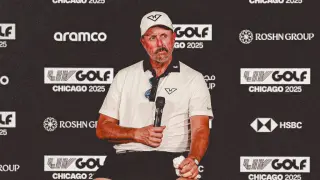
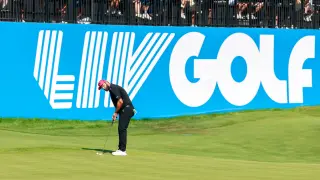
LIV Golf’s Chapter 11 filing lists a 0.23% stake held by a 'current player'—identified by sources as Phil Mickelson—making him LIV’s unnamed shareholder, while ownership sits at about 98.48% for the Public Investment Fund and 1.05% for Performance54; the document outlines a proposed restructuring that would shift roughly 52.5% of ownership to players and details how pre-bankruptcy agreements would be handled as LIV pursues a reimagined tour.
Marmalade Cafe, a 36-year Southern California brunch chain, filed for Chapter 11 on Sept. 2 citing rent disputes and mounting supplier debts, listing about $12.7 million in assets but a net loss and more than $1 million owed to creditors. The Calabasas closure spurred by construction helped shrink the chain to four locations, while the remaining El Segundo, Malibu, Sherman Oaks and Westlake Village sites are described as healthy as the industry grapples with rising costs and the need to adapt.
LIV Golf has filed for Chapter 11 with liabilities of $500m–$1bn, aiming to reorganize into a majority player-owned league backed by BC Partners and to emerge in early 2027, with a $50m loan from Saudi Arabia’s Public Investment Fund to support the process; nine golfers are listed as unsecured creditors.
LIV Golf has filed for Chapter 11 bankruptcy protection in New Jersey, after facing a looming Saudi PIF funding cliff and attempting to raise up to $350 million. The company struck a restructuring support agreement with BC Partners and will seek court approval to reorganize, with PIF providing about $49.6 million in debtor-financing to keep operations afloat. The plan envisions the venture becoming majority-owned by its players, with BC Partners Credit and other minority investors financing the post-bankruptcy structure. LIV continues talks with players and remains focused on a fan- and player-owned ownership model as it pursues a transformative path beyond the current upheaval.
LIV Golf has filed for Chapter 11 bankruptcy protection in New Jersey, entering a court-supervised restructuring funded by a $49.6 million debtor-in-possession loan from the Saudi Public Investment Fund after it pulled long-term funding. A new investor, BC Partners, is lined up to back the league’s next phase as LIV shifts to a sustainable, player-centric model that returns commercial rights to players and offers equity, with prize purses, field sizes, and formats reworked to be between PGA Tour and DP World Tour levels. The move aims to build a lasting global golf business and a framework for growth with more national-identity teams and a broader field, while the players gain greater earning potential.
Rebel Creamery, the keto ice cream brand sold at Kroger, Walmart and Target, has filed for Chapter 11 bankruptcy after losing a $23.8 million court battle over the design of its ice cream containers and trade dress to rival Van Leeuwen. The bankruptcy filing shows about $13.78 million in assets and $23.85 million in liabilities, with Van Leeuwen’s $23.785 million judgment tied to Rebel’s profits from the infringing pints.
Rebel Creamery filed for Chapter 11 bankruptcy amid a trade-dress dispute with rival Van Leeuwen, which claims nearly $24 million in profits from Rebel. A federal judge previously ruled Rebel infringed and diluted Van Leeuwen's packaging and ordered a redesign, with Rebel appealing the ruling. Van Leeuwen had sought around $36 million, later reduced to just under $24 million. The bankruptcy filing lists the claim as disputed and under appeal; Rebel markets keto-friendly ice cream and operates nationwide retailers and parlor locations.
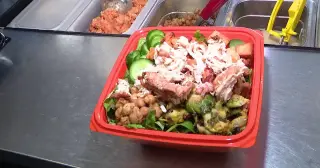
Salad and Go filed for Chapter 11 bankruptcy and will permanently close all 70 drive-thru locations, with final guest service on Aug. 5, 2026, citing sustained demand pressures, rising costs, and industry challenges (including a July Cyclospora outbreak). Founded in Gilbert in 2013, the chain served over 60 million meals, with some Texas and Oklahoma locations already closed.