
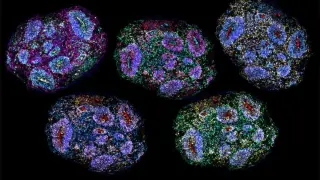
Lab-Grown Brain Organoids Track Time and Retain Developmental Memory
Scientists have created long-lived brain-like organoids that can sense the passage of time and preserve a cellular memory of their developmental age. These organoids remain alive for nearly six years—the longest observed—showing ongoing maturation across cell types and even retaining developmental history when older and younger cells are reassembled into chimeroids. Using epigenetic clocks, researchers demonstrated aging patterns similar to real brains, suggesting a cell-intrinsic clock. The work, published in Nature by Faravelli and Bolaños, offers a new platform to study human brain maturation and neoteny in vitro.