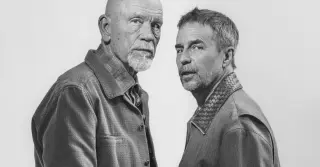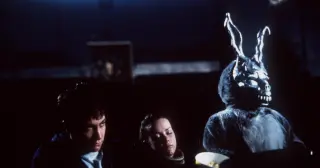
The film Obsession delivered a surprising debut weekend, outperforming projections and outpacing other new releases, marking a rare box-office uptick that suggests strong early word-of-mouth and a selective theatrical run.
Rolling Stone’s Cannes 2026 rundown highlights ten standout titles—from Hamaguchi’s All of a Sudden and Sorogoyen’s The Beloved to Club Kid and a director’s cut of Ken Russell’s The Devils—along with several strong restagings and bold new voices (Ben’imana, Fatherland, Maverick: The Epic Adventures of David Lean, Minotaur, Paper Tiger, Teenage Sex and Death at Camp Miasma). The piece underscores intimate character studies, sharp satire on moviemaking, and restorations that resonate today, while noting honorable mentions and brisk industry buzz around acquisitions and next-year anticipation.
The Wall Street Journal claimed an AI-generated feature called Hell Grind would debut at Cannes, but festival organizers say it was not on the official program and instead screened at a third‑party venue in Cannes; the producers point to the Marché du Film, a marketplace with no formal festival selection, to back their claims. The piece uses the episode to critique AI hype in cinema and notes a mix of industry reactions, underscoring how marketing can blur what actually qualifies as a Cannes appearance.
Imax is reportedly exploring a sale, with early talks prompting Wall Street to speculate on a wide pool of potential buyers from traditional theater chains (Cinemark, AMC) to tech and media giants (Apple, Sony, Netflix, Amazon) and private equity firms, plus entertainment players like Sphere Entertainment. Analysts say the universe of likely bidders is unusually broad, though concerns remain about how any buyer might influence Imax’s neutral release model. Previous auction attempts stalled, but the current sale process has renewed interest as premium, large-format cinema experiences rebound post-pandemic.
IMAX is reportedly exploring a potential sale, with the Wall Street Journal noting preliminary talks via intermediaries and CNBC saying there’s no formal process yet. The news spiked its stock and points to interest from entertainment companies—potential buyers could include Disney, Apple, Amazon, or Netflix—though Disney’s Infinity Vision format complicates the fit. IMAX also posted strong numbers, with about $1.28 billion worldwide last year, underscoring premium-experience cinema’s pull even as the theater industry contends with changes.
Variety’s Cannes critics pick 20 standout titles from the 2026 festival, highlighting bold international cinema—from Hamaguchi’s All of a Sudden and Grisebach’s The Dreamed Adventure to Club Kid, Maverick: The Epic Adventures of David Lean and Rehearsals for a Revolution—showing that a quieter Cannes still delivered high-impact, diverse storytelling across genres and voices.
Imax’s stock surged after-hours following a Wall Street Journal report that the company is in the early stages of fielding possible buyers, as studios push premium large-format screens to lure audiences back to theaters. Shares rose about 11% to $37.50, while Imax executives declined to comment on takeover speculation. CEO Richard Gelfond has framed Imax as a valuable asset either on its own or within a larger company, but the sale process is early and may not lead to a deal as the industry continues to emphasize immersive premium experiences.
Cristian Mungiu’s Fjord follows a devout Romanian couple who move to a Norwegian village, where their traditional Christian parenting clashes with liberal school norms and child-protection authorities, igniting a fiery debate about faith, xenophobia, and how society handles unconventional beliefs at Cannes; critics are deeply divided, lauding some aspects while others call it overlong or biased, yet Sebastian Stan’s performance anchors the film’s provocative stance.
Pedro Almodóvar returns to his native Spanish with Bitter Christmas, which premiered in Cannes to a notably warm, star-studded reception—including Juliette Binoche and Ken Loach—and a six-and-a-half-minute standing ovation. The melodrama about artists who’ve lost their way is praised for its vibrant visuals and a standout sequence around a Chavela Vargas song, with Almodóvar calling Cannes the warmest audience he’s ever felt. The ovation duration at Cannes was shorter than the Venice premiere for The Room Next Door, underscoring a strong, appreciative response to his latest work.
A Cannes review of Jim Queen, Nicolas Athane and Marco Nguyen’s French animated comedy about a gay Parisian lifestyle; the film leans into crude, South Park–style humor and an AIDS allegory as a pandemic turns gay men straight; while the animation pops with bright energy and some bold set pieces, the jokes feel familiar and less sharp than hoped, limiting its impact despite its provocative aims.
Dior's LA Cruise show under Jonathan Anderson blends Hollywood glamour with couture as the designer pushes a strategy to deepen cinema collaborations, staging at LACMA's Geffen Galleries and hinting at future film costumes and franchises, with Ed Ruscha shirts and Treacy headpieces signaling a broader fusion of fashion, commerce, and film in the US market.
At the 79th Cannes Film Festival, Demi Moore decries self-censorship and Park Chan-wook defends politics in cinema, arguing art and politics should mix and be expressed with artistry; AI debates surface, jurors including Zhao, Skarsgård, Negga and Laverty weigh in, and the festival opens with La Vénus électrique ahead of the Palme d’Or on May 23.
Christopher Nolan’s The Odyssey trailer uses all-American accents for its ancient characters, breaking with the traditional British-dominated sound of period epics. The piece situates this choice in a history of mixed accents in cinema (Kubrick, Spartacus, etc.), arguing that performance and relatability matter more than linguistic authenticity, and that Nolan’s approach aims for intimate, human scale rather than regal antiquity.
Milan, the birthplace of the Prada label, buzzes as audiences flock to see The Devil Wears Prada 2, with immersive installations at La Rinascente and media attention highlighting Italy’s fashion-forward capital ahead of the film’s release.
Mathieu Kassovitz predicts a near future where AI-generated cinema is standard, with AI actors and an AI-enabled film studio in Paris; he claims AI is the final artistic tool and plans to adapt a 1940s comic with AI at the core, slashing production costs from about $50–60 million to around $25 million. He shrugs off copyright concerns, arguing cinema borrows from others, while Cannes bans AI in competition and copyright lawyers report hundreds of pending AI-related cases. The piece also notes AI-generated performances like Val Kilmer in the trailer for As Deep as the Grave.