Tag

Design Systems

All articles tagged with #design systems

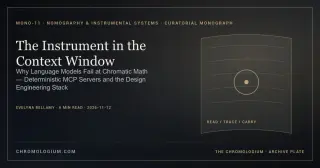
Chromologium MCP Server Delegates Color Math to Deterministic Instruments
technology6 days ago

Chromologium MCP Server Delegates Color Math to Deterministic Instruments

Chromologium has released an MCP server that replaces probabilistic AI color guessing with deterministic optical and perceptual math. The tool integrates with coding agents to generate accessible color scales, mix pigments using physical scattering laws, and audit contrast, ensuring design outputs are mathematically accurate rather than statistically approximated.
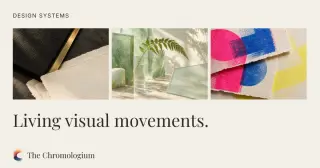
Chromologium Catalogs Ten Historical Design Systems for Modern Digital Interfaces
technology1 month ago

Chromologium Catalogs Ten Historical Design Systems for Modern Digital Interfaces

The Chromologium has released a monograph detailing ten 'living visual movements' that translate historical material and typographic traditions into modern digital design systems. The publication argues that digital interfaces should not merely mimic physical aesthetics but should derive their visual logic from the functional and material constraints of their historical predecessors, such as the precision of 1970s terminals or the organic trust of botanical lithography.

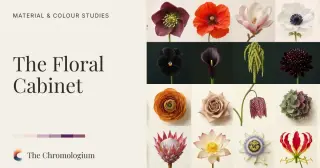
Chromologium Launches 'The Floral Cabinet,' a 24-Part Digital Study of Botanical Color Relationships
art-and-design1 month ago

Chromologium Launches 'The Floral Cabinet,' a 24-Part Digital Study of Botanical Color Relationships

The Chromologium has released 'The Floral Cabinet,' a comprehensive digital archive comprising 24 floral color and material studies. The project organizes 144 color forms and 48 stage studies into four thematic drawers, exploring how light, surface, and time affect botanical appearance. It provides interactive tools for comparing color relationships, translating palettes into interface designs, and exporting swatches in various formats for creative use.

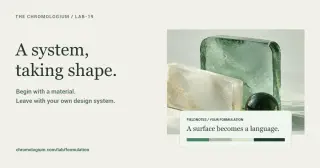
The Formulation Lab Enables Local Design System Creation via 177 Atlas Studies
technology1 month ago

The Formulation Lab Enables Local Design System Creation via 177 Atlas Studies

The Formulation Lab is a browser-based tool that generates editable design systems using 177 curated material studies as references. It allows users to customize color, typography, spacing, and motion without requiring an account. The tool provides CSS tokens, JSON recipes, and HTML manuals for offline use, while including contrast checks for accessibility compliance.

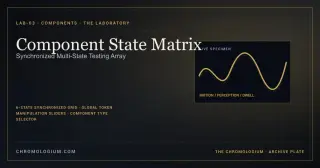
Chromologium Launches Interactive Lab for Testing UI State Consistency Across Design Systems
technology1 month ago

Chromologium Launches Interactive Lab for Testing UI State Consistency Across Design Systems

The Chromologium has released a new interactive laboratory tool, LAB-03, designed to help designers and developers test how user interface components maintain their visual identity across different states, such as focus, loading, and error. The tool allows users to compare components across multiple design palettes, including Midnight Editorial and Glass Garden, while adhering to strict token governance standards. It emphasizes the importance of preserving material cues that support state recognition, ensuring that interfaces remain clear and consistent without relying on fluid motion or complex animations. This resource aims to bridge the gap between design intent and technical implementation by providing a structured environment for inspecting pseudo-state transitions.

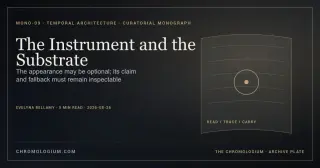
Chromologium Monograph Argues for Separating Visual Rendering from Material Provenance
technology-and-design2 months ago

Chromologium Monograph Argues for Separating Visual Rendering from Material Provenance

Evelyna Bellamy's new monograph, 'The Instrument and the Substrate,' argues that digital visual experiments must be clearly distinguished from physical material measurements. The piece emphasizes that rendering engines, such as WebGL, should have robust fallbacks to ensure content remains accessible if technical failures occur. It advocates for using provenance standards like PROV-O to document how visual parameters are derived, ensuring that aesthetic choices do not masquerade as scientific data.