The NFL will review the Steelers’ call to USC wide receiver Makai Lemon after the draft, tied to the Eagles’ last-minute jump to No. 20 and possible rules about contacting a prospect while another team is on the clock.
The NFL on Jan. 15 announced 42 players were granted special eligibility for the 2026 NFL Draft after renouncing remaining college eligibility, plus 21 underclassmen who have fulfilled degree requirements and are also eligible. The draft will be held April 23-25 in Pittsburgh. Petitions were submitted under an early soft deadline (Jan. 5) and the traditional Jan. 14 deadline, with a Jan. 23 championship deadline for players in the National Championship Game.
The NCAA is gradually allowing drafted players who haven't signed professional contracts to retain college eligibility, sparking debate about the rules' stability and fairness, especially as legal challenges expose their vulnerabilities. This shift could also impact college football, where drafted players might choose to return to college for financial or strategic reasons, reflecting a changing landscape in college sports governance.
The Biden-Harris Administration has released draft rules aimed at providing student debt relief to millions of borrowers, including proposals to cancel runaway interest, eliminate debt for borrowers who entered repayment at least 20 years ago, and assist those enrolled in low-financial-value programs or institutions. The rules will be open for public comment for 30 days, with the aim of finalizing them in time to start delivering relief this fall. The Administration has already taken historic action to approve debt cancellation for nearly 4.3 million borrowers, totaling $153 billion in debt forgiveness through various actions.
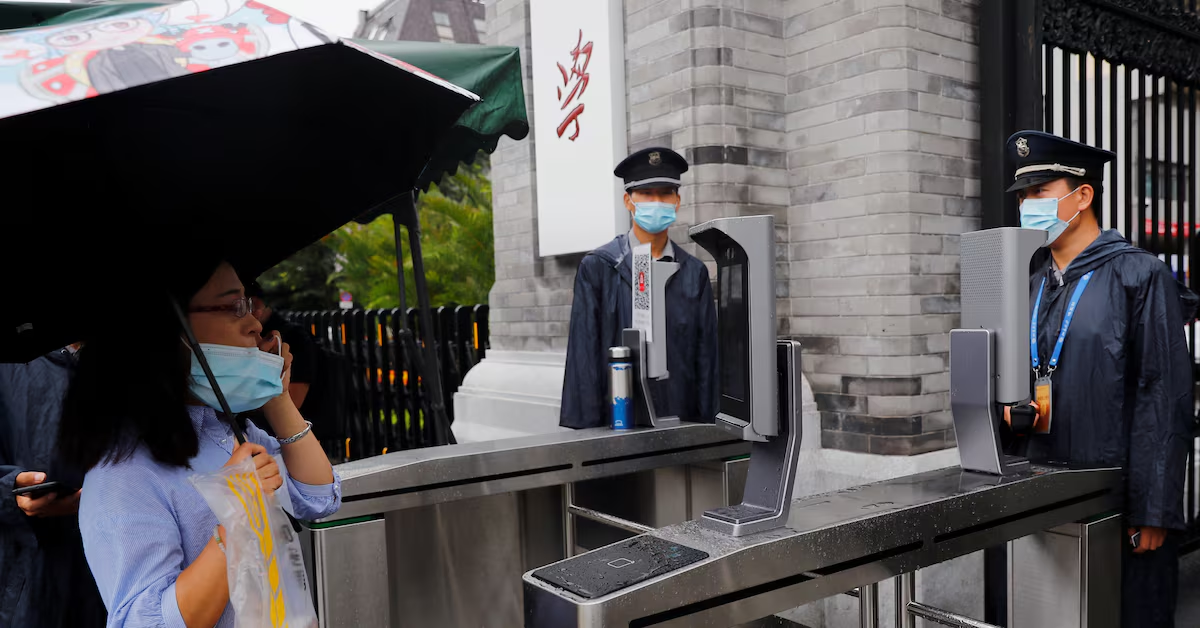
China's Cyberspace Administration has released draft rules to regulate the use of facial recognition technology in the country. The rules state that facial recognition can only be used for specific purposes with the individual's consent and strict protective measures. Non-biometric identification solutions should be preferred when equally effective. The draft rules also prohibit the installation of image capturing devices in places that may infringe upon others' privacy, such as hotel rooms and public bathrooms. This move is part of China's broader efforts to tighten data regulation and protect user privacy.