
Tag

Employer Match

All articles tagged with #employer match

Small Starts, Big Bucks: Six Americans Who Built Million-Dollar 401(k)s
personal-finance1 month ago

Small Starts, Big Bucks: Six Americans Who Built Million-Dollar 401(k)s

Six Americans—Mary Woulf, Joy El-Amin, Richard Eckman, Elisa Brown, Bruce Scott, and Jackie Borja—built $1 million retirement portfolios through decades of consistent 401(k) (and IRA) contributions, generous employer matches, and staying invested, even on modest salaries. The stories illustrate that starting early, saving 10–15% of pre‑tax income, maximizing matches, avoiding withdrawals, and keeping money in the market can yield seven‑figure balances; Fidelity notes a mid-2026 record of 769,000 401(k) millionaires. The piece also highlights risks like job changes and account forgetting, and emphasizes treating retirement funds as money for your future self.

American Airlines to Match $1,000 Trump Account Seed for Employees’ Children
business1 month ago

American Airlines to Match $1,000 Trump Account Seed for Employees’ Children

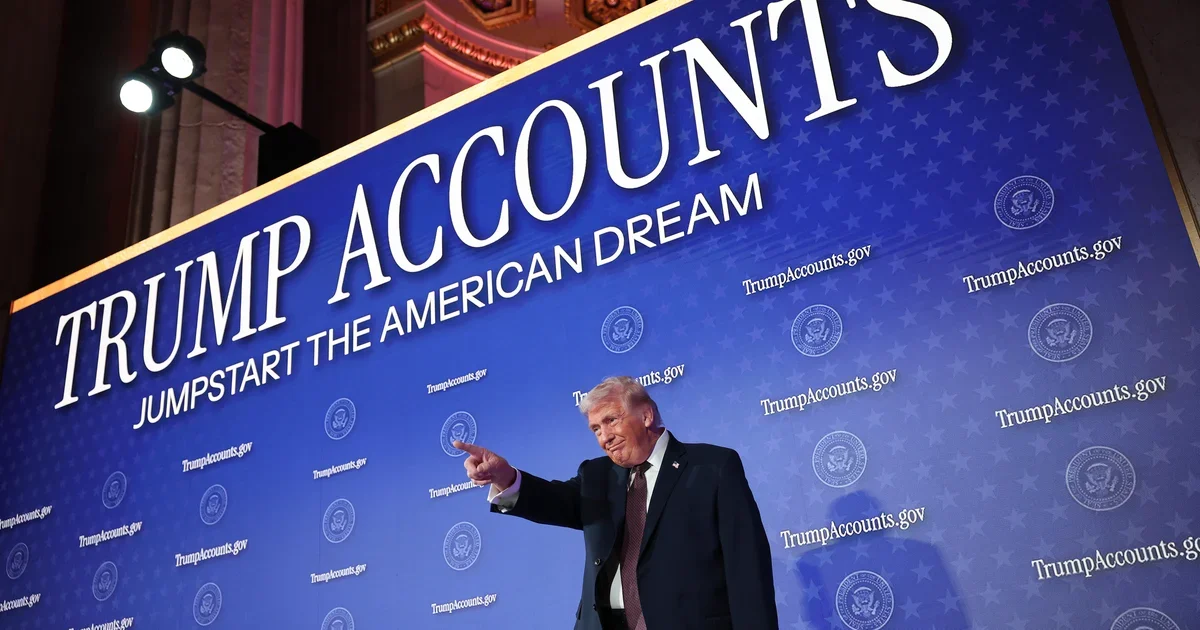
American Airlines will match the federal $1,000 seed for Trump Accounts for employees’ children with an additional $1,000, joining more than 50 companies offering similar matches; Trump Accounts are 530A accounts for U.S. children under 18, with about 1.4 million eligible, and the airline plans to enable pretax payroll deductions up to $2,500 starting in 2027 (payroll deductions expected next year after final rules are issued).

Big Banks Offer $1,000 Match for Trump Accounts for Newborns
business8 months ago

Big Banks Offer $1,000 Match for Trump Accounts for Newborns

Bank of America and JPMorgan Chase will match the government's $1,000 seed for Trump Accounts for eligible newborns born 2025–2028, joining a broader corporate push to support the White House savings plan. Other firms, including Intel and Visa, have pledged support as well. Employers can contribute up to $2,500 per year (counting toward a $5,000 annual limit per child), with employees able to make pre‑tax contributions. The accounts begin July 4, and withdrawals are typically restricted until the child turns 18.

"Roth 401(k) Adoption Surges as Secure 2.0 Sparks Worker Interest"
personal-finance2 years ago

"Roth 401(k) Adoption Surges as Secure 2.0 Sparks Worker Interest"

More employers are offering Roth 401(k) options in their retirement plans, with 89.1% of employers allowing workers to contribute to a Roth account in 2022, up from 58.2% in 2013. However, only 21% of workers are taking advantage of this option, with 72% still saving in a traditional pre-tax account. The recently passed retirement law, Secure 2.0, is expected to increase Roth uptake by requiring catch-up contributions to be made to Roth accounts for high-income workers. Employers are also starting to offer their company match in a Roth account. Financial advisors recommend considering Roth contributions for investors in a lower tax bracket now than in retirement, and for young workers with their highest-earning years ahead. Roth savings also have additional benefits, such as avoiding required minimum distributions and reducing Medicare Part B premiums.

The Impact of Financial Stress on Retirement Savings and Investor Knowledge Revealed
personal-finance3 years ago

The Impact of Financial Stress on Retirement Savings and Investor Knowledge Revealed

A CNBC survey has found that 74% of Americans are feeling financially stressed, with 37% indicating high levels of stress. This financial strain is impacting retirement savings, as 41% of workers with a 401(k) or employer-sponsored plan do not contribute any money. Among those who are contributing, the majority are saving as much as they can afford or up to their employer's match. However, 46% of respondents do not know what investments are in their 401(k), and 56% admit they are not on track with their yearly savings for a comfortable retirement. Financial advisors recommend prioritizing employer matches, building an emergency fund, and paying off high-interest debt to improve financial security.