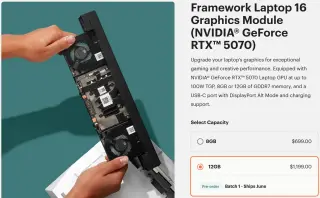
Framework adds a new RTX 5070 12GB upgrade module for the Laptop 16, priced at $1,199—a steep jump for more VRAM, with the higher cost likely tied to low production volume and ongoing DRAM shortages.
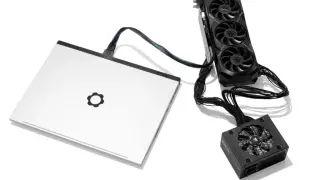
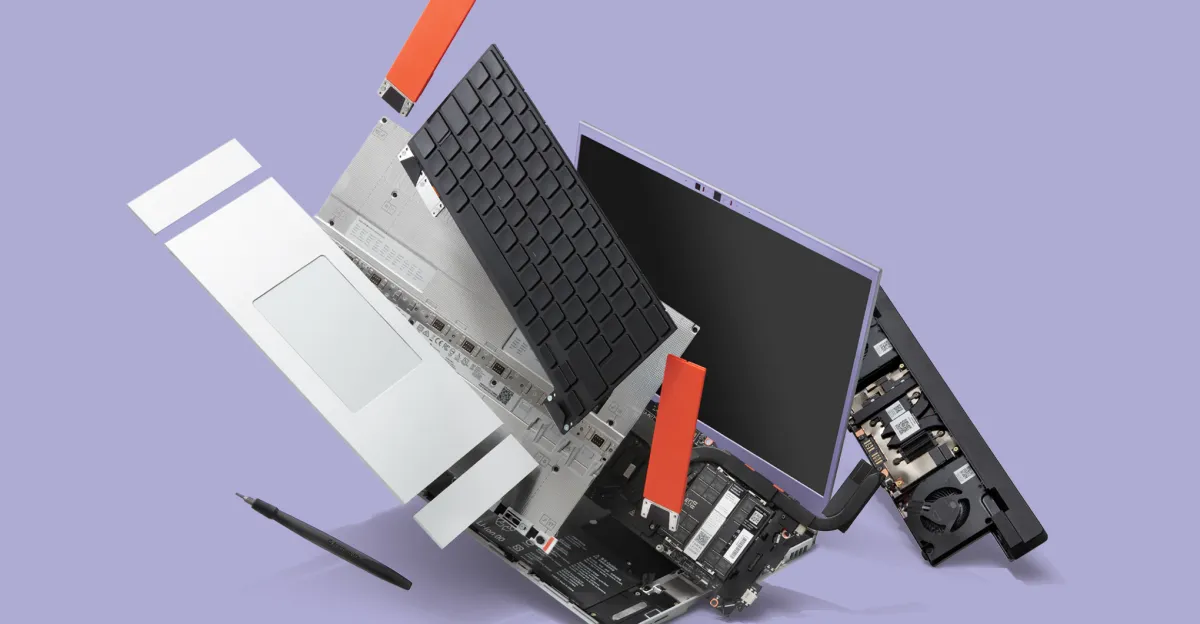
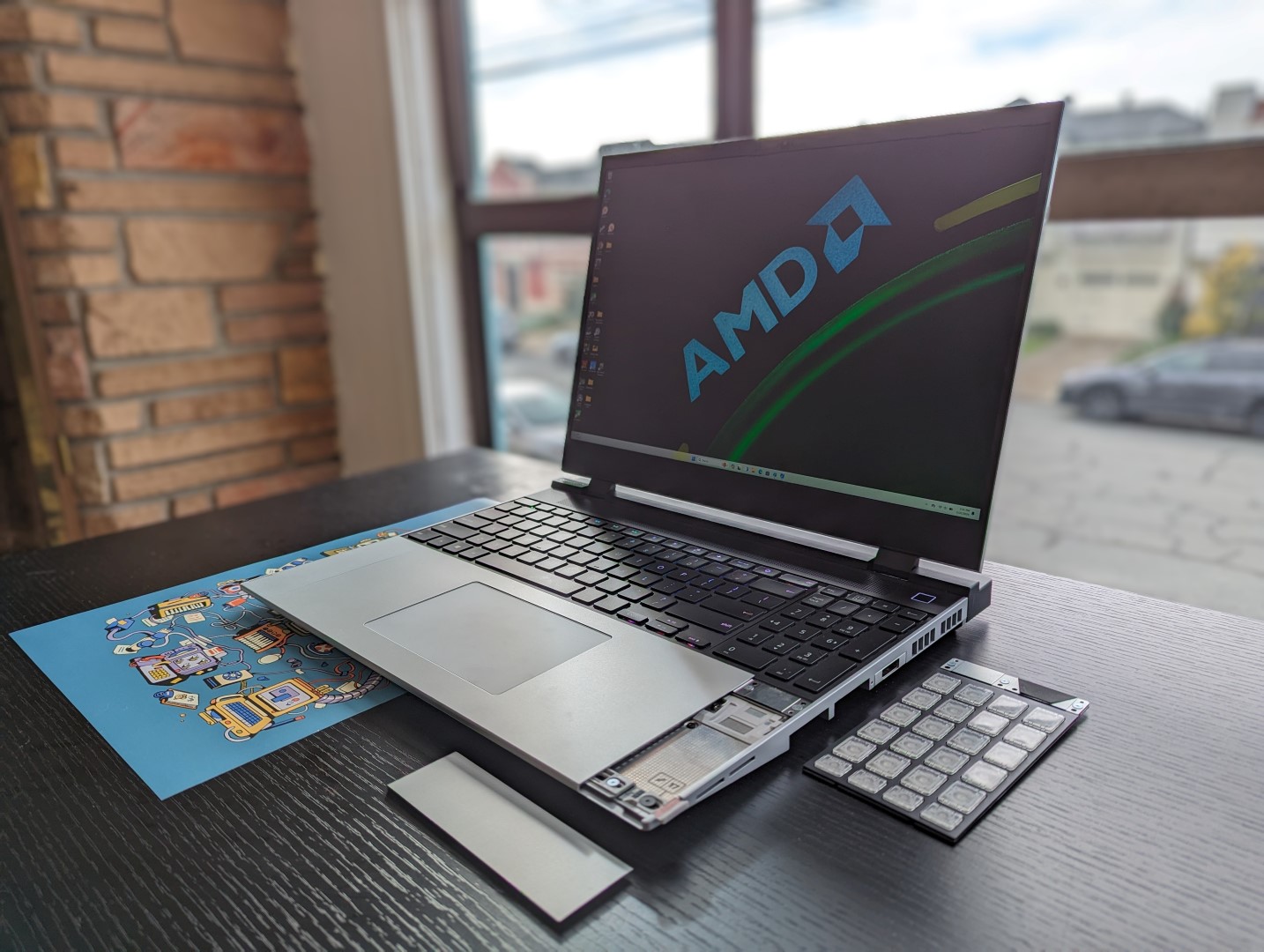
Framework’s Laptop 16 gets cosmetic refinements (a translucent bezel option and a new one-piece keyboard plus haptic trackpad) to look more finished, plus a cheaper CPU option (Ryzen AI 5 340) that drops starting prices to $1,599 for pre-built or $1,249 for a DIY kit. The big new feature is the OCuLink Dev Kit, which exposes up to eight PCIe 4.0 lanes for external GPUs and other accessories via dedicated adapters, replacing the laptop’s current GPU/Expansion Bay shell. Pricing for the Dev Kit components isn’t announced yet, and shipping is planned for later this year.
The Framework Laptop 16 has received significant upgrades, including support for interchangeable motherboards with AMD and Nvidia GPUs, notably the new Nvidia GeForce RTX 5070, making it more powerful and flexible for gaming and professional use, though it remains large and costly compared to other laptops.
Framework Computer has upgraded its Laptop 16 with AMD Ryzen AI 300 series processors and optional GeForce RTX 5070 graphics, offering improved performance and modularity, with benchmarks and Linux testing now available.
Framework announced the second-gen Framework Laptop 16 with innovative features like a user-upgradable Nvidia GPU and 240W USB-C charging, and revealed upcoming prototypes including a wide haptic touchpad, an external GPU module for reuse of existing graphics modules, and custom keyboard modules, though some may not reach production.
Framework has announced upgrades for its 16-inch modular laptop, including options for AMD Ryzen AI 7 350 or 9 HX 370 processors, NVIDIA GeForce RTX 5070 or Radeon RX 7700S graphics, WiFi 7, improved cooling, and a new CNC aluminum structure, with prices starting at $1499 and shipping beginning in November.
Framework has announced an update to its Laptop 16, introducing a new graphics module with Nvidia's GeForce RTX 5070, Ryzen AI processors, and a redesigned cooling system, with preorders starting at $1,499 and units shipping in November.
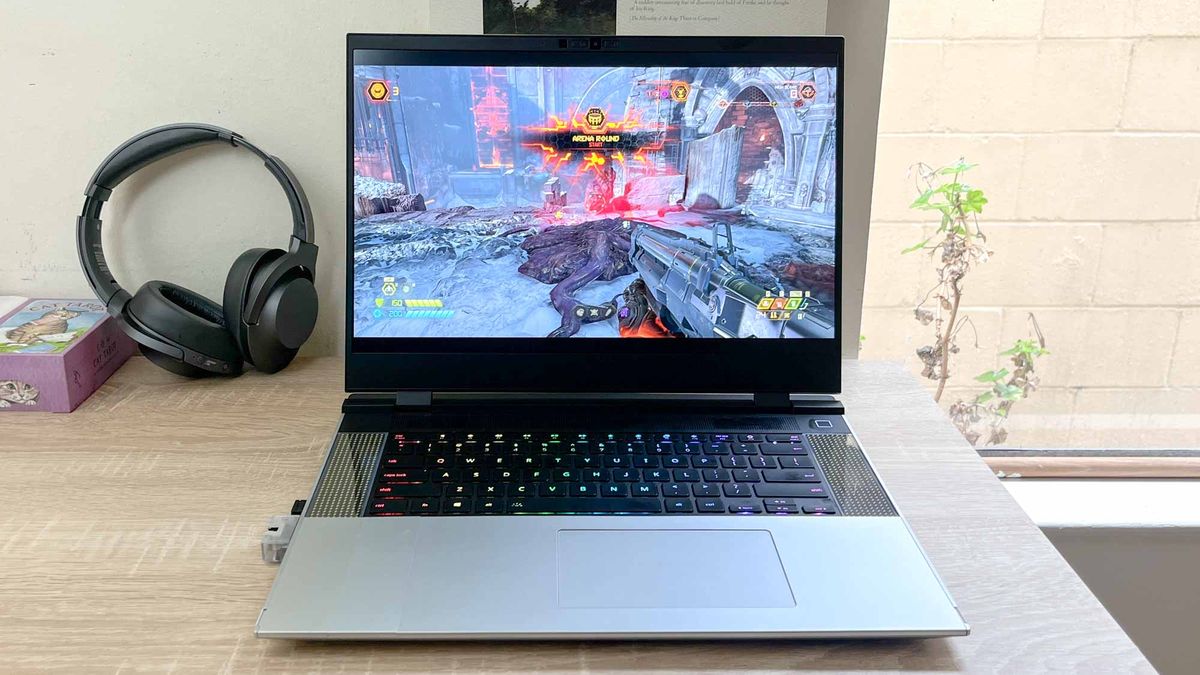
Framework has released a gaming laptop that allows users to easily upgrade its GPU, now supporting both AMD and Nvidia options, with plans for future upgrades and improvements in cooling and performance, emphasizing its modular, upgradable design.
Framework has updated its Laptop 16 to support an upgrade to the Nvidia RTX 5070 graphics card, showcasing its commitment to modular, sustainable laptops that can be upgraded over time, with a significant performance boost and a new power adapter, at a higher price point.
The Framework Laptop 16 aims to revolutionize the workstation/gaming laptop market with its upgradeable design, customizable keyboard, and dedicated GPU options, but it faces limitations and bulkiness compared to non-upgradeable alternatives. While the current upgrade options are fairly limited, the company's track record with the Framework Laptop 13 builds trust for potential appealing upgrades in the future. The laptop's unique features make it intriguing, but not essential for now, with great potential for improvement in the coming years.
The Framework Laptop 16, featuring a unique expansion bay for an optional discrete GPU, receives mixed reviews for its ambitious modularity and customization but higher cost and noise under load. A pocket-sized travel router with dual gigabit Ethernet ports is introduced, while Firefox 122 brings improvements including enhanced search suggestions and website translations. Budget smartphones with 90 Hz displays are announced, and rumors suggest Intel's Arrow Lake desktop CPUs may feature Thunderbolt 5 and PCIe 5.0 support.
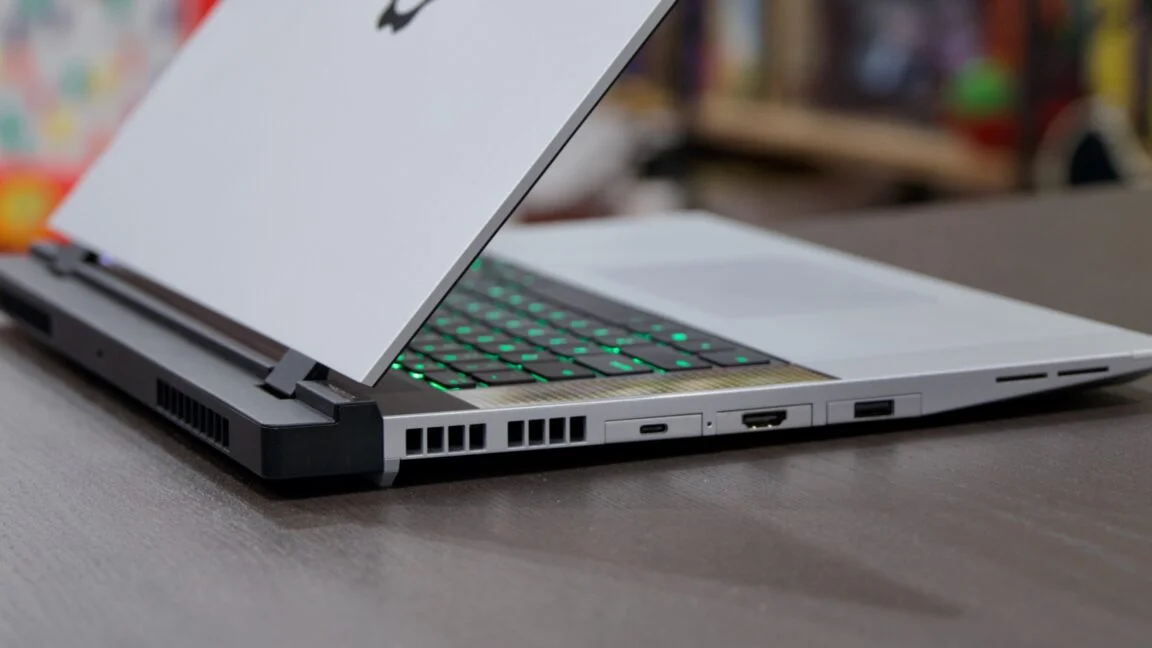
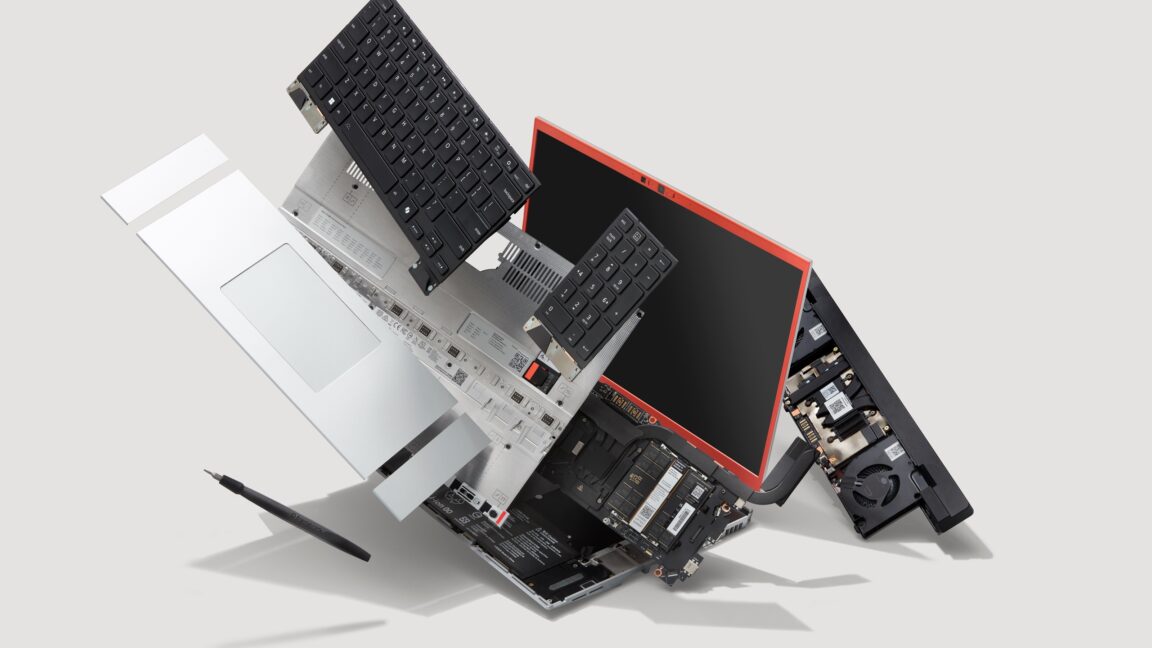
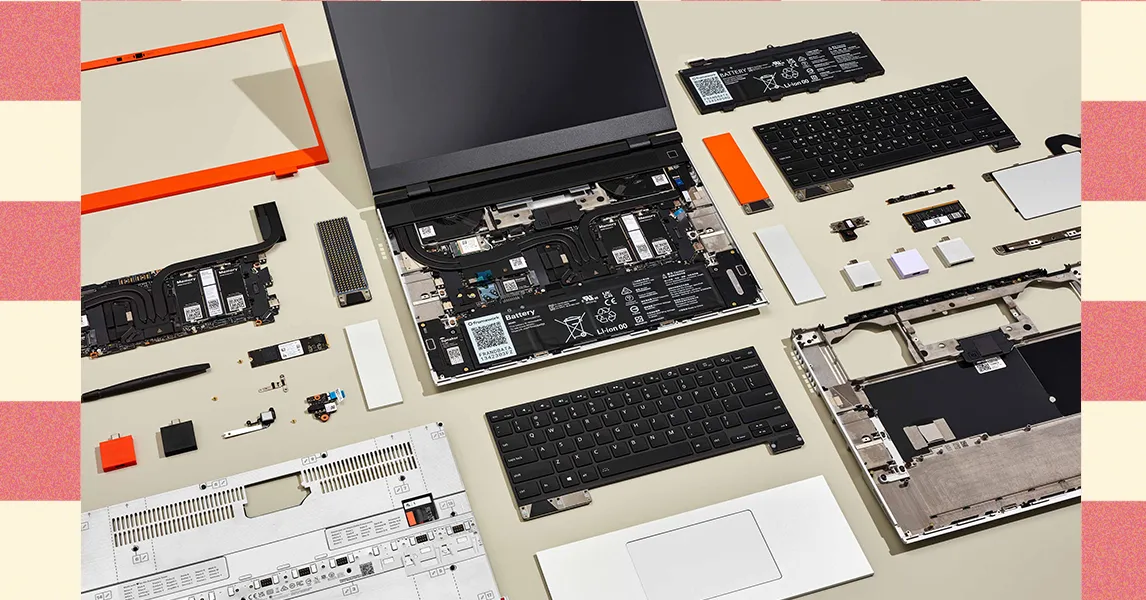
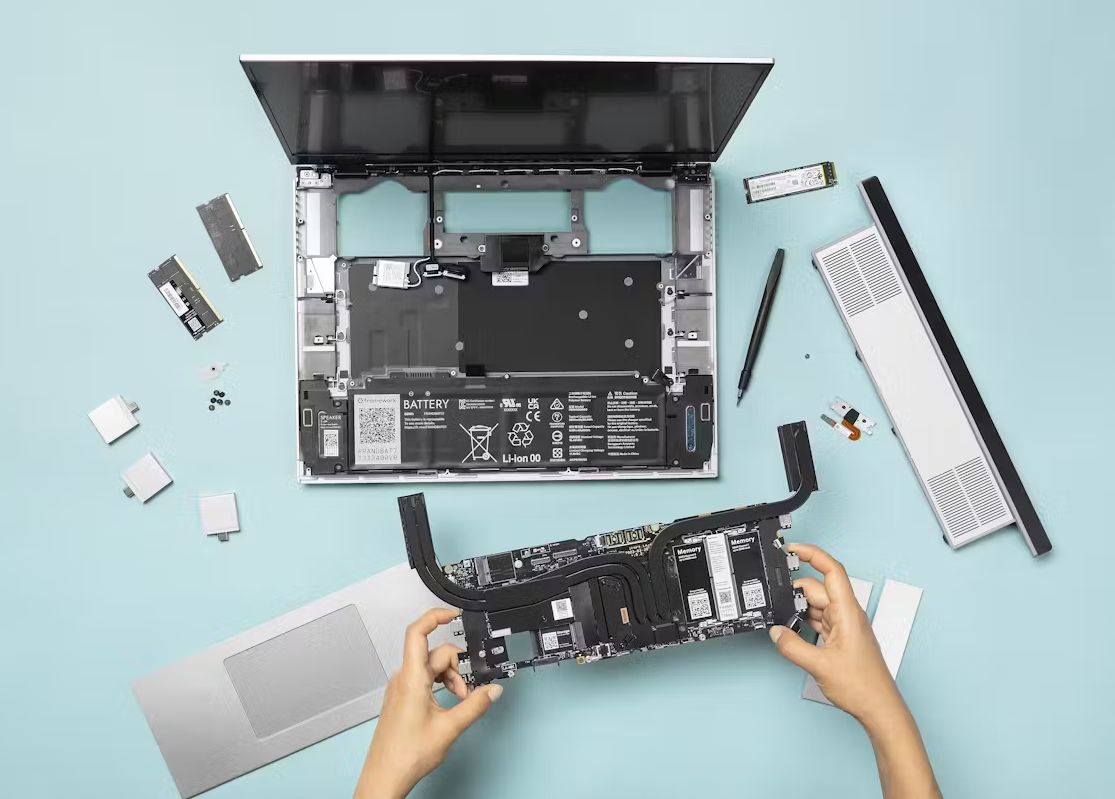
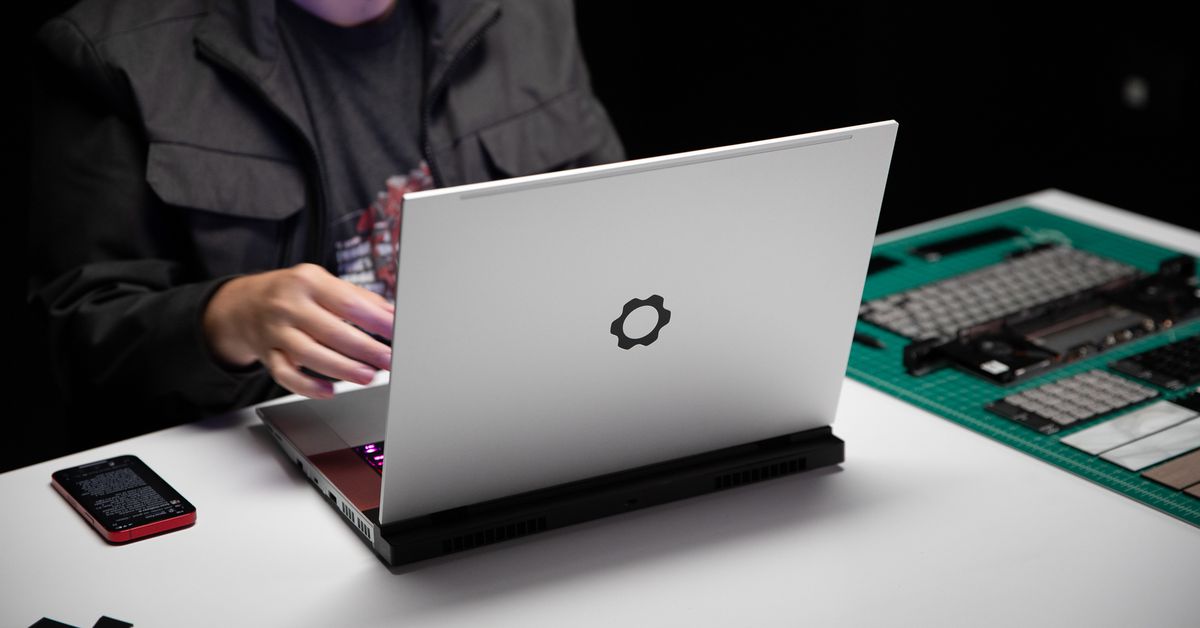
The Framework Laptop 16 is a highly customizable and repairable 16-inch laptop, offering a 6-slot Expansion Card system for customizability, attachable GPU module for gaming, and customizable keyboard deck. While it may not feel as sturdy as some gaming laptops, it provides unparalleled freedom to customize and repair. However, the DIY version requires additional components and parts, and its performance, while solid, may not match that of other gaming laptops.
The Framework Laptop 16 debuts with a detachable Radeon RX 7700S GPU, offering a larger 16-inch form factor with customizable and upgradeable components, including LED Matrix modules and an RGB Macropad module. The highest-end configuration features a Ryzen 9 7940HS and 100 W Radeon RX 7700S for around $2400 USD, targeting a broad audience of multimedia users, content creators, and gamers. The environmentally-friendly laptop boasts six USB-C ports, but lacks an audio jack or Kensington lock. Its IPS display offers fast response times, DCI-P3 colors, and a variable 165 Hz refresh rate with FreeSync support, making it suitable for editing and gaming. The laptop's repairability is emphasized, with detailed maintenance guides available, but accessing the motherboard requires removing the keyboard and clickpad.
The Framework Laptop 16 is a highly ambitious and customizable modular laptop that offers unprecedented user-repairability and customization options, including the ability to swap out components like the GPU and input modules. However, the review highlights several issues such as unresponsiveness, display anomalies, and heating problems, indicating that the laptop may need more refinement before it can be considered a stable and reliable product. Despite its potential, the high price and ongoing concerns about performance and future upgrades raise questions about its practicality and long-term viability.
The Framework Laptop 16 offers extensive customizability, improved performance with the AMD Ryzen 7040HS processor, and excellent Linux support. It features a larger form factor, open-source design files, and a 165Hz display with VRR and FreeSync support. While it is slightly heavier and may compromise sleekness when using certain I/O ports, the laptop's modular design and upgrade options make it an exciting choice for tech enthusiasts, with pricing starting at $1399 USD for the DIY model.