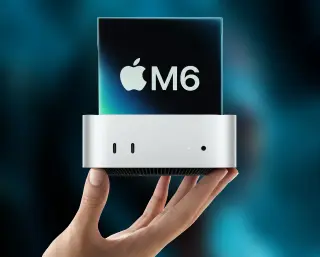
A Geekbench 7 listing for Apple's M6 Pro generated hype with top scores, but Geekbench’s John Poole cites internal inconsistencies suggesting the results may be fake. With reports that Apple might skip the M6 Pro/Max in favor of M7 Pro/Max and Fusion Architecture allowing similar core counts, the listing should be treated skeptically until verification.
A purported Geekbench result for an unreleased M6 Pro chip appears dubious due to internal inconsistencies flagged by Geekbench’s John Poole; Bloomberg had previously reported that Apple plans to skip the M6 Pro and M6 Max, suggesting the alleged score may not be legitimate.
Google has launched Android Bench 2.0 to evaluate how well large language models and AI agents handle complex Android development tasks, including long-horizon projects that can take days to complete. The benchmark uses continuous scoring rather than binary pass/fail and includes tasks like upgrading dependencies, adding major features, and building apps from scratch. Early results show GPT-6 Astra leading with a 28% pass rate, while Gemini 3.8 Flash trails at 8%, illustrating the current landscape of AI coding capabilities.
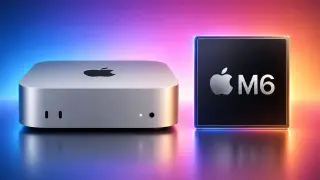
Early Geekbench 7 results for Apple's M6 Mac mini show substantial performance gains over the M4, M2, and M1 models, with a base frequency of 4.78 GHz. Single-core scores reach 4,071 (about 24% faster than M4, 69% ahead of M2, and 89% ahead of M1), while multi-core scores hit 22,783 (up 48% vs M4, 132% vs M2, and 165% vs M1). With only a single listing so far, more benchmarks are expected to confirm the magnitude of the boost before consumer release.
A Geekbench 7 entry for Apple’s M5 Ultra (36-core CPU) shows single-core 3,774 and multi-core 52,516, indicating the fastest Apple chip to date with roughly 30% higher single-core and 35% higher multi-core performance than the M3 Ultra. The Mac Studio with M5 Ultra starts at $6,799 and launches Sept. 22, with GPU results still pending as more benchmark data emerges.
An unverified Geekbench 7 result for Apple's 2nm M6 chip shows 4,071 (single-core) and 22,783 (multi-core), suggesting ~12% faster single-core and ~27% faster multi-core than the M5; Apple claims the M6 delivers the world’s fastest single-threaded CPU, and the Mac mini with M6 (launching Sept. 22 alongside new Mac Studio models) could reflect these gains, though GPU results are not yet available and real‑world performance may vary.
Geekbench 6.3 lists the Mac mini M6 with a 4,610 single-core and 20,676 multi-core score (32 GB RAM), about 10% faster in single-core and 20% faster in multi-core than the M5; the A20 Pro (iPhone 18 Pro) posts a higher single-core of 4,725, but the M6 still leads in multi-core due to core count, with potential decoder-width and thermal headroom explanations; these are early engineering samples, so final results may vary.
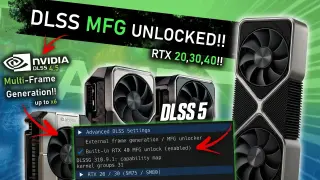
A community guide explains how to install DLSS 5 Neural Rendering and Multi-Frame Generation on RTX 20/30/40 GPUs using an OptiScaler 0.7.6 build, DXGI setup, and an in-game menu; benchmarks on a RTX 4070 at 4K show a 3x frame multiplier boosting FPS from ~40–50 to ~120 with good smoothness, while 4x–6x multipliers can cause artifacts on weaker GPUs and CPU bottlenecks may cause micro-freezes, so 3x is recommended for balanced performance.
Early Geekbench 7 results (unconfirmed) suggest the iPhone 18 Pro/Pro Max with the A20 Pro chip delivers about 21–23% faster single-core and 27–28% faster multi-core CPU performance than the A19 Pro, plus roughly 38–40% GPU gains on a 7-core GPU; the chip is built on a 2‑nm process with a 6‑core CPU at ~4.93 GHz. Benchmarks are not independently verified and may not reflect real-world performance.
New benchmarks comparing RTX 4090 (24 GB) and RTX 5080 (16 GB) show the 4090 generally leads, even with DLSS 5. In 4K with DLSS 4.5 Quality, the 4090 averages about 72 FPS vs 61 FPS for the 5080; enabling DLSS 5 drops both to roughly 39 FPS (4090) and 31 FPS (5080). At 1440p with Path Tracing and DLSS 5 Balanced, the 4090 averages around 34 FPS versus 27 FPS for the 5080, underscoring that the 24 GB RTX 4090’s greater compute/memory keeps it ahead.
OpenAI has launched GPT-6 Astra, calling it the world’s most intelligent and aligned model and signaling the start of an “AGI era.” Astra was trained at massive scale (over 100,000 GPUs) and shows notable gains on agentic and cross-domain benchmarks (ARC-AGI-3, FrontierMath, BenchCAD, OSWorld, etc.), though Meta’s Muse Spark 1.3 still leads on some tests. OpenAI emphasizes Astra’s improvements in Codex-like memory and inference, while noting it is not AGI as a contractual term but a milestone in a broader journey. Rollout will begin with Daybreak enterprise access and will expand to Plus/Pro/Business/Enterprise and via API/AWS in coming days, with pricing around $10 per million input tokens and $50 per million output tokens. Safety remains a priority; Astra is powerful but harder to monitor, and scaling will pause until governance and guardrails catch up. Daybreak Blue access will allow defensive cybersecurity testing, while standard Astra will decline advanced exploit work. Overall, OpenAI frames Astra as a major step toward AGI, rather than a definitive leap.
A comprehensive hardware benchmark of The Blood of Dawnwalker, testing GPUs from RTX 3060 to 5090 and RX 6750 XT to 9070 XT at 1080p–4K with DLSS/FSR/XeSS, detailing the required 64-bit OS, 16 GB RAM, and 60 GB SSD, and showing how CPU/GPU pairings impact FPS, VRAM and RAM usage under Ultra vs Minimum settings using Unreal Engine 5 (Nanite, Lumen, Chaos).
The Pixel 11 Pro XL’s Tensor G6 brings roughly 20% higher single- and multi-core CPU performance vs the G5, but Google’s chip still lags behind Qualcomm’s Snapdragon 8 Gen 5 and Apple’s A-series in raw speed, especially for gaming where the Galaxy S26 Ultra and iPhone 17 Pro Max pull ahead by about 2.5x at launch and maintain a sizable lead after throttling. Benchmarks show only modest gains in AI/ML and GPU performance, with Tensor’s 3nm process not delivering the kind of power efficiency or speed parity hoped. Storage tests note the Pixel is slightly faster than its predecessor but slower than the Galaxy, and battery life results are still pending. Overall, Tensor G6 improves efficiency but does not close the performance gap against its main rivals, though Google may gain if the efficiency benefits translate to real-world longevity.
Quanta’s interview with Melanie Mitchell argues AI cognition isn’t human-like thinking but alien intelligence that requires new testing methods borrowed from developmental and comparative psychology; she outlines six principles to assess machine cognition, warns against overreliance on benchmarks and anthropomorphism, discusses transfer and 'task tyranny', uses Clever Hans as a cautionary tale, and champions mechanistic interpretability to reveal how AIs work and where they fail, shaping safe deployment and the future of science.
Phoronix compares Windows 11 Pro and several Linux distributions—Ubuntu 26.04 LTS, AlmaLinux 10.2, CachyOS, and Fedora Workstation 44—on an HP Z4 G6i with a 48-core/96-thread Xeon 678X, 4x32GB DDR5, and RTX Pro 6000. AlmaLinux uses the Intel P-State performance governor by default, with a separate CachyOS “Performance” run to mirror that setup. The goal is to assess which OS delivers the best overall throughput for demanding workloads on a high-end workstation, with tests spanning multiple creator and compute workloads across a roughly $46k system configuration.