
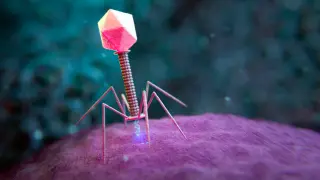
AI designs bacteriophage genomes, prompting biosafety questions
Researchers trained large genome models (Evo1 and Evo2) on DNA to generate virus-like genomes related to ΦX174. After screening 285 AI-suggested sequences, 16 produced viable viruses in E. coli, with higher similarity to the original ΦX174 correlating with higher viability. Some candidates carried novel genes or larger changes, illustrating the model's creativity within constraints. The work hints at potential phage-therapy applications but raises biosafety concerns about designing vertebrate-targeting viruses and underscores the need for governance of DNA-sequence design tools.