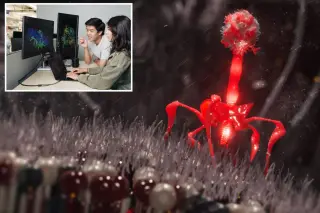
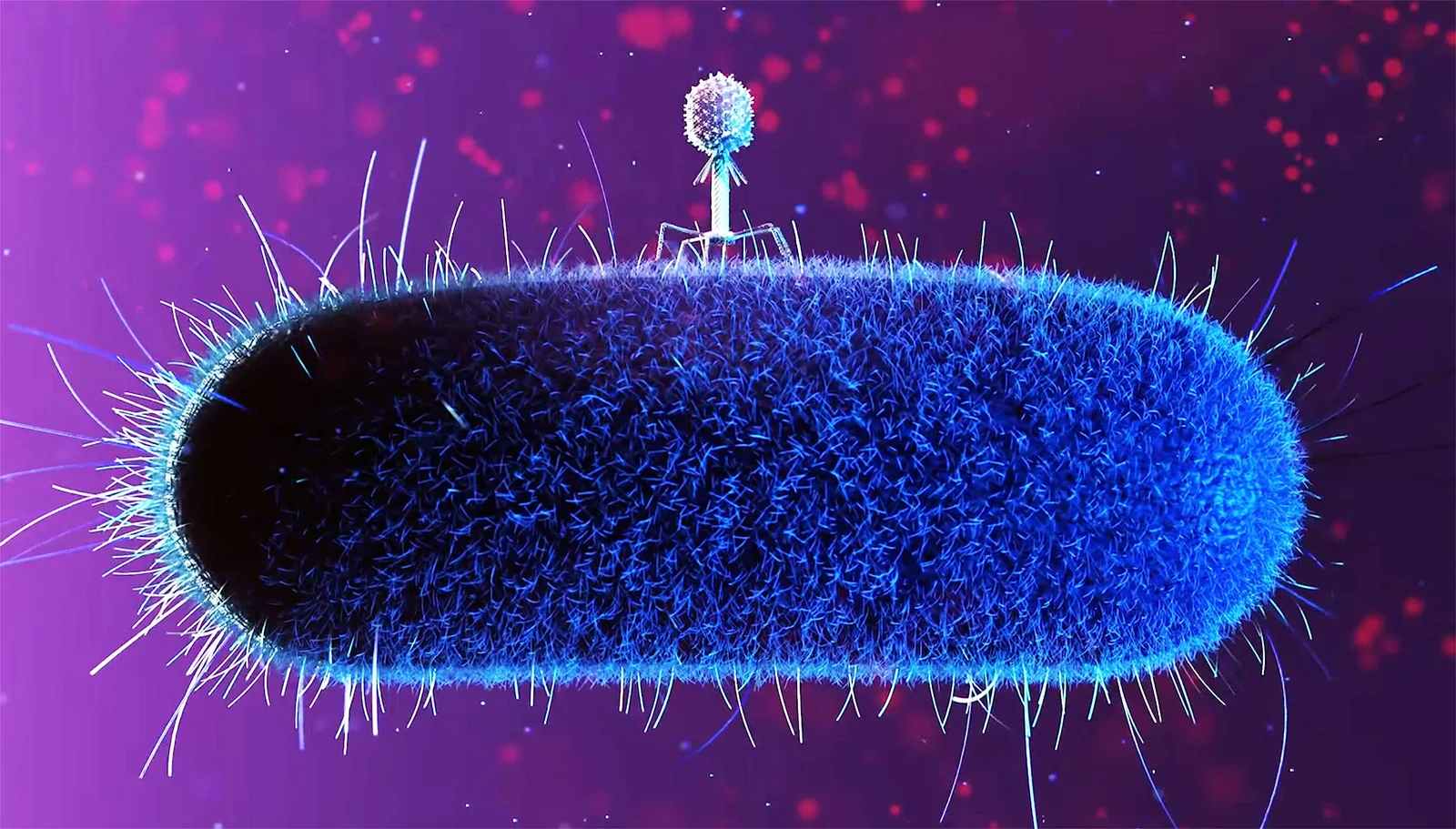
A California AI startup claims it has administered the first AI-designed virus to a human patient to treat an antibiotic-resistant infection, marking a potential shift in how superbugs are combated.
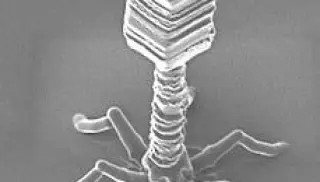
San Francisco-based AI lab Radical Numerics announced the first administration of an AI-designed bacteriophage cocktail to a human patient suffering from an antibiotic-resistant infection. The treatment, approved under a compassionate-use arrangement, utilized the company's new model, Omnii-1, to engineer viruses targeting specific bacterial strains. While laboratory tests confirmed the phages eliminated the patient's bacteria, the company withheld clinical outcome data to protect patient privacy, citing the lack of evidence from a single case.
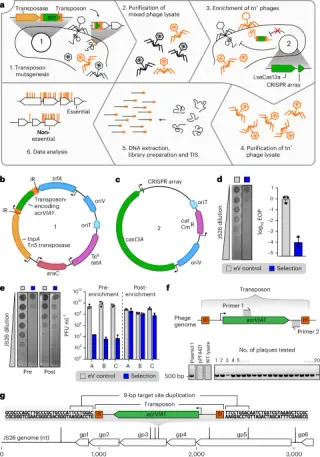
Researchers at the University of Otago developed 'phage Tn-seq,' a method that uses transposon mutagenesis and anti-CRISPR selection to identify essential genes in diverse bacteriophages. The technique also allows rapid insertion of new genetic cargo, such as fluorescent markers or anti-defense proteins, into phage genomes within days, overcoming previous barriers in phage engineering and functional genomics.
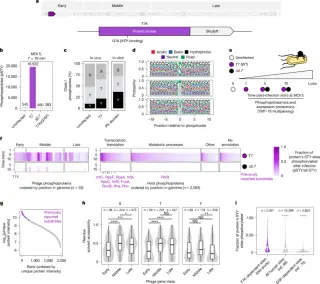
Researchers at EMBL have identified a novel anti-defense mechanism in bacteriophage T7. Its kinase, T7K, acts as a hyperpromiscuous enzyme that phosphorylates nearly all host and phage proteins during infection. This massive modification specifically targets DNA-binding proteins, effectively disabling bacterial immune systems that rely on nucleic acid recognition. The discovery reveals a broad-spectrum strategy for phages to overcome diverse bacterial defenses, offering new insights for engineering robust phage therapies against antibiotic-resistant bacteria.
Researchers at Stanford and the Broad Institute used AI to design 16 novel bacteriophages that effectively kill antibiotic-resistant E. coli, marking a potential breakthrough against superbugs. However, the capability to generate new viral genomes from scratch has triggered urgent debates over biosafety, biosecurity, and the adequacy of current regulatory frameworks.
Researchers at Virginia Tech discovered that bacteriophages, viruses that infect bacteria, play a crucial role in releasing vitamin B12 into the environment. By lysing bacterial cells that produce the nutrient, phages allow it to escape and support neighboring microbes that cannot synthesize it themselves. This process, detailed in a study published in The ISME Journal, reshapes microbial community diversity and highlights viruses as nutrient recyclers in ecosystems ranging from the human gut to the ocean.
Researchers at Stanford and the Arc Institute used AI to design 16 functional viruses from scratch, marking a milestone in synthetic biology. While the viruses target bacteria and pose no human threat, experts warn of biosafety risks. The Washington Post argues for regulating physical lab synthesis rather than censoring AI models, as a bipartisan bill faces legislative delays.
Researchers at Stanford University and the Arc Institute have successfully used artificial intelligence to design 16 entirely new viruses capable of infecting bacteria. Published in the journal Science, the study utilized AI models trained on millions of genetic sequences to generate novel bacteriophage genomes. While the breakthrough offers promising avenues for combating antibiotic resistance, it has triggered urgent debates regarding biosecurity and the pace of regulatory oversight.
Researchers at Stanford University and the Arc Institute used AI models to design 16 functional bacteriophages, marking the first time an AI has generated a complete viral genome. While the new viruses show promise for treating antibiotic-resistant infections, experts warn of significant biosafety risks and the potential for misuse in bioweapon development.
Researchers at Stanford University and the Arc Institute have successfully used artificial intelligence to design and synthesize 16 viable bacteriophages, marking the first time AI has generated functional viral genomes not found in nature. Published in the journal Science, the study demonstrates that AI models trained on genetic data can create novel viruses capable of overcoming antibiotic resistance in E. coli. While the achievement offers potential for new medical therapies, experts warn of significant biosecurity risks, urging stronger governance frameworks to prevent the misuse of generative AI for pathogen design.
Researchers at Stanford University and the Arc Institute have used artificial intelligence to design and synthesize 16 novel viruses that do not exist in nature. Published in the journal Science on August 6, 2026, the study marks the first time generative AI has created functional viral genomes. The AI models, named Evo1 and Evo2, were trained on genetic data from 2 million bacteriophages to design viruses that infect bacteria, specifically E. coli. While the new viruses pose no threat to humans, the breakthrough raises urgent concerns about biosecurity and the potential for malicious use.
Stanford researchers used large genome models to design 16 functional bacteriophages that infect E. coli. These AI-generated viruses showed distinct genetic features and outperformed natural phages in overcoming bacterial resistance, raising concerns about potential misuse for designing viruses that target humans.
A NAMRU-SA team identified 14 new bacteriophages that target Enterococcus faecalis, naming them with Texas-themed monikers (one being a new species), in a bid to counter antibiotic-resistant infections and potentially aid dental root canals; phages offer pathogen-specific alternative or adjuncts to antibiotics, but require further study and formal taxonomy review before clinical use.
A study comparing phage-bacteria dynamics on the ISS and on Earth shows that the T7 phage infecting E. coli slows in microgravity but can still replicate after a long interval. Space conditions drive distinct mutation patterns in both phage and host, and researchers used microgravity-informed mutations to engineer phage variants that outperform Earth-informed ones against drug-resistant uropathogenic E. coli. The findings suggest extreme environments can reveal new design principles for phage therapy to combat antibiotic resistance and are reported in PLOS Biology.
A Space.com study compared T7 phage infections of E. coli in identical setups on the ISS and on Earth. In microgravity, infection slowed at short incubation times due to reduced fluid mixing and host stress, but after 23 days the infection could still proceed with fewer bacteria. The research also found microgravity-specific mutations in the phage genome, suggesting space conditions steer phage–host evolution differently. These results have implications for spaceflight microbiology and potentially for Earth-based phage therapies, though more work is needed to assess long-term health risks for astronauts.