
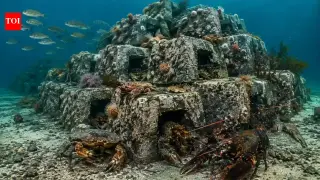
Coal-ash reef in Poole Bay sprouts a thriving underwater habitat within weeks
In 1989 UK researchers built an artificial reef off Poole Bay using 50 tonnes of stabilised coal-fired power-station waste (PFA/gypsum). Lobsters and edible crabs arrived within three weeks, and within a year the reef surfaces were encrusted with a diverse community of organisms, including hydroids, barnacles, sponges and pouting fish, with some lobsters showing long-term site fidelity. The study found no clear ecological differences between coal-ash mixes and concrete controls, addressing concerns about heavy metals and environmental impact. The work demonstrated that industrial by-products could be stabilised and used to create habitat, contributing to broader efforts to reuse waste rather than dumping it at sea.