
Tag

Klinefelter Syndrome

All articles tagged with #klinefelter syndrome

Testosterone Therapy Triggers Rare Psychosis in Man With Klinefelter Syndrome
health3 months ago

Testosterone Therapy Triggers Rare Psychosis in Man With Klinefelter Syndrome

A 45-year-old man developed psychosis, including auditory hallucinations and paranoid delusions, after one year of testosterone replacement therapy for osteoporosis and infertility. Doctors in India identified the condition as substance-induced psychotic disorder, likely triggered by hormone fluctuations in a patient with undiagnosed Klinefelter syndrome. Symptoms resolved rapidly after discontinuing the medication, highlighting the need for psychiatric monitoring during hormone therapy.

Testosterone Injections Triggered Psychosis in Man with Undiagnosed Klinefelter Syndrome
health3 months ago

Testosterone Injections Triggered Psychosis in Man with Undiagnosed Klinefelter Syndrome

A 45-year-old man developed acute psychosis, including auditory hallucinations, after one year of injectable testosterone therapy for osteoporosis and low testosterone. The case report, published in The Primary Care Companion for CNS Disorders, links the reaction to his undiagnosed Klinefelter syndrome. Symptoms resolved after stopping the hormone and starting antipsychotics, with a cautious reintroduction of lower-dose therapy later.

"Identification of Turner Syndrome in Ancient Genomes"
genetics-and-archaeology2 years ago

"Identification of Turner Syndrome in Ancient Genomes"

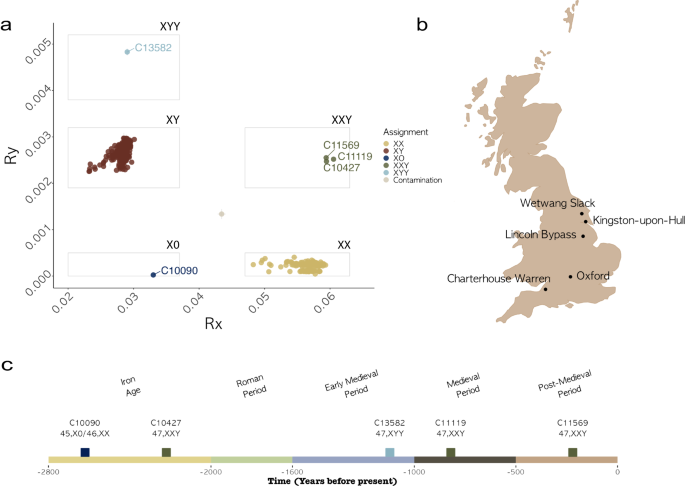
A new computational method has been developed to identify chromosomal aneuploidies, including sex chromosome karyotypes and autosomal aneuploidies, in ancient genomes. The method was applied to ancient British data, revealing the oldest known instance of mosaic Turner syndrome, individuals with Klinefelter syndrome, and an individual with 47,XYY syndrome, providing insights into the historical prevalence of these conditions. The study sheds light on the societal treatment of individuals with aneuploidies in ancient societies and highlights the potential for exploring past gender variability and societal perceptions of individuals with disorders of sex development.