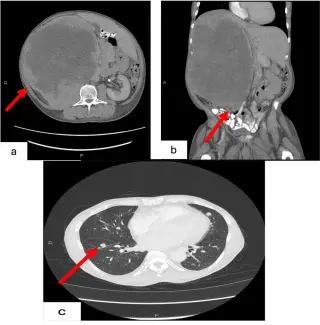
A 50-year-old man was diagnosed with a 31-cm papillary renal cell carcinoma, an exceptionally large tumor that presented with suspected lung and bone metastases. This case highlights that papillary renal cell carcinoma can exhibit aggressive, atypical imaging features, challenging the assumption that this subtype is always small and less aggressive.
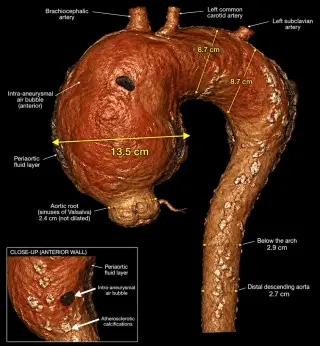
A 70-year-old woman with a massive 13.5 cm ascending aortic aneurysm caused by atherosclerosis underwent successful valve-sparing total arch replacement. The rare case, reported in Cureus, highlights the extreme rarity of such large proximal aortic aneurysms and the efficacy of advanced open surgical reconstruction.
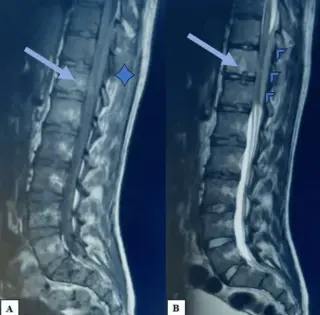
A 20-year-old male presented with acute spinal cord compression, leading to the diagnosis of a rare thoracic Ewing sarcoma. After surgical decompression and chemotherapy, the patient developed orbital metastasis six months later.
A recent case report in Cureus details the diagnosis and treatment of a pleomorphic adenoma in the lower lip, a rare location for this common benign salivary gland tumor. The patient, a man in his 30s, initially received an incorrect diagnosis of a sebaceous cyst and failed corticosteroid treatment before specialist referral. Surgical excision and histopathological analysis confirmed the tumor, emphasizing the need for biopsy in persistent lip lesions.
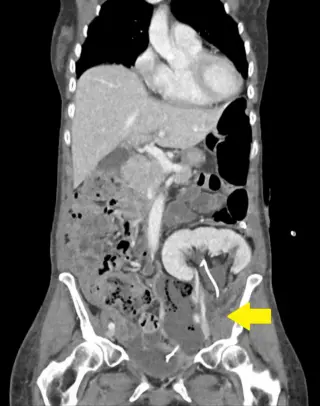
A 68-year-old woman who underwent living unrelated kidney transplantation developed severe hyponatremia (sodium 109 mmol/L) on postoperative day 8 with only mild symptoms. Sodium improved with hypertonic saline, nutrition, and fluid restriction. By postoperative day 13 she spiked a fever; CT revealed a large (16 cm) peritransplant abscess, with drainage growing Escherichia coli. This case suggests severe unexplained hyponatremia can be an early manifestation of occult infectious or surgical complications after kidney transplantation.
A 45-year-old man on testosterone for osteoporosis developed paranoia and hearing voices about a year into therapy; stopping testosterone led to rapid resolution of symptoms, and he was later restarted on testosterone with close monitoring. He was found to have Klinefelter syndrome, which may increase psychiatric risk, underscoring the need for baseline mental-health screening and vigilant monitoring when initiating testosterone, especially in vulnerable patients.
A case report describes a 45-year-old man who developed severe psychosis—hallucinations and hearing voices from his body—after a year of injectable testosterone for infertility and osteoporosis. He was later diagnosed with Klinefelter syndrome (XXY). Stopping testosterone and treating with antipsychotics led to recovery, and a cautious reintroduction at a lower dose with close monitoring did not prompt a relapse. The authors emphasize that this is a single case and does not prove causation, but hormone fluctuations may trigger psychiatric crises in vulnerable individuals, underscoring the need for psychiatric screening during hormone therapies.
A 65-year-old mother developed the rare happy heart syndrome, a form of takotsubo cardiomyopathy, after extreme happiness at her daughter's wedding. She presented with chest pain and shortness of breath, was treated in intensive care for suspected acute coronary syndrome, but arteries were normal and imaging showed the characteristic left-ventricular ballooning. After hospitalization she fully recovered, underscoring that intense joy can, in rare cases, trigger serious heart problems and must be recognized by clinicians.
An 83-year-old man in Belgium presented with facial nerve palsy, fever, anemia, and liver/kidney abnormalities. A severely itchy rash prompted testing that revealed Treponema pallidum infection, leading to a diagnosis of secondary syphilis with early neurosyphilis. He was treated with a 14‑day IV penicillin course, after an initial injection, with improvement and normalization of labs. The case highlights atypical, multisystem presentation of syphilis (including potential latent reactivation) and CNS involvement; public health authorities and his wife were notified/tested.
A Canadian woman in her 50s experienced voices for years and was treated for unspecified psychosis with multiple antipsychotics, but later tests revealed bilateral sensorineural hearing loss. Even after fitting with hearing aids, the voices persisted, while brain scans and blood tests were normal and her daily functioning remained intact—suggesting the hallucinations arose from sensory deprivation rather than a psychotic disorder. The case underscores that hearing voices does not always indicate psychosis and recommends early hearing assessments and coping-focused psychotherapy to manage persistent hallucinations when hearing loss is present.
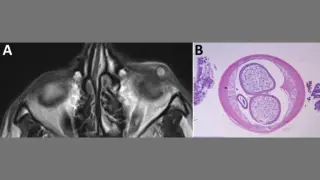
A 74-year-old California man developed a firm eyelid nodule after an insect bite; an MRI suggested a chalazion, but surgical removal and genetic testing identified the culprit as a nematode, Dirofilaria repens, a parasite common in Europe/Asia and reportedly the first such human case documented in the United States. The worm likely arrived via local animal hosts and mosquito vectors; humans are incidental hosts. The patient recovered after removal, and researchers urge continued surveillance of D. repens in North America amid expanding mosquito populations.
An 11-year-old in northern Ontario woke to a bat on his face and, despite no visible bite, later died from rabies—the first locally acquired human case in Ontario since 1967. The case highlights the importance of seeking immediate medical evaluation after any direct bat contact, since rabies is almost always fatal once symptoms appear, though prompt post‑exposure treatment can prevent infection.
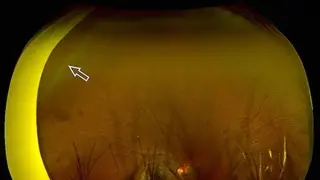
A BMJ Case Reports study documents a young man who developed multiple retinal tears and retinal detachment after using a percussion massage gun on and around his eyes for months. Laser treatment repaired the damage, highlighting the eye injury risks and the lack of clear safety guidelines for ocular use of these devices.
A published Frontiers in Neuroscience case report describes an 80-year-old woman with advanced Alzheimer's who temporarily regained urinary continence, walking ability, self-care, and conversational capacity after a single five-gram dose of psilocybin-containing mushrooms (with a follow-up three-gram session showing continued improved verbal expression). While the improvements spanned multiple domains and persisted for weeks, researchers caution that this is a single observational case without controls or standardized testing, and not evidence of a cure. The findings suggest dormant brain-network capacities may be temporarily re-engaged by psychedelic-induced neuroplasticity, highlighting the need for formal, controlled trials and safety assessments, particularly in vulnerable older adults; ongoing studies like UC Berkeley's PLASTICITY aim to explore aging brains and neuroplasticity with psychedelics.
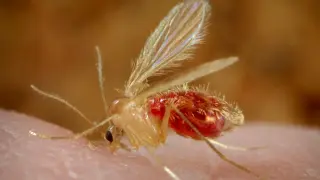
A middle‑aged woman develops a draining buttock lesion due to cutaneous leishmaniasis, revealing a decades‑old congenital dermal sinus that was reactivated by the parasite; after medical treatment and surgical removal, doctors confirmed no spinal connection, and the case is highlighted to raise awareness of this rare presentation of leishmaniasis, a neglected tropical disease affecting over a million people annually.