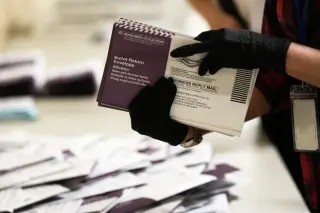
The Supreme Court rejected Donald Trump’s challenge and allowed states to count mail-in ballots that arrive after Election Day, upholding rules in about 30 states and delivering a major defeat for Trump on voting procedures.
Justice Samuel Alito argued for a literal reading of 'day' during arguments over Mississippi’s law allowing postmarked ballots to count if received after Election Day, signaling skepticism toward late-ballot schemes. The Supreme Court’s conservative-leaning bloc appeared wary of broad late-ballot counting in Watson v. RNC, a decision that could affect about a dozen states that count postmarked ballots after Election Day; Roberts and Kagan urged caution about impacting early voting. A ruling expected by summer could shape rules for the 2026 midterms, while military/overseas ballots would likely be unaffected.
The U.S. Supreme Court’s conservative bloc signaled readiness to rule that ballots must be received by election day to be counted, potentially upending California’s practice of counting late-arriving mail ballots and pressuring voters to mail earlier. The case, Watson v. Republican National Committee, challenges state rules allowing postmarked ballots that arrive after Election Day to be counted, a practice followed by several western states. A ruling upholding a strict receipt deadline could redefine how ballots are handled nationwide and affect election timing and outcomes.