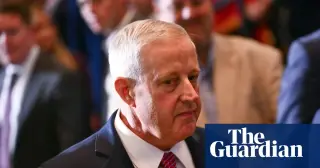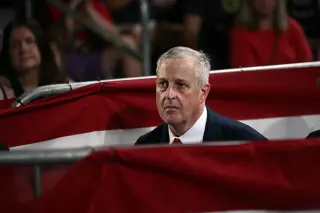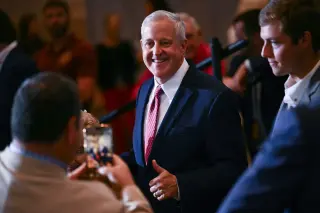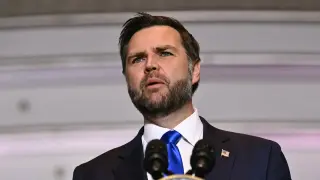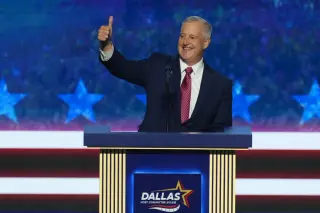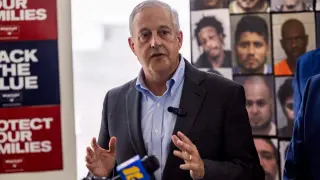
In North Carolina, Trump-backed Republican Michael Whatley challenges Democrat Roy Cooper as Cooper seeks to extend a historic winning streak in a high-stakes Senate race that underscores Trump’s ongoing influence in a key swing state.
CBS News projects former North Carolina Gov. Roy Cooper and ex-RNC chair Michael Whatley won Tuesday's primaries, setting up an open-seat Senate race in November—after Thom Tillis announced he wouldn’t seek reelection—expected to be among the cycle’s most competitive and drawing national attention.
Polls close across Texas and North Carolina in the first 2026 midterm primaries, with North Carolina vote tallies potentially delayed until 8:30 p.m. ET after a precinct extension. Democrat Roy Cooper is favored to advance to the general in NC’s pivotal Senate race, while Trump-backed Michael Whatley leads the Republican field. Down-ballot races are reshaped by a new GOP-drawn map, creating GOP pickup opportunities in the coastal 1st District and contests in the western 11th District, and Democratic Rep. Valerie Foushee faces Durham County commissioner Nida Allam in the Research Triangle.
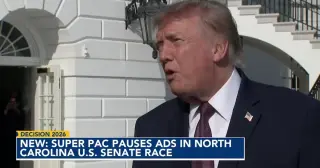
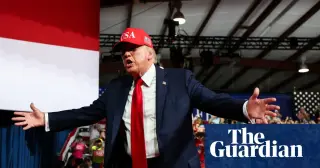
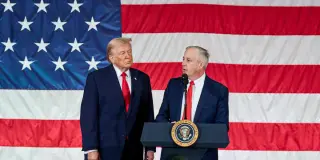
President Trump launched his campaign in North Carolina for the 2026 midterms, criticizing Democratic candidate Roy Cooper and endorsing Republican Michael Whatley, while highlighting economic achievements and attacking opponents on crime and policy issues.
A recent Emerson College Poll shows former Governor Roy Cooper leading Republican Michael Whatley by six points in North Carolina's 2026 Senate race, with Cooper enjoying higher name recognition and a more favorable image. The poll also highlights low recognition for Whatley, a close congressional race, and various approval ratings for local and national figures, indicating a competitive political landscape as the election approaches.
Roy Cooper leads the North Carolina Senate race with a six-point advantage over Michael Whatley in the first public poll, highlighting a competitive and closely watched contest for the 2026 Senate seat, with Cooper enjoying higher name recognition and favorability among voters.
Roy Cooper is breaking fundraising records as he begins his campaign for re-election in North Carolina, emphasizing his role in expanding Medicaid and contrasting himself with Republican opponents, including Michael Whatley, who has Trump’s backing but lacks name recognition and campaign funds.
Michael Whatley, RNC chair, plans to run for Senate in North Carolina with Trump's support, after Tillis announced he won't seek re-election. Lara Trump, initially considering a run, has decided not to pursue the seat. The race is expected to be highly competitive with top contenders including Whatley and Democrat Roy Cooper.
The Republican National Committee (RNC) has elected Michael Whatley, the former North Carolina Republican Party chair, as its new leader, prompting criticism from the corporate media for his emphasis on election integrity. Whatley's supporters highlight his efforts to strengthen election integrity in North Carolina, including establishing an Election Integrity Committee and the Judicial Victory Fund. However, some GOP critics argue that Whatley could do more and question his fundraising abilities, while others believe the RNC should take the lead in election integrity efforts.
Former President Donald Trump has solidified his control over the Republican National Committee by installing his ally Michael Whatley as chair and his daughter-in-law Lara Trump as co-chair. This move comes after Trump's push for changes at the committee following lackluster fundraising and opposition to the RNC's presidential primary debates. The focus going forward will be on fundraising and election integrity, with Trump's campaign adviser Chris LaCivita also joining as RNC chief of staff. The RNC's recent gathering coincided with Trump's victories in GOP primaries and caucuses, moving him closer to officially securing the 2024 Republican presidential nomination. There were concerns over the RNC potentially paying Trump's legal bills, but it was confirmed that the committee would not be using its funds for this purpose.
The Republican National Committee has unanimously elected Michael Whatley as its chair and Lara Trump as co-chair, both of whom were endorsed by former President Donald Trump, tightening his grip on the party's machinery ahead of the general election. This move comes after Ronna McDaniel, the committee's leader since 2017, privately informed Trump of her intention to step down, facing pressure over lackluster fundraising and criticism of the party's performance. Trump's allies have criticized McDaniel for being insufficiently supportive of the former president, and the new leaders' elevation is part of Trump's effort to merge the R.N.C. with his campaign, allowing for larger fundraising efforts and tapping into the existing party apparatus.
Michael Whatley has been unanimously elected as the new chairman of the Republican National Committee, succeeding Ronna McDaniel, who tearfully endorsed him and Lara Trump as chair and co-chair. The election, largely pre-determined, took place in a single morning with minimal proxies present. The accelerated meeting was described as a "coronation" by some members, with Whatley's chairmanship seen as a "foregone conclusion." Lara Trump pledged to work towards re-electing President Trump, emphasizing the family's commitment to the country.
Former President Donald Trump has chosen Michael Whatley to succeed Ronna McDaniel as the chair of the Republican National Committee, believing that Whatley is more aligned with his views on voter fraud. Trump is insistent that Whatley will prevent Democrats from "cheating" in the upcoming election. However, the story that influenced Trump's decision, about Whatley's efforts to secure Trump's victory in North Carolina, was based loosely on reality.
Donald Trump's push for significant personnel changes at the Republican National Committee, including the resignation of chairwoman Ronna McDaniel and the endorsement of Michael Whatley and Lara Trump as replacements, could backfire, according to an academic. The move raises questions about the GOP's fundraising and campaign focus, as well as the impact of Trump's influence on the party. McDaniel's resignation is expected to take effect on March 8, with potential implications for the RNC's future direction and effectiveness in upcoming elections.