Tag

Oxygen

All articles tagged with #oxygen

Oldest Eukaryotes Found in 1.7-Billion-Year Ocean Cores Point to Oxygen-Driven Life
science-paleontology2 days ago

Oldest Eukaryotes Found in 1.7-Billion-Year Ocean Cores Point to Oxygen-Driven Life

Fossils from 1.75–1.4 billion-year-old mudstone cores in Darwin, Australia, include more than 12,000 microscopic remains of the oldest known eukaryotes. Analysis shows these early complex cells lived in oxygenated bottom waters, suggesting oxygen was functionally necessary for their evolution. The fossils mostly occur in oxic, benthic settings, with fewer in anoxic layers, implying a seafloor lifestyle and a delayed transition to open-water, planktonic life during the Neoproterozoic.

Chemistry Unmasks a Spiral Galaxy’s Ancient History
science11 days ago

Chemistry Unmasks a Spiral Galaxy’s Ancient History

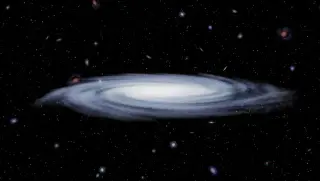
Astronomers used chemical fingerprints from thousands of star-forming gas clouds in the nearby spiral galaxy NGC 1365 to reconstruct its 12-billion-year growth by matching observations to about 20,000 galaxy simulations. They found a centrally formed, oxygen-rich core with slower outer-disk growth, likely shaped by mergers with smaller galaxies and late gas inflows. This chemical-archaeology approach opens a new way to study how distant galaxies assembled over cosmic time.

Giant Insects Challenge Oxygen-Size Link, New Study Finds
science15 days ago

Giant Insects Challenge Oxygen-Size Link, New Study Finds

A Nature study argues that atmospheric oxygen did not limit the size of giant prehistoric insects. By examining tracheole density in flight muscles across species, researchers found oxygen delivery was not the constraining factor, suggesting other causes—such as vertebrate predation or exoskeleton constraints—helped shape why giants once dominated ancient skies.

Breath-hold divers show human evolution in action, spleens included
science1 month ago

Breath-hold divers show human evolution in action, spleens included

A Copenhagen-led study finds Sama-Bajau divers who spend hours daily underwater have unusually large spleens that release extra red blood cells during dives, suggesting a inherited physiological adaptation rather than training alone. The finding, published in Cell, highlights how long-standing environmental pressures shape human biology, a pattern echoed by high-altitude Tibetans (EPAS1) and Andean populations with larger lungs, underscoring that evolution continues to tailor bodies to oxygen challenges globally—often with trade-offs such as risks to other bodily systems.

Oxygen wasn’t the bottleneck for giant Paleozoic insects, new study finds
science2 months ago

Oxygen wasn’t the bottleneck for giant Paleozoic insects, new study finds

A new study across 44 insect species shows that the tracheal system in insects wouldn’t need dramatic expansion as size increases, meaning the ancient giants like Meganeuropsis permiana could still deliver oxygen efficiently. The finding undermines the long-held oxygen-constrain hypothesis and suggests giant bugs weren’t blocked by atmospheric oxygen after all; other factors—predation by aerial vertebrates, heat buildup during flight, molting/structural constraints, and open circulation—likely helped limit insect size, with future research exploring the role of air sacs in ventilation.

Giant Griffinflies May Not Have Needed Oxygen After All, New Study Says
science2 months ago

Giant Griffinflies May Not Have Needed Oxygen After All, New Study Says

A new study challenges the long-held view that high atmospheric oxygen powered giant prehistoric insects like griffinflies, showing that flying insects’ internal tracheal systems can supply oxygen to flight muscles, which could allow large sizes even today; if confirmed, this suggests oxygen levels were not the limiting factor, though researchers note other causes may explain why such giants disappeared.

Insect giants escape oxygen-diffusion limits in flight muscles
science2 months ago

Insect giants escape oxygen-diffusion limits in flight muscles

A cross-species analysis of 44 insect species across 10 orders (plus the 100 g Meganeuropsis permiana) shows the tracheolar space in flight muscles rises only about 1.8-fold over a 10,000‑fold range in body mass and is typically 1% or less. This argues that diffusion of oxygen through the tracheolar–muscle system does not constrain maximum insect size, including gigantism. The study highlights that even a threefold increase in tracheolar space would markedly affect oxygen delivery but have only modest effects on flight, challenging the long-held view that atmospheric oxygen limits insect gigantism and pointing to other factors shaping their evolution.

Jupiter Found to Be 1.5x Oxygen-Rich Compared to the Sun
space3 months ago

Jupiter Found to Be 1.5x Oxygen-Rich Compared to the Sun

Using data from NASA's Juno and Galileo missions, researchers built a combined chemistry–hydrodynamics model of Jupiter's atmosphere. They find Jupiter may contain about 1.5 times the Sun's oxygen—far more than earlier estimates of roughly one-third—much of which is in water. The study also shows gas diffusion in Jupiter's atmosphere could be 35–40 times slower than previously thought, a result that informs theories about how the planet formed from icy material near the frost line.

Oxygen Clues Rewrite Jupiter’s Formation Story
space3 months ago

Oxygen Clues Rewrite Jupiter’s Formation Story

New 1D chemistry and 2D hydrodynamic models suggest Jupiter contains about 1.5 times more oxygen than the Sun and that its atmospheric circulation is slower than previously thought, refining theories of gas-giant formation; the work builds on NASA’s Juno data revealing complex weather and a possible fuzzy core, as the mission continues through 2025 with a planned end that preserves the moons from Earth microbes.

New simulations suggest Jupiter harbors 1.5 times the Sun’s oxygen
space4 months ago

New simulations suggest Jupiter harbors 1.5 times the Sun’s oxygen

A detailed set of simulations modeling Jupiter’s interior atmosphere finds the gas giant contains about 1.5 times more oxygen than the Sun, likely due to Jupiter’s early accretion of icy material beyond the snow line. The models couple atmospheric chemistry with hydrodynamics, explaining why deep oxygen (mostly in water) is hidden from direct measurement and suggesting slower deep atmospheric circulation (gas movement taking weeks). The findings support formation scenarios for Jupiter and offer insight into the solar system’s history, with the study published Jan 8 in the Planetary Science Journal.