
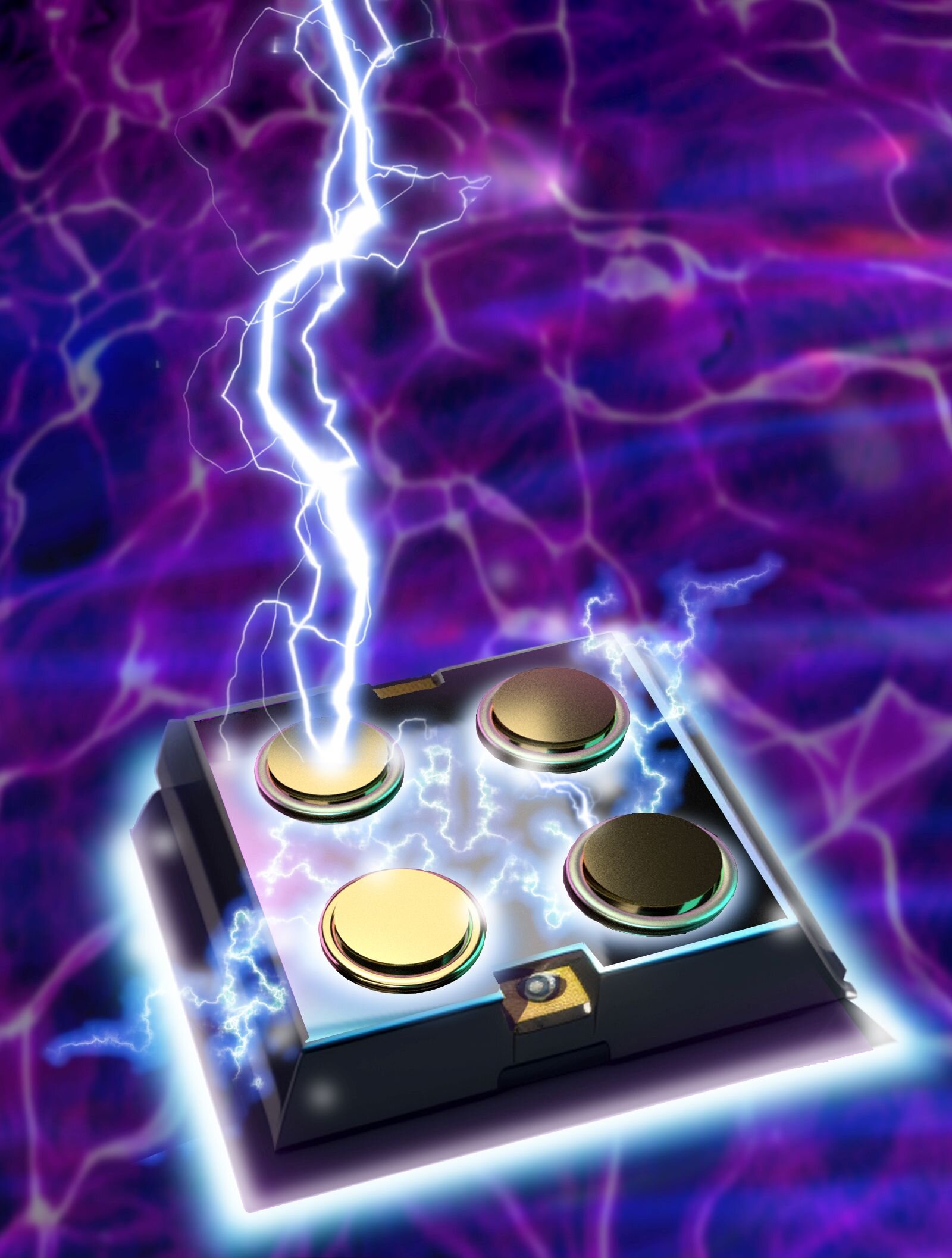
"Quantum Material's 'Non-Local' Behavior Mirrors Brain Function"
Researchers from the Quantum Materials for Energy Efficient Neuromorphic Computing (Q-MEEN-C) consortium have made a significant breakthrough in creating brain-like computers with minimal energy requirements. They have discovered that electrical stimuli passed between neighboring electrodes can also affect non-neighboring electrodes, a phenomenon known as non-locality. This discovery, published in Nano Letters, brings us closer to developing devices that mimic brain functions and could revolutionize artificial intelligence. The researchers used a thin film of nickelate, a quantum material, and inserted hydrogen ions to create pathways for electricity to flow through. The next step is to create more complex arrays with more electrodes to further understand and simulate brain functions.