Tag

Neuromorphic Computing

All articles tagged with #neuromorphic computing

Ultra-cold semiconductor forges a shared time crystal from billions of spin oscillators
innovations13 days ago

Ultra-cold semiconductor forges a shared time crystal from billions of spin oscillators

A semiconductor cooled to near absolute zero hosts billions of electron-nuclear spin oscillators in InGaAs that synchronize to a single rhythm, via diffusion of spin-polarized electrons, turning many microscopic oscillators into a cohesive macroscopic time crystal with potential applications in spintronics and neuromorphic computing.
Brain-inspired memtransistor chip promises ultra-efficient, edge-friendly AI
technology13 days ago

Brain-inspired memtransistor chip promises ultra-efficient, edge-friendly AI

Researchers unveiled a cerebellum-inspired memtransistor chip that merges memory and processing to power neuromorphic AI. In ECG simulations, the device detected arrhythmias with 98% accuracy, ran about twice as fast as a transformer, and used roughly 10,000 times fewer computations, signaling potential for fast, energy-efficient edge AI and reduced reliance on data centers for responsive applications such as health monitoring, autonomous cars, and robotics. Built from molybdenum disulfide, the memtransistor forms the core of the output layer of a spiking neural network, offering a path toward low-power hardware that reacts to unexpected events instead of processing all data.

Self-assembled contacts push molecular devices toward near-perfect yields
technology21 days ago

Self-assembled contacts push molecular devices toward near-perfect yields

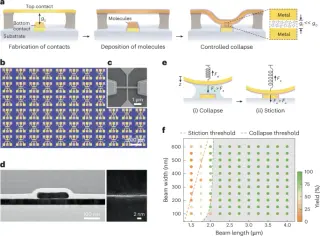
Researchers introduce self-assembled contacts that convert standard semiconductor-fabricated device structures into pristine molecule–metal interfaces, enabling over 1,000 electrically active metal–molecule–metal devices with yields up to 99% and stability across 10^5 measurement cycles, even for layers thinner than 1 nm. In situ Raman confirms molecular integrity, and the platform scales to system-level use, demonstrated by vector–matrix multiplication in a crossbar array of self-rectified molecular memory devices, bridging self-assembly with top-down manufacturing for scalable molecular electronics.

Printed Neurons Talk to Living Brain Cells, Paving Energy-Efficient Neuromorphic Tech
technology4 months ago

Printed Neurons Talk to Living Brain Cells, Paving Energy-Efficient Neuromorphic Tech

Northwestern University researchers developed flexible, aerosol-jet-printed artificial neurons made from MoS2 nanosheets and graphene that generate complex, neuron-like signals and can reliably stimulate living mouse brain tissue, signaling a scalable, energy-efficient route to brain–machine interfaces and brain-inspired computing.

"Formose Reaction Powers Chemical Reservoir Computing"
science-and-technology2 years ago

"Formose Reaction Powers Chemical Reservoir Computing"

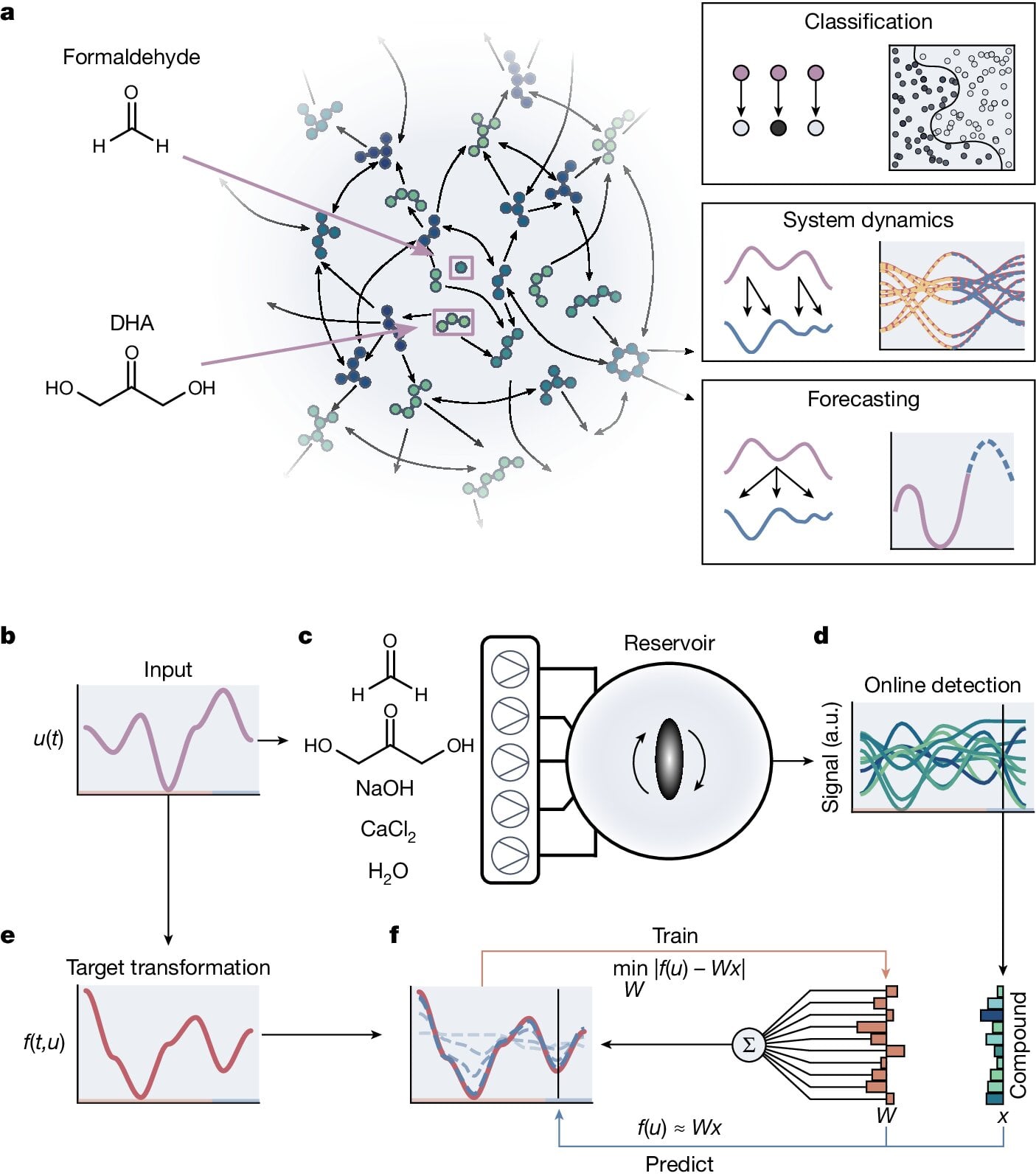
Researchers at Radboud University have demonstrated that the formose reaction, a complex self-organizing chemical reaction network, can perform computational tasks such as nonlinear classification and complex dynamics prediction. This approach leverages the inherent properties of chemical systems for computation, potentially bridging the gap between artificial systems and biological information processing. The study, published in Nature, highlights the potential for scalable and flexible molecular computing, with implications for the origins of life and neuromorphic computing.
"Intel Introduces World's Largest Neuromorphic Computer with 1.15 Billion Neurons"
technology2 years ago

"Intel Introduces World's Largest Neuromorphic Computer with 1.15 Billion Neurons"

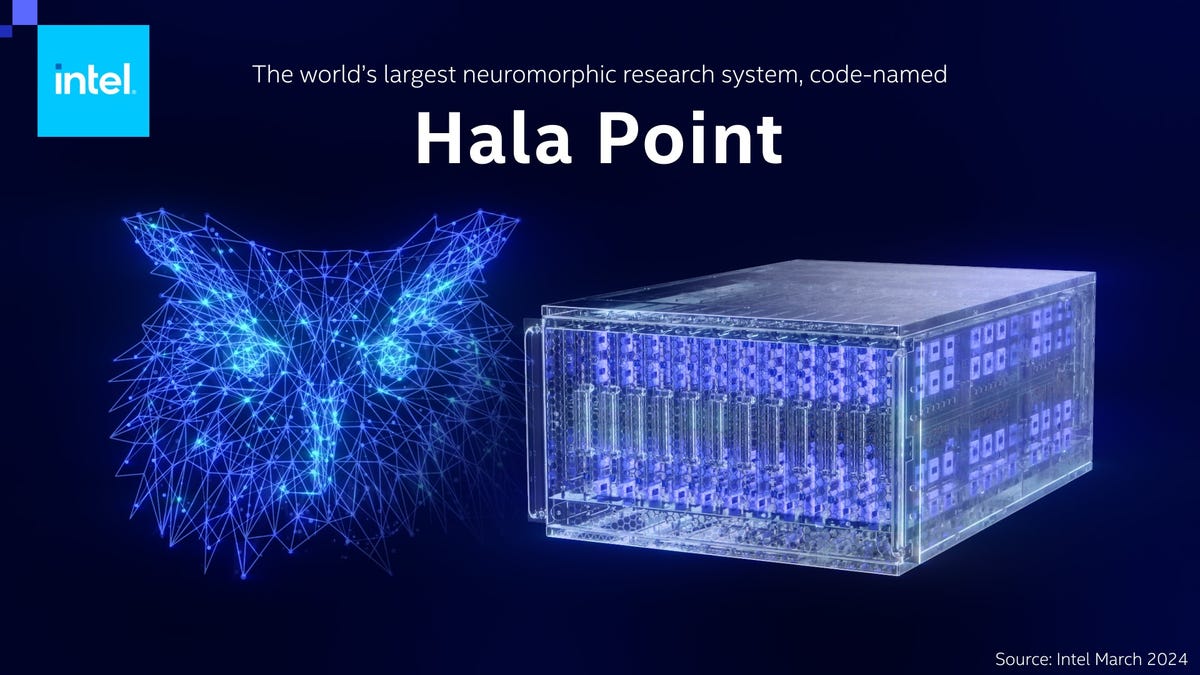
Intel has unveiled "Hala Point," the world's largest neuromorphic computer designed to mimic the human brain, powered by 1,152 Loihi 2 processors. This system can perform AI workloads 50 times faster and use 100 times less energy than conventional computing systems. Neuromorphic computing differs from conventional computing due to its architecture, using spiking neural networks to process data in parallel, similar to neurons in the brain. Hala Point achieved high energy efficiency for AI workloads and is a research prototype that could lead to future commercially deployed systems, potentially impacting AI deployments and large language models.

"Intel Unveils Hala Point: World's Largest Neuromorphic Computer with 1.15 Billion Neurons"
technology2 years ago

"Intel Unveils Hala Point: World's Largest Neuromorphic Computer with 1.15 Billion Neurons"

Intel has unveiled Hala Point, the world's largest neuromorphic computer, featuring 1,152 Loihi 2 chips that enable a total of 1.15 billion artificial neurons and 128 billion synapses. The system, developed in partnership with Sandia National Laboratories, aims to advance brain-scale computing research and solve complex problems in various fields. Intel's focus on neuromorphic computing has led to significant energy efficiency and speed gains, with potential applications in areas such as drug development and high-performance computing. While commercialization is a couple of years away, Intel is committed to providing substantial value and differentiation from existing technologies when it does happen.

"Intel and Sandia National Labs Unveil World's Largest Neuromorphic Research System, Hala Point"
technology2 years ago

"Intel and Sandia National Labs Unveil World's Largest Neuromorphic Research System, Hala Point"

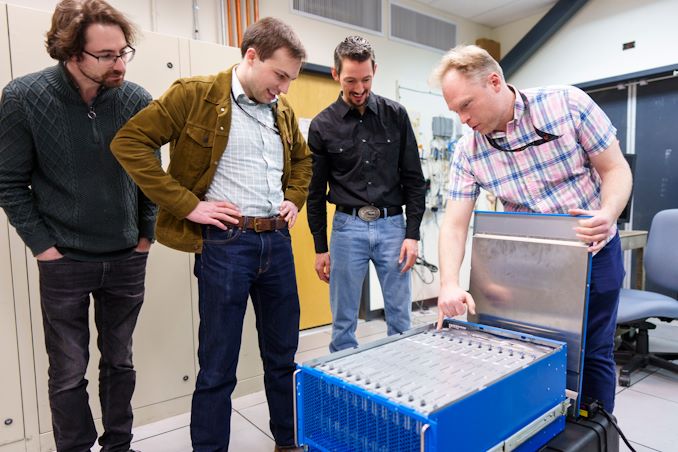
Intel and Sandia National Laboratories have unveiled the Hala Point neuromorphic system, featuring 1.15 billion neurons and 1152 Loihi 2 processors, making it the largest neuromorphic system in the world. The system aims to advance research into neuromorphic computing, with a focus on AI inference and energy efficiency. Sandia plans to use the system for large-scale neuromorphic computing research, while Intel is exploring the potential for continuous learning and dataset augmentation. The ultimate goal is to develop commercial systems and refine algorithms for larger workloads.

"Merge of Spintronics and Brain-Inspired Computing Advances Computational Power"
technology2 years ago

"Merge of Spintronics and Brain-Inspired Computing Advances Computational Power"

Tohoku University researchers have developed a theoretical model for energy-efficient, nanoscale computing using spin wave reservoir computing and spintronics technology, paving the way for advanced neuromorphic devices with high-speed operations and applications in fields like weather forecasting and speech recognition. The innovation, detailed in npj Spintronics, harnesses the unique properties of spintronics technology to potentially usher in a new era of intelligent computing, bringing us closer to realizing a physical device for practical use in various applications.

"Advancements in Neuromorphic Computing: Mimicking Human Brains with New Hardware and AI Circuitry"
technology2 years ago

"Advancements in Neuromorphic Computing: Mimicking Human Brains with New Hardware and AI Circuitry"

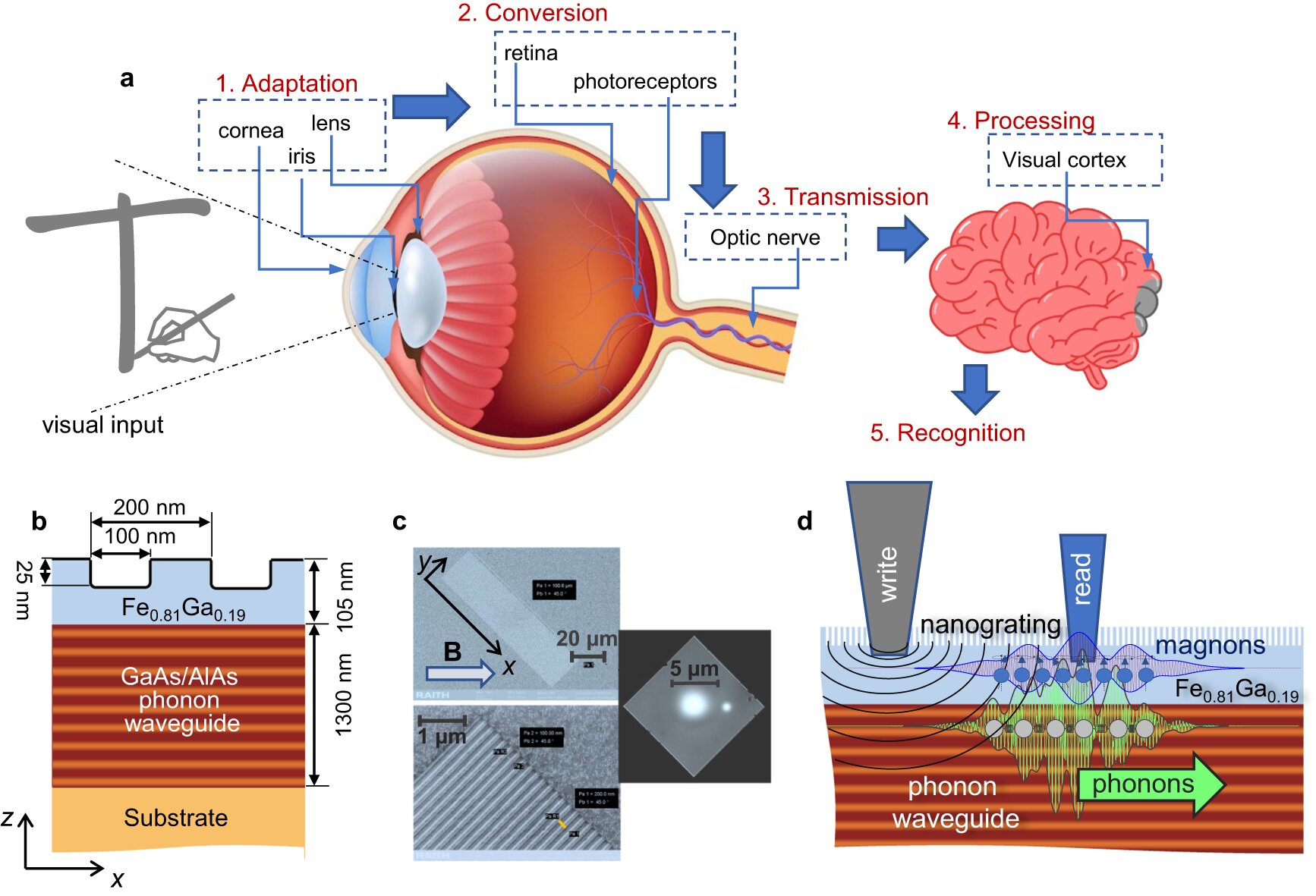
An international research team has developed a new concept for neuromorphic computing inspired by human vision, utilizing on-chip phonon-magnon reservoirs to process information with high efficiency and density. The concept, featured in Nature Communications, aims to mimic the brain's ability to process complex signals and form rapid responses. By utilizing acoustic waves and spin waves mixed in a small chip, the system shows potential for significant breakthroughs in emulating natural reservoir computing directly with analog signals, bringing future artificial intelligence systems closer to the efficiency of the human brain.

"Revolutionary Transistor Unleashes Human-Like Learning Abilities at Room Temperature"
technology2 years ago

"Revolutionary Transistor Unleashes Human-Like Learning Abilities at Room Temperature"

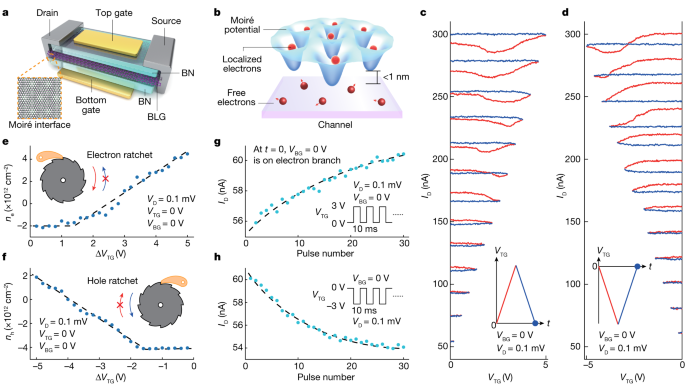
Researchers have developed a moiré synaptic transistor that exhibits room-temperature neuromorphic functionality. The transistor, based on moiré heterostructures, demonstrates the potential for integrating memory and computing in a single device. This advancement could pave the way for more efficient and powerful neuromorphic computing systems.