Florida voters approved Amendment 3, which raises the homestead tax exemption to $250,000 by 2028. While this lowers bills for homeowners, it threatens to drain local government revenue by billions, forcing cities to cut services or seek state funding.
Florida voters approved Amendment 3 on November 3, 2026, with 62% support, significantly increasing property tax exemptions for homeowners. The measure takes effect January 1, 2027, but experts warn it will cause a $12 billion annual revenue loss for local governments by 2031-32, forcing cuts to public safety, infrastructure, and services. Governor-elect Byron Donalds plans further tax reforms, while local officials face immediate budget crises.
Florida Republicans retained control of the governor’s office and state legislature in the 2026 midterms, but margins narrowed significantly. Democrats ended the GOP supermajority in the state House and gained a Senate seat. Analysts attribute the GOP hold to a large voter registration lead, high fundraising, and the passage of Amendment 3, which lowered property taxes.
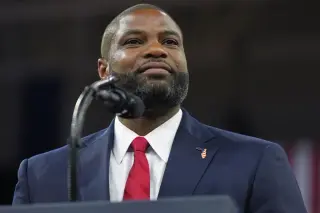
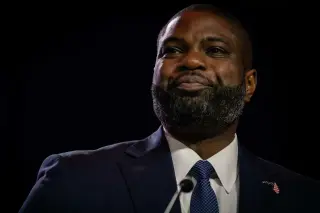
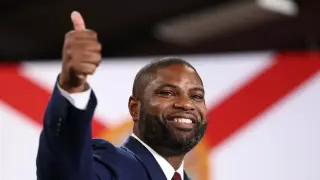
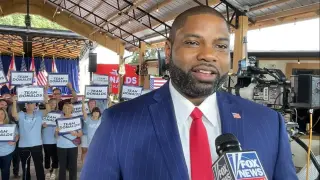
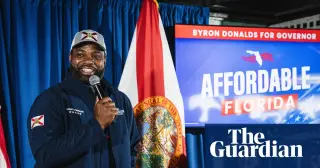
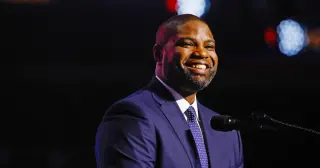
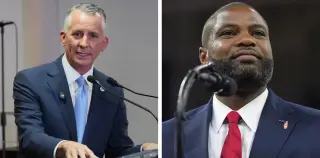
Byron Donalds, a three-term congressman and ally of President Trump, has won the 2026 Florida gubernatorial election, becoming the state’s first Black governor. He defeated Democrat David Jolly by a narrow margin of 107,695 votes statewide, securing 50.02% of the vote. Donalds, who succeeds term-limited Governor Ron DeSantis, emphasized meritocracy and job performance over race in his victory remarks. The win makes him the fifth Black governor in the U.S., joining four Democrats in Georgia, Wisconsin, Nevada, and Maryland. While Donalds celebrated the historic milestone as a source of pride for Black Americans, his victory was marked by significant divisions within the Black community, with some voters supporting him for economic policy and others opposing him due to his conservative stance on immigration and diversity initiatives.
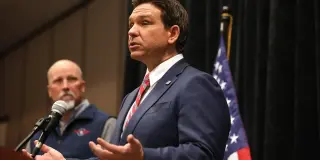
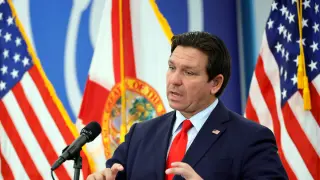
Florida Governor Ron DeSantis described the 2026 midterm results as an 'extinction-level event' for Republicans, noting that Democrats seized control of both chambers of Congress and swept key red states like Texas. DeSantis credited Florida’s massive GOP base and a successful property tax amendment for keeping the state under Republican control, calling it the 'last main anchor standing.' He blamed the national defeat on congressional inaction, culture war focus, and voter frustration with economic issues, warning that the party may not regain unified power in Washington for years.
Byron Donalds has won the 2026 Florida gubernatorial election, defeating Democrat David Jolly in a close contest. Donalds, a three-term congressman from southwest Florida, becomes the first Black Republican governor in U.S. history and the first Black governor of Florida. He will succeed term-limited Governor Ron DeSantis, continuing the state's conservative agenda. Donalds secured the Republican nomination after winning a crowded primary and received an early endorsement from President Trump, despite recent efforts to distance his campaign branding from the president due to declining approval ratings. The victory marks a significant shift in Florida politics, where Donalds will lead the nation's third most populous state with a focus on affordability and safety.
Byron Donalds has won the 2026 Florida gubernatorial election, becoming the first Black Republican governor in U.S. history. He defeated Democrat David Jolly in a close race, succeeding term-limited Governor Ron DeSantis. Donalds, a three-term congressman from southwest Florida, secured the nomination after winning a crowded Republican primary and received an early endorsement from President Trump. His victory follows a campaign focused on affordability and continuing conservative policies, despite recent efforts to distance his branding from the president amid declining approval ratings. The win marks a historic shift in Florida politics, where Donalds will now lead the nation's third most populous state.
Republican Byron Donalds is projected to become Florida's first Black governor, defeating Democrat David Jolly. The Republican Party retained all three statewide cabinet positions, including Attorney General James Uthmeier, Chief Financial Officer Blaise Ingoglia, and Agriculture Commissioner Wilton Simpson, each winning by approximately two percentage points. Voters approved Amendment 3, which increases the homestead exemption and clears the way for property tax cuts, but rejected Amendment 1, which would have expanded the state's rainy day fund. In Congress, Democrats won key South Florida seats, including Districts 20, 22, and 25, while Republicans held Districts 1, 2, 3, 4, and 28. Miami voters approved a $450 million bond for public safety infrastructure but rejected a private marina redevelopment plan on Virginia Key.
Republican Byron Donalds has won the Florida governorship, defeating Democrat David Jolly to become the state's first Black governor. Donalds secured victory with a massive financial advantage and endorsements from President Donald Trump and outgoing Governor Ron DeSantis. The race highlighted tensions between national party strategies and local economic concerns, particularly regarding housing costs and the Iran war. Donalds will succeed DeSantis in January, extending Republican control of the state for nearly three decades.
Republican Byron Donalds won the Florida governor’s race, becoming the state’s first Black governor, while incumbent Ashley Moody retained her U.S. Senate seat. Democrats broke the Republican supermajority in the state House and won key congressional districts, but Republicans maintained control of the Senate and most cabinet positions. Amendment 3, which lowers property taxes, passed with approximately 62% support.
Republican Byron Donalds has defeated Democrat David Jolly to become Florida’s next governor, extending the GOP’s control of the state’s highest office for nearly three decades. Donalds, who raised $130 million and secured early support from President Trump, was widely favored in a state that has not elected a Democratic governor since 1994. Although Jolly narrowed the gap compared to previous contests, he lacked national Democratic support and faced criticism for refusing to debate his opponent. Donalds will be sworn in next year, becoming Florida’s first Black governor and the fifth consecutive Republican to hold the position.
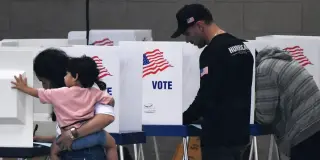
Republican Ashley Moody won the Florida U.S. Senate special election, defeating Democrat Angie Nixon. In the governor's race, Democrat David Jolly leads Republican Byron Donalds, particularly in Osceola County. Heavy flooding disrupted voting in Broward and Brevard counties, but officials reported smooth operations. Key House races saw mixed results, with Democrats winning Districts 20, 22, 24, and 25, while Republicans retained Districts 27 and 28.
Florida Republicans are experiencing significant anxiety regarding the 2026 midterm elections due to unexpectedly low early voting turnout. Despite an 11-point registration advantage, GOP early ballot margins are lagging behind previous cycles. Key concerns include the governor’s race, where incumbent Byron Donalds faces a tight contest against Democrat David Jolly, and potential losses in state House seats that could jeopardize the party’s supermajority. While Democrats show higher enthusiasm and turnout among minority and younger voters, Republicans maintain a financial and organizational edge, hoping for a traditional Election Day surge to overcome early deficits.
With the Nov. 3 Florida gubernatorial election approaching, polls show a statistical tie between Republican Byron Donalds and Democrat David Jolly despite Donalds’ massive fundraising advantage. The candidates sharply diverge on three key issues: vaccine mandates, universal school vouchers, and local home rule authority. Donalds supports expanding executive power and current conservative policies, while Jolly advocates for evidence-based health measures and stricter oversight of education spending.
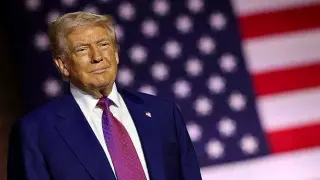
President Donald Trump held a campaign rally at Florida Gulf Coast University’s Alico Arena in Fort Myers on Friday, October 23, 2026, supporting Republican gubernatorial candidate Byron Donalds. The event, which occurred less than two weeks before the November 3 midterm elections, drew significant security and traffic disruptions. Trump addressed topics including the economy, energy prices, and the war with Iran, while also criticizing Democratic gubernatorial candidate David Jolly. The visit included appearances by Florida Attorney General James Uthmeier, U.S. Senators Rick Scott and Ashley Moody, and HHS Secretary Robert F. Kennedy Jr. Following the rally, Trump departed Southwest Florida International Airport, with plans to vote early in Palm Beach County on Saturday.