Los Angeles Lakers reportedly hired Rohan Ramadas, formerly the Pelicans’ VP of strategy and operations, as an assistant general manager focused on strategy, analytics and the salary cap, bringing AI-driven modeling to the front office; a second assistant GM focused on scouting is also expected to be added.
After the Spurs upset, Minnesota’s 2026 offseason centers on cap management: six core players (Edwards, Gobert, Julius Randle, Jaden McDaniels, Naz Reid, Donte DiVincenzo) are under contract for next season, totaling about $188.9M with Edwards at $48.9M, while luxury-tax projections loom around $201M–$222M across the first, second, and other thresholds. The club may pursue trades rather than a teardown, with Reid and Randle carrying $23.3M and $33.3M options and a $2.4M team option on Julian Phillips; Jaylen Clark is a restricted free agent. Ayo Dosunmu stands out as a priority free agent, and Minnesota will weigh re-signing backups Bones Hyland and Jaylen Clark and pursuing a ball-handler and floor-spacing shooter—candidates include CJ McCollum, Luke Kennard, Tim Hardaway Jr., and Jock Landale—while re-signing Kyle Anderson remains sensible.
MLB and the MLB Players Association opened the 2026 collective bargaining talks in New York with a preliminary session that outlined each side’s positions; formal proposals will come later. With the current CBA expiring December 1, 2026, negotiations could become contentious given past lockouts and ongoing debates over a league salary cap and floor, revenue sharing, and how to balance big- and small-market clubs, even as the sport enjoys rising popularity and looming broadcast deals.
The MLS Players Association released 2026 salary data showing Lionel Messi earning $28.3 million in guaranteed compensation, far higher than any other MLS player and nearly the entire league payroll; the numbers highlight how much clubs rely on Designated Players (DPs) to chase big salaries, with cap room managed via General Allocation Money. Salaries exclude transfer fees and other non-wage costs, so totals don’t reflect transfers like Philadelphia Union’s $4.5 million signing Ezekiel Alladoh. Philadelphia is the lowest-spending club by salary, while the top earners include Son Heung-min, Rodrigo De Paul, Chucky Lozano, Miguel Almirón, Emil Forsberg, Sam Surridge, Riqui Puig, Jonathan Bamba and Hany Mukhtar. The data provides transparency but isn’t the full financial picture of MLS teams.
Trent Williams signed a two-year, $50 million extension ($48.5M guaranteed) with a structure including void years to spread a $56.27M signing bonus over five years, plus potential 2027- and 2028-related guarantees and roster bonuses. Post-draft, the 49ers hold the NFL's top cap space (about $71.27M in cap space; effective space ~ $67.8M), but they'll be in the red in 2027 and only mildly solvent in 2028, making rollover space critical to their long-term balance sheet rather than a big free-agent splurge next year.
The Celtics head into a cap-constrained offseason with about $188 million guaranteed and cap lines at the first and second aprons ($209M and $222M). They own 27th and 40th picks, have nine free agents (one unrestricted: Nikola Vučević) and several players on team-option minimum contracts, plus multiple traded-player and other salary exceptions. Boston’s toolbox includes five TPEs, a $5.5M bi-annual exception, and a $15M full mid-level exception, with the option to use a taxpayer mid-level. With a June 29 deadline to decide options, Boston must navigate cap, tax, and hard caps to shape the roster around its core.
The Cincinnati Bengals did not exercise the fifth-year option on edge rusher Myles Murphy to preserve salary-cap flexibility, signaling a possible long-term deal as Murphy showed breakout potential with 5.5 sacks last season; with a retooled defense, the team is prioritizing cap management while Murphy continues to develop under new coordinator Al Golden and a strengthened front.
Facing a tight salary-cap situation, the Vikings traded Jonathan Greenard to the Philadelphia Eagles for two third-round picks and a new four-year, $100 million contract for Greenard. Interim GM Rob Brzezinski said the move was very difficult and driven largely by economics, noting Greenard's leadership and value but that cap realities forced reallocating resources. The deal frees about $12 million in cap space this year and roughly $22 million next year, while enabling third-year pass rusher Dallas Turner to grow; the return included the No. 98 pick used on Jakobe Thomas and a 2027 third-rounder. Vikings coach Kevin O'Connell said he spoke with Greenard and wishes him well, emphasizing the decision was about financial constraints and fit rather than his value.
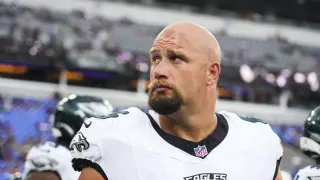
The Eagles are expected to trade A.J. Brown to the Patriots after June 1 to split a $40 million cap hit between 2026 and 2027; the deal isn’t done and could be derailed or outbid, but Patriots draft picks (2027/2028) are likely to be involved, aided by Mike Vrabel’s previous connection to Brown.
San Diego's $3.9 billion sale of the Padres to José Feliciano and Kwanza Jones—a league-record price—is framed as a potential turning point for MLB's next bargaining agreement, highlighting strong market demand and challenging the case for a salary cap while boosting expectations for centralized media rights, expanded gambling revenue, and future expansion fees that could benefit smaller‑market clubs.
Dolphins GM Jon-Eric Sullivan says talks with running back De’Von Achane on a contract extension are trending positively, with Achane seeking a deal as he nears the end of his rookie contract. Talks on extensions for center Aaron Brewer and linebacker Jordyn Brooks are ongoing but not imminent. The team won’t pursue a big summer free-agent splurge despite potential cap space around $22 million by June 2, instead prioritizing signing the draft class and maintaining a best-player-available approach, with input from Troy Aikman and Dan Marino and an emphasis on versatility in the roster.
Buffalo Bills fans are nearly evenly divided (51% yes, 49% no) on pursuing Dexter Lawrence II in this year’s draft, weighing his potential defensive impact against an $18+ million 2026 salary and the cost of a likely No. 26 overall pick. Lawrence, currently with the Giants and seeking a move amid contract tensions, would require cap work and could reshape long-term plans, prompting debate over whether the upside justifies the price.
Green Bay traded wideout Dontayvion Wicks to Philadelphia for a 2025 fifth-round pick (No. 153) and a 2027 sixth-rounder, plus Wicks’s one-year extension with the Eagles through 2027. The move creates about $2.6 million in salary-cap space (roughly $25 million now) and frees up room to extend players like Christian Watson, Jayden Reed, or Tucker Kraft. Wicks’ 2025 production was modest (30 receptions, 332 yards, 2 TDs), though he had a standout Thanksgiving game against Detroit. With Wicks out, Matthew Golden’s opportunities should rise in Year 2, and Green Bay adds eight picks this year (one each in the second, third, fourth, sixth rounds and two in the fifth and seventh rounds) plus a 2027 sixth-rounder, strengthening Gutekunst’s draft capital while leaving no current first-round pick due to past trades.
Kaleb McGary, the Falcons’ longtime right tackle and 2019 first-round pick, retires after a season-ending injury in 2025; his exit leaves Atlanta with a gapping hole at right tackle, shifts responsibility to Storm Norton and Elijah Wilkinson, and opens roughly $14 million in cap space for 2026–27, prompting a likely search for free-agent or trade additions.
The piece argues that Major League Baseball’s looming 2027 lockout stems from a fundamental clash over implementing a salary cap. Owners, led by Commissioner Rob Manfred, want caps to curb spending and improve competitive balance and long-term media-value, while the MLB Players Association opposes limiting player pay. Public support for a cap is high, but a season cancelation remains possible if a deal isn’t reached. The author suggests a compromise—likely tweaks to the luxury tax and spending rules—will be necessary before the 2028 media-rights deals reshape the economics of the sport, warning that fear could push both sides toward a pragmatic settlement rather than prolonged conflict.