Tag

Space Elevator

All articles tagged with #space elevator

Graphene-powered space elevator edges toward reality, but cost and risks loom.
technology1 month ago

Graphene-powered space elevator edges toward reality, but cost and risks loom.

Researchers at the International Space Elevator Consortium say polycrystalline graphene could serve as a 62,000-mile tether for a space elevator, enabling climbers to reach a counterweight beyond geostationary orbit. If built, payloads could reach space at about 16,000 mph, with Moon missions potentially taking ~14 hours and Mars trips ~61–120 days depending on planetary alignments. Yet major hurdles remain: manufacturing a tether that long and withstands debris, safety considerations, and a hefty price tag—roughly $15 billion for a robotic first phase. Even optimistic timelines suggest 10–20 years to complete, with returns likely focused on cargo before people. Sources: New York Post, NDTV.
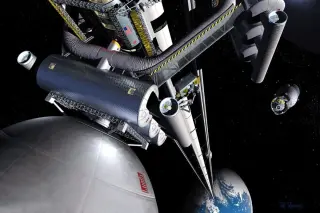
Graphene breakthrough nudges space elevator dream toward reality
science1 month ago

Graphene breakthrough nudges space elevator dream toward reality

A breakthrough from the International Space Elevator Consortium proposes polycrystalline graphene as a tether for a future space elevator, potentially ferrying cargo from the equator to beyond GEO and enabling rapid trips to the Moon or Mars; while a 1,000-meter graphene test and optimistic projections exist, experts warn real-world construction would take decades and face cost, debris and engineering hurdles.

Space elevators: could we climb to orbit on a 100,000-km tether?
technology3 months ago

Space elevators: could we climb to orbit on a 100,000-km tether?

A space elevator could, in theory, haul cargo and passengers to orbit via a ground-anchored tether extending ~100,000 km, balanced by a counterweight and powered by electricity from solar or ground-based sources. It promises dramatically cheaper, cleaner access to space, but faces huge hurdles: materials stronger than anything we can currently manufacture (carbon nanotubes at requisite lengths), relentless orbital debris, and massive political and financial coordination requirements. For now it remains a visionary concept rather than an imminent reality.

"Riding the Space Elevator: A Bizarre Plan to Transport Passengers to the Cosmos"
space-technology2 years ago

"Riding the Space Elevator: A Bizarre Plan to Transport Passengers to the Cosmos"

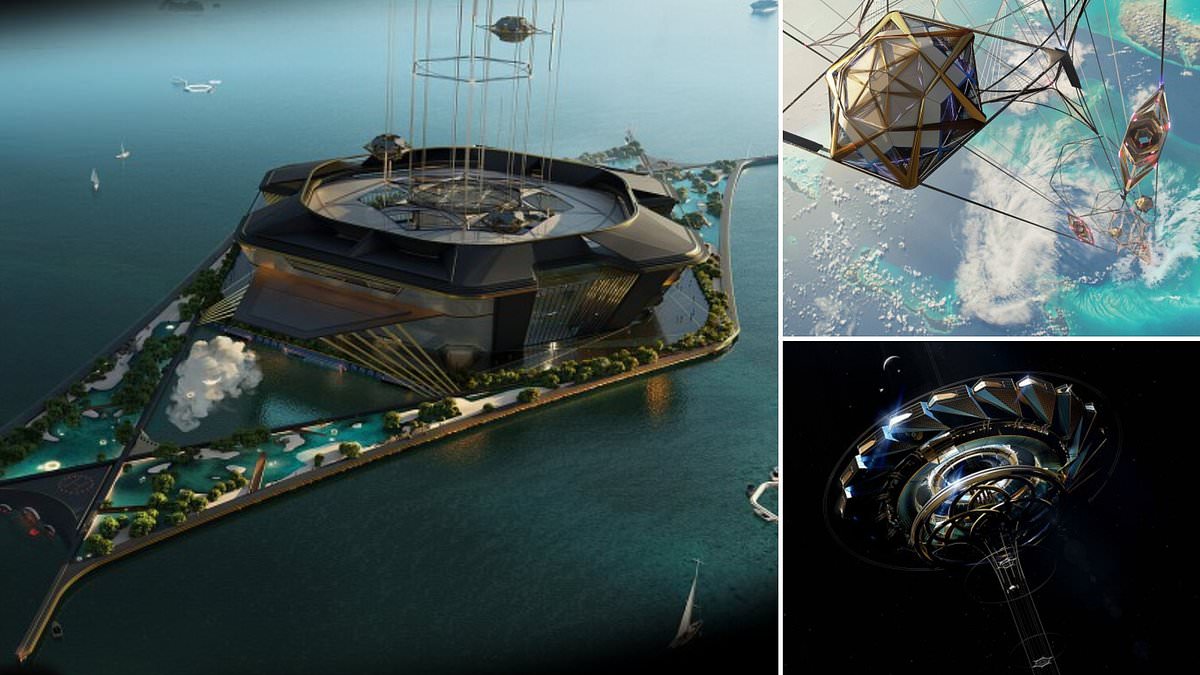
Architect Jordan William Hughes has ambitious plans for a 'space elevator' called Ascensio, which aims to revolutionize space travel by replacing rockets with a cable connecting Earth to an orbiting satellite. The elevator would transport passengers and cargo to a space station 22,370 miles above Earth, offering luxurious amenities and a gateway to other parts of the solar system. While the technology is not yet feasible due to the need for new materials, Hughes remains optimistic about the future of space architecture and hopes for a different way of doing things to make his vision a reality.

"Captivating Insights: A Review of 'Counterweight' by Djuna"
book-review3 years ago

"Captivating Insights: A Review of 'Counterweight' by Djuna"

"Counterweight" by Djuna is a fast-paced cyberpunk novel that explores corporate conspiracies and the implications of advanced technology, including a space elevator built by a multinational conglomerate. Set in a fictional island transformed into a global hub for space exploration, the story follows a high-level security operative tracking a resistance group. The protagonist becomes entangled in a web of intersecting conspiracies, questioning agency and identity in a world where neural implants and connectivity blur the lines between reality and manipulation. The novel also delves into questions of inheritance and the potential for companies run by artificial intelligence to surpass human control.

The Reality of Space Elevators is Approaching
space-technology3 years ago

The Reality of Space Elevators is Approaching

The concept of a space elevator, which could bring the cost of sending a payload to any Earth orbit as low as $100 per pound, has been around since the 1950s. However, the biggest challenge has been finding a material strong enough to build the tether. Carbon nanotubes were once thought to be the solution, but their synthesis has proven difficult. Other options, such as Kevlar fibers and graphene, are being explored. Despite progress, the need for a space elevator may have evaporated as reusable rockets and alternative launch technologies, such as SpinLaunch's centrifuge, continue to develop.