Tag

Tantalum

All articles tagged with #tantalum

Krypton sputtering unlocks low-temperature Ta films for scalable quantum devices
technology10 days ago

Krypton sputtering unlocks low-temperature Ta films for scalable quantum devices

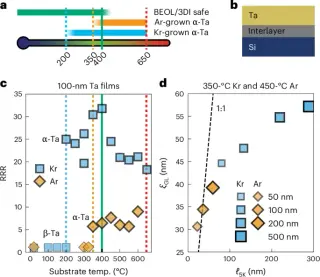
Researchers show krypton gas in magnetron sputtering enables cubic bcc tantalum films on silicon at around 200°C, broadening the fabrication window for quantum hardware. These krypton-sputtered Ta films deliver low microwave losses in resonators, while higher-temperature Ta films suffer from Ta–Si intermixing and higher losses. Notably, transmon qubits fabricated with these films achieved a compact 20‑μm capacitor gap and quality factors up to 16.9 million, indicating a scalable route to high-performance superconducting quantum devices.


China develops 2,400°C-tolerant tantalum alloy for extreme-tech applications
military1 month ago

China develops 2,400°C-tolerant tantalum alloy for extreme-tech applications

Chinese researchers have created a tantalum-based alloy that can retain strength up to 2,400°C due to a engineered microstructure, potentially enabling components for hypersonic aircraft, rockets, spacecraft thermal protection systems and nuclear reactors, though commercialization will depend on cost, manufacturability and long-term durability.

Antiferromagnetic light switch could turbocharge processors with little heat
technology3 months ago

Antiferromagnetic light switch could turbocharge processors with little heat

A new non-volatile switching element built from ultrathin tantalum and Mn3Sn on silica can switch a bit in about 40 picoseconds with minimal additional heat, offering a path to processors that could run far faster (potentially up to 1,000×) without the usual heat penalty and dramatically reducing data‑center energy use. Demonstrated in Science with stable operation over billions of cycles, the approach faces manufacturing, material supply, and scalability challenges, but a prototype chip could be ready by 2030.

New Quantum Processor Extends Information Retention 15-Fold Beyond Google and IBM
technology8 months ago

New Quantum Processor Extends Information Retention 15-Fold Beyond Google and IBM

Scientists at Princeton have developed a new method for creating superconducting qubits using tantalum, significantly increasing their coherence time to 1.68 milliseconds, which is three times longer than current systems, potentially enabling more powerful quantum computing operations. However, challenges such as the scarcity of tantalum remain before these advancements can be widely implemented.

Revolutionary Material Safeguards Fusion Reactor Walls by Absorbing and Releasing Hydrogen
science-and-technology2 years ago

Revolutionary Material Safeguards Fusion Reactor Walls by Absorbing and Releasing Hydrogen

Engineers at the University of Wisconsin-Madison have developed a new material using a cold spray coating technology that can withstand the harsh conditions inside a fusion reactor. The material, a tantalum coating on stainless steel, has shown excellent performance in extreme fusion reactor conditions and has the unique ability to trap hydrogen particles. This discovery could lead to more efficient and compact fusion reactors that are easier to repair and maintain. The cold spray process also allows for on-site repair of reactor components, reducing costs and downtime. The researchers plan to use this material in the Wisconsin HTS Axisymmetric Mirror (WHAM) experiment, which aims to develop a next-generation fusion power plant.

Tantalum's Potential for Quantum Processor Improvement.
quantum-computing3 years ago

Tantalum's Potential for Quantum Processor Improvement.

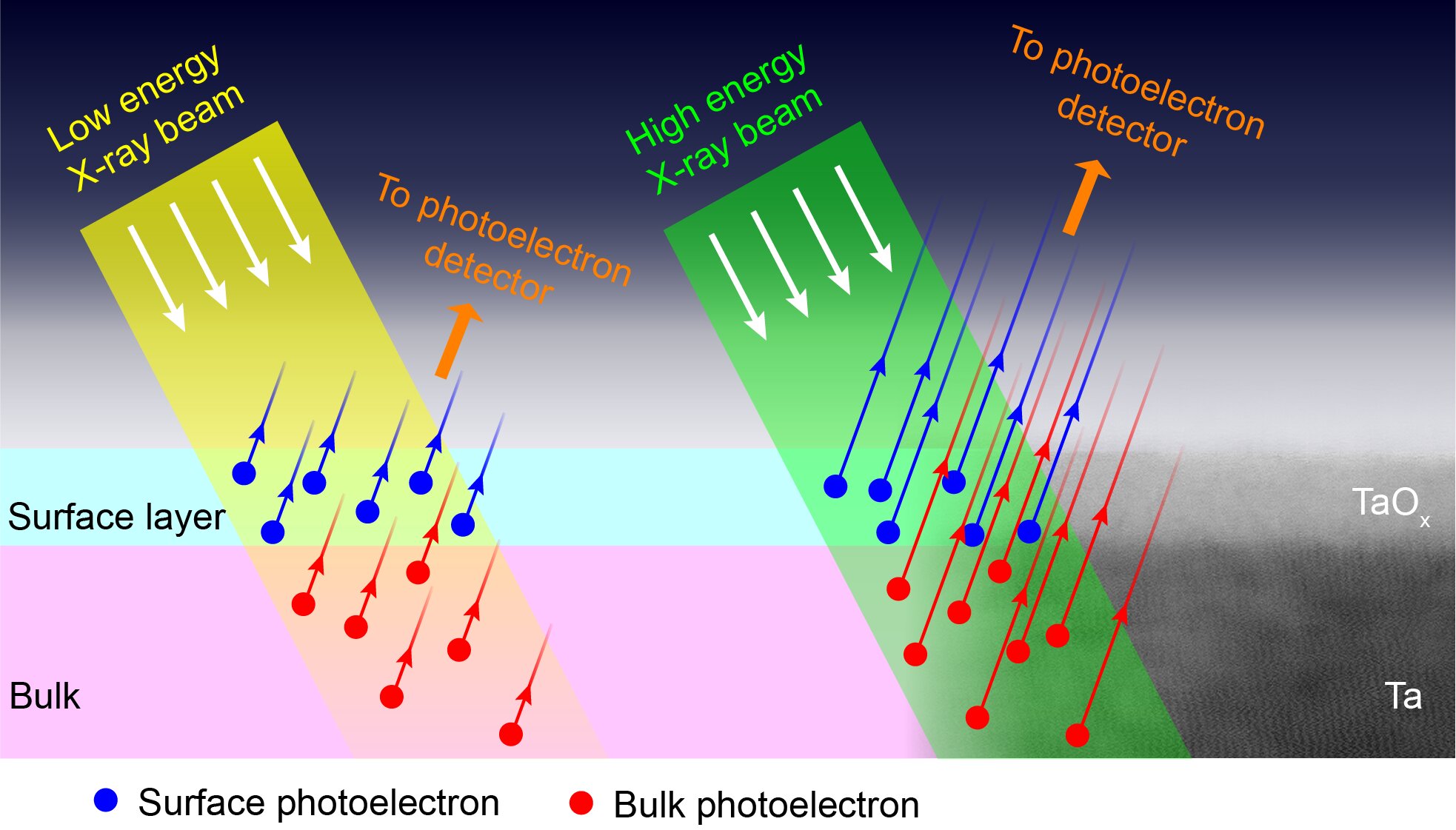
Researchers from the Center for Functional Nanomaterials, the National Synchrotron Light Source II, the Co-design Center for Quantum Advantage, and Princeton University have decoded the chemical profile of tantalum to understand why superconducting qubits made with tantalum perform better than those made with niobium and aluminum. They found that the thickness and chemical nature of the tantalum oxide layer on the surface of tantalum played a role in determining the qubit coherence. The study's results will provide key knowledge for designing even better qubits in the future.