Tag

Alloy

All articles tagged with #alloy

Tiny Hiroshima Grain Reveals a Novel Silicon-Rich Iron Alloy
science29 days ago

Tiny Hiroshima Grain Reveals a Novel Silicon-Rich Iron Alloy

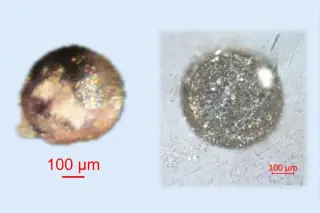
A glassy bead from Hiroshima Bay contains a microscopic grain that preserves a previously unknown silicon-rich alloy of iron, chromium, nickel, manganese, molybdenum, silicon, and aluminum, formed when city materials vaporized in the fireball and cooled rapidly. Using single-crystal X-ray diffraction, researchers found an ordered AlAu4-type structure, an unusual arrangement for iron-rich alloys, suggesting the blend of materials from urban debris can crystallize into exotic, highly ordered phases in seconds. While this could aid nuclear forensics by linking grains to blast conditions and temperatures, the finding is based on a single tiny grain and is not yet a practical alloy recipe.


Hiroshima debris reveals a novel alloy forged by the blast
science29 days ago

Hiroshima debris reveals a novel alloy forged by the blast

Researchers analyzing microscopic debris from Hiroshima Bay identified a previously unseen alloy consisting of iron, chromium, nickel, manganese, molybdenum, silicon, aluminum and other elements arranged in a complex cubic lattice. forged by the explosion’s extreme, rapid heating and cooling, these microdroplets act as tiny laboratories, preserving a record of conditions that existed for fractions of a second. The finding, published in Science Advances, broadens understanding of how extreme events can create novel materials and may shed light on related structures like quasicrystals.

Hiroshima blast spawns a brand-new metallic alloy, scientists report
science1 month ago

Hiroshima blast spawns a brand-new metallic alloy, scientists report

Researchers analyzing debris from the 1945 Hiroshima bombing have identified a previously unseen metallic alloy formed under the explosion’s extreme conditions. The alloy, consisting of iron, chromium, nickel, manganese, molybdenum, silicon and aluminum in a unique cubic lattice, acts like a tiny physical archive of the blast. This micro-scale “experiment” helps scientists understand how matter can organize under violent events and may inform broader studies of unusual materials such as quasicrystals and other extreme-condition formations.

China develops 2,400°C-tolerant tantalum alloy for extreme-tech applications
military1 month ago

China develops 2,400°C-tolerant tantalum alloy for extreme-tech applications

Chinese researchers have created a tantalum-based alloy that can retain strength up to 2,400°C due to a engineered microstructure, potentially enabling components for hypersonic aircraft, rockets, spacecraft thermal protection systems and nuclear reactors, though commercialization will depend on cost, manufacturability and long-term durability.

NASA develops 3D-printed superalloy for extreme environments and nuclear space travel.
science-and-technology3 years ago

NASA develops 3D-printed superalloy for extreme environments and nuclear space travel.

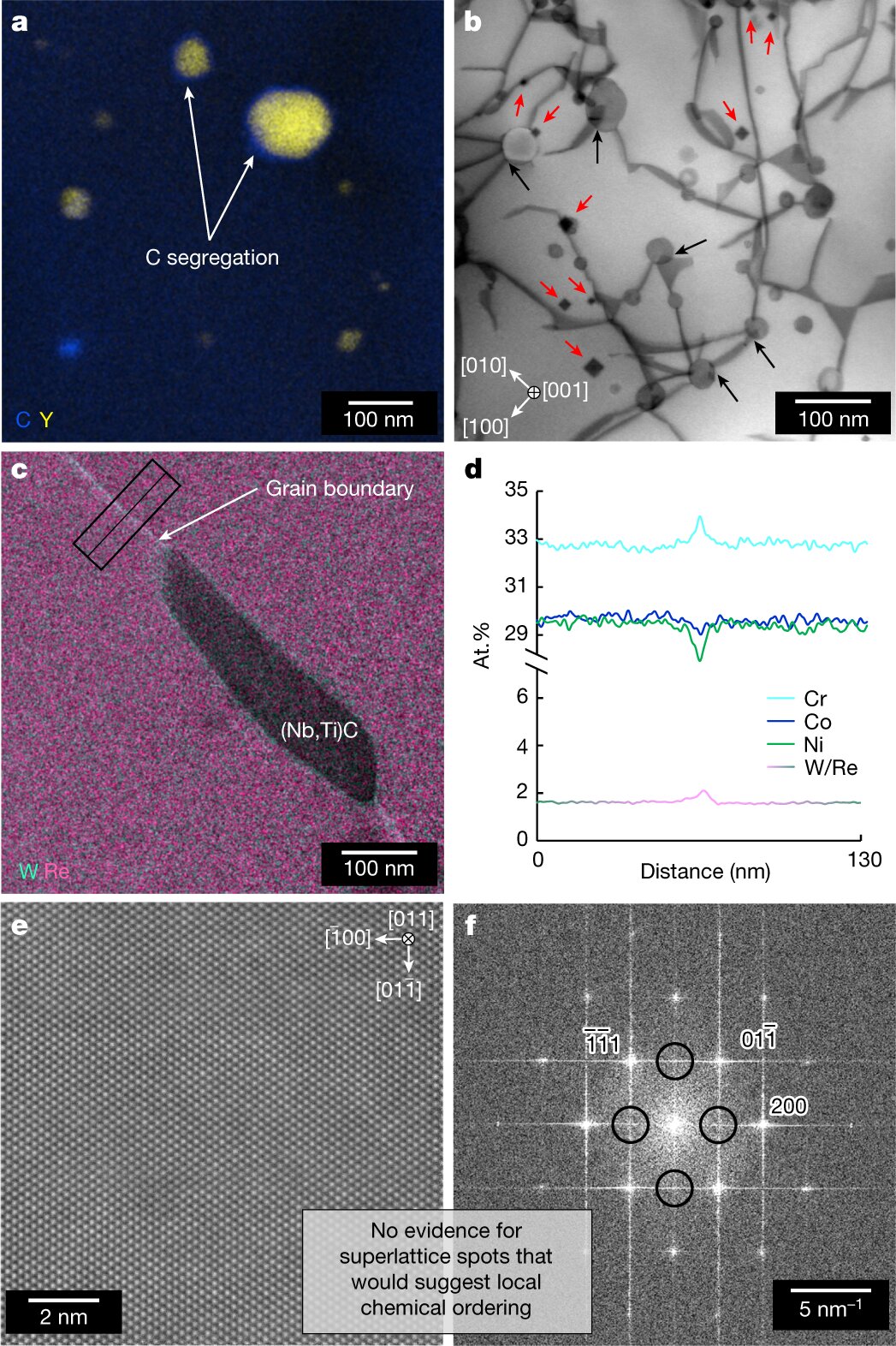
A team of materials scientists from NASA, The Ohio State University, and HX5 LLC have developed a 3D printing process that produces an alloy called GRX-810, which is much more resistant to stress than other alloys currently in use. The process involves adding a dusting of yttrium oxide powder to each layer of ink made of a mixture of cobalt, nickel, and chrome particles. The new alloy lasted for 6,500 hours in a creep test, compared to current top materials that typically last approximately 10 hours.