
Tag

Token Exfiltration

All articles tagged with #token exfiltration

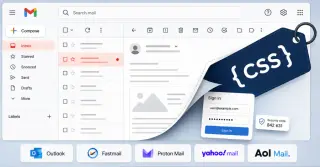
CSS Attacks Break Webmail Boundaries, Stealing Passwords and Tokens
cybersecurity17 days ago

CSS Attacks Break Webmail Boundaries, Stealing Passwords and Tokens

Researchers at Black Hat USA 2026 demonstrated CSS- and HTML-based attack chains that can escape the boundary of webmail interfaces across Outlook, Gmail, Fastmail, Proton Mail, Yahoo Mail, and AOL Mail to capture passwords, leak tokens, hijack UI actions, and even manipulate connected AI tools; while some vectors have been patched (Fastmail, Proton Mail), others (Outlook password chain, Gmail image-set() bypass) may still work; PoCs are public, and defense recommendations include isolating HTML emails in sandboxed iframes, tightening CSS validation with allow-lists, blocking dangerous selectors and attacker-controlled image requests, and restricting external resources.

Malicious npm and Android apps siphon OpenAI Codex tokens in a sophisticated supply-chain attack
security2 months ago

Malicious npm and Android apps siphon OpenAI Codex tokens in a sophisticated supply-chain attack

Security researchers uncovered a malicious supply-chain campaign targeting OpenAI Codex via a legitimate-looking npm package (codexui-android) and related Android apps. The npm package, linked to the friuns account (Igor Levochkin), secretly reads Codex credentials from ~/.codex/auth.json and exfiltrates access_token, refresh_token, id_token, and account ID to a server masquerading as Sentry (sentry.anyclaw.store). The refresh_token is long-lasting, enabling persistent access. The same actor also deployed Android apps (OpenClaw Codex Claude AI Agent and Codex) that run the npm package in a PRoot sandbox to harvest credentials. This underscores growing risks to AI developer tooling and software supply chains.

One-Click RCE Flaw Lets Attackers Hijack OpenClaw Gateways
technology6 months ago

One-Click RCE Flaw Lets Attackers Hijack OpenClaw Gateways

OpenClaw faces a high-severity vulnerability (CVE-2026-25253, CVSS 8.8) that enables one-click remote code execution via a crafted malicious link by exfiltrating the gateway token through a cross-site WebSocket hijack, granting attacker control of the gateway API and the ability to run commands on the host; a fix is in version 2026.1.29 (Jan 30, 2026).