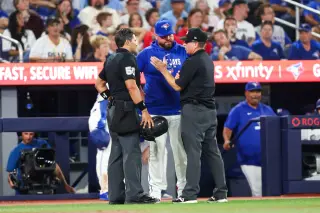
A 15-minute umpire-driven review of a baserunning sequence in the Red Sox–Blue Jays game produced one Boston run on a time-play, but Toronto still won 2-1, highlighting the oddities and delays involved in Rule 5.08 decisions and video reviews in 2026 MLB.
The Yankees criticized MLB for reemphasizing the pitch-clock rule without advance notice during a 10-inning loss to the Pirates after Jose Caballero was called for a late-clock violation; Aaron Boone called the enforcement 'embarrassing,' while MLB said umpires were instructed to enforce the rule following a prior benches-clearing incident, and Caballero defended his routine as not deception.
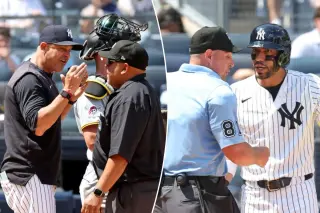
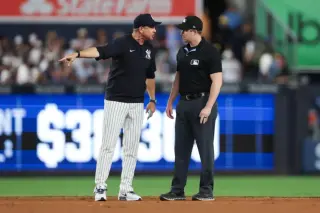
Yankees manager Aaron Boone was ejected after arguing a controversial ruling on Dalton Varsho’s diving catch that negated a hit in a 5-4 win over the Blue Jays; Boone had earlier protested a missed call on Anthony Volpe’s stolen-base attempt, and replay appeared to show Varsho trapped the ball. Boone acknowledged he overreacted; it was his second ejection of the season and 48th of his career.
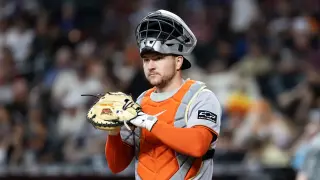
Automated balls and strikes (ABS) are already reshaping MLB. Catchers must frame pitches more subtly, reducing big glove moves and influencing when to challenge, which is changing how calls are made and challenged. Early data point to quieter dugouts, greater game-situation awareness, and a growing emphasis on strike-zone discipline, with walks and strikeouts climbing. A new, informal stat idea—“Terminators”—highlights catcher-driven strikeouts from challenges, led by Ryan Jeffers, while the piece also surveys other early ABS effects and related player and pitching notes. These are early trends and will evolve as the season progresses.
Baseball’s automated ball-strike system is already boosting fan engagement by creating anticipation around challenges and suspense when a call is shown on the scoreboard, turning calls into talking points and drawing more attention to the game.
Five days into the 2026 MLB season, the Automated Ball-Strike system has produced notable overturn rates among umpires led by Chad Whitson (7/7). Other high-percentage umpires include C.B. Bucknor (6/8), Chris Segal (7/10), Tripp Gibson (4/6) and Carlos Torres (4/7). Catchers dominated success on challenges, with Salvador Perez (4/4), J.T. Realmuto, and Austin Wells winning all theirs; Acuña Jr. and William Contreras each failed two challenges. The Royals and Diamondbacks benefited from overturned calls, while the Astros and Cardinals struggled, signaling early adjustments as ABS unfolds.
MLB's new ABS challenge system overturned six calls by home-plate umpire C.B. Bucknor in the Reds' 6-5 extra-inning win over the Red Sox, including back-to-back third-strike reversals on Eugenio Suárez; Cincinnati was 5-for-5 on challenges, Boston 1-for-3. Trevor Story's eighth-inning check-swing strike drew heat from Boston, and manager Alex Cora was ejected after supporting his player.
Umpire CB Bucknor’s day at Great American Ball Park drew attention as MLB’s Automated Ball-Strike System overturned six of eight challenged calls in Cincinnati, including two back-to-back strikes against Red Sox rookie Ryan Watson after Eugenio Suarez’s challenges. Bucknor also ejected Boston manager Alex Cora following a heated, non-reviewable check-swing call by Trevor Story, during a game the Reds won 6-5 in 11 innings after Dane Myers’ walk-off. Boston had tied it in the ninth on Wilyer Abreu’s homer. The affair underscored the ongoing debate over ABS and umpiring in baseball.
MLB’s automated ball-strike system overturned six of CB Bucknor’s calls in the Reds–Red Sox game, including a clearly low 2-1 pitch that Bucknor initially called a strike before the challenge overturned it by about 2.7 inches. The ABS system’s immediate challenges are correcting egregious misses, but they also spotlight Bucknor’s strike-zone inconsistencies and contribute to longer, more review-heavy games, a point of contention in the ongoing umpire-evaluation debate (with references to Angel Hernandez).
Major League Baseball is deploying the Automated Ball-Strike System (ABS) this season, using 12 Hawk-Eye cameras to judge pitches and allow teams two challenges per game (one additional in extra innings). A strike under ABS is defined by a height-based zone different from the traditional rule-book box, with calls potentially overturned on challenge success. Spring training data shows varying challenge success by teams and players, highlighting a push for greater accuracy but sparking concerns about humiliation for human umpires and the broader impact on the game. The ABS builds on a two-decade history of electronic umpire evaluation, aiming to correct egregiously missed pitches while leaving room for human judgment on near-calls.
MLB will test a semi-codified Check-Swing Challenge in the minors, allowing two challenges per team on swing/no-swing or ball/strike calls and using a 45-degree bat-angle criterion; trials in the Florida State League and Arizona Fall League in 2025 reduced strikeouts by over 3% and increased balls in play, with the Pacific Coast League starting midseason while the International League won’t apply the check-swing to that call (though umpires will use the same criterion). The move aims to reduce umpire discretion on check-swings and could affect batting strategy and MLB play, prompting debate on downstream effects.
An OutKick columnist argues the postgame uproar over the WBC semifinal’s final pitch is overblown, contending the pitch was close but not a disaster, that you don’t take a two-strikes pitch, and that blaming the umpire misses baseball’s inherent imperfection—despite ABS/AI tech—and the DR’s squandered chances. He also emphasizes the standard, team-wide message after losses and calls out the outrage mob for lacking baseball experience.
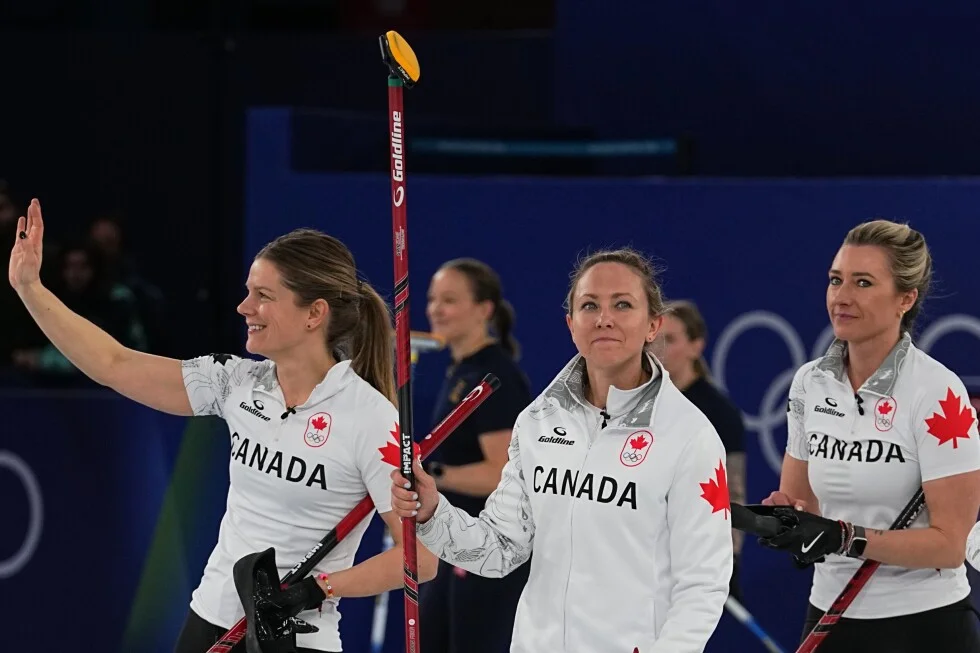
At the 2026 Winter Olympics in Cortina d’Ampezzo, curling officiating is under heightened scrutiny as unofficial umpires monitor calls more closely, including the removal of a British men’s team stone for an alleged violation that also irked Canada, signaling ongoing tensions over officiating in Olympic curling.
World Curling has pulled back from its intensified Olympic match surveillance after a period of controversy, briefly deploying umpires who were later withdrawn as penalties for alleged violations—an incident involving the British men’s team, with earlier penalties affecting Canada—highlighting a widening debate over how strictly Olympic curling should be monitored.
MLB will deploy the Automated Balls and Strikes (ABS) system this season, keeping a human plate umpire but enabling rapid challenges: each team gets two challenges per game, with an additional challenge in extra innings; if a challenge overturns a call, the result stands and challenges don’t accumulate. ABS reviews take precedence over other reviews on overlapping plays. The system uses a defined strike zone (the K zone) and includes safeguards against cheating. Catchers, pitchers, and fans will see changes in strategy and viewing as calls are reviewed more often.