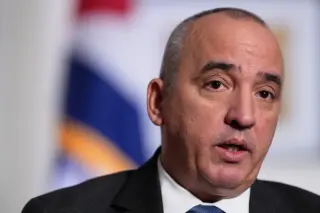
U.S. authorities indict a former Cuban president and five fighter pilots over the 1996 downing of two Brothers to the Rescue planes, highlighting long‑standing tensions between the U.S. and Cuba that followed the incident.
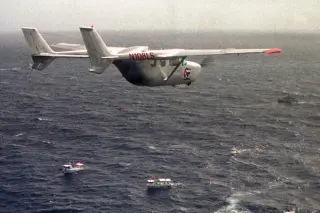
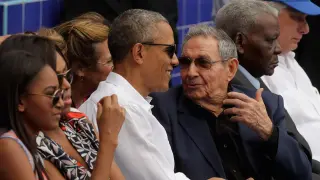
The Justice Department unsealed a superseding indictment charging Raul Castro and five co-defendants in the 1996 shootdown of two civilian planes that killed four Americans, reviving scrutiny of Barack Obama’s 2016 Cuba normalization and reviving debate over U.S.-Cuba policy; Trump lauded the indictment while Cuban-American critics argued the outreach legitimized the Castro regime.
Beijing called on Washington to stop coercion against Cuba after Raúl Castro was indicted on conspiracy to kill US nationals tied to the 1996 downing of two planes, as the U.S. widens sanctions on Cuba; China expressed support for Cuba and opposed external interference amid long-running US-Cuba tensions.
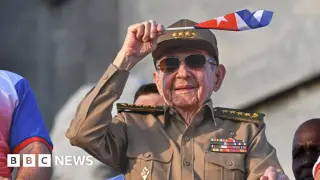
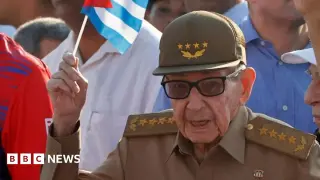
The U.S. Department of Justice unsealed charges against former Cuban President Raúl Castro, accusing him of conspiracy to kill U.S. nationals, destruction of an aircraft, and murder in the 1996 shootdown of Brothers to the Rescue planes, adding six defendants to a case dating back to 2003. Prosecutors say Castro approved deadly force and a retaliatory operation against the exile group. Cuba’s leader Díaz-Canel denounced the indictment as a political maneuver and cited U.S. sanctions and self-defense arguments, while analysts warn the move could strain U.S.-Cuba relations and potentially set the stage for further pressure or action.
The US Department of Justice has indicted former Cuban president Raúl Castro in connection with the 1996 downing of two Brothers to the Rescue planes; the charges have not yet been made public and appear to update an older case, with Acting Attorney General Todd Blanche set to outline details at a news conference, as Cuban-American lawmakers push for arrest and US-Cuba policy debates intensify amid Cuba’s economic crisis.
Secretary of State Marco Rubio marks Cuban Independence Day with a direct message to Cubans blaming the communist leadership and GAESA for shortages, promoting a 'new relationship' and aid channeled through trusted groups rather than the regime, as U.S. sanctions and a looming Castro indictment intensify pressure on Havana.
Former Defense Secretary Robert Gates tells CBS that Cuba’s biggest risk to the United States is its potential collapse and a Mariel Boatlift–style exodus, not an imminent military threat, as Washington maintains sanctions while signaling possible engagement with Havana.
U.S. prosecutors in Florida are pursuing criminal charges against Raul Castro, with a grand jury potentially indicting him as soon as next week; the investigation has examined the 1996 downing of Brothers to the Rescue planes amid escalating U.S.–Cuba tensions, though officials cautioned there is no public information yet about an indictment.
AP sources say the Trump administration is preparing to indict former Cuban leader Raúl Castro as a pressure tactic against Havana, signaling a tougher policy stance; the specific charges have not been disclosed.
Cuba’s government said it will accept a $100 million U.S. humanitarian aid package to address a dire fuel shortage and collapsing energy grid, with distribution through the Catholic Church and trusted NGOs; the move follows conflicting statements and renewed but uncertain U.S.-Cuba diplomacy amid protests and a deteriorating economy.
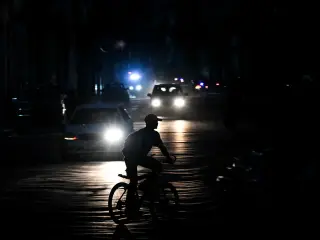
The United States offered $100 million in direct humanitarian aid to Cuba, to be distributed in coordination with the Catholic Church and other reliable organizations, as Cuba’s aging national power grid collapsed and eastern provinces went dark. Cuba said it would accept the aid if delivered in full conformity with universally recognized humanitarian practices, while a CIA-involved U.S. delegation visited Havana to discuss cooperation on economic and security issues. Cuban officials blame the U.S. blockade for worsening shortages, with outages disrupting daily life, hospitals, and supplies as authorities race to restore power.
The United States is reportedly planning to indict Raul Castro over the 1996 downing of planes operated by the Brothers to the Rescue humanitarian group, a move that would require a grand jury's approval and signals a new escalation in US–Cuba tensions amid a fuel blockade and ongoing regime-change pressure.
CIA Director John Ratcliffe’s high‑profile meeting with Cuba’s Interior Minister and the head of Cuban intelligence in Havana marks the clearest public milestone yet in two months of opaque U.S.–Cuba negotiations, unfolding as Cuba grapples with a severe fuel shortage and blackouts under an energy embargo. The talks come amid mixed signals from Washington about openness to diplomacy and aid conditioned on reforms, while Havana stresses bilateral cooperation and maintains its security apparatus, even as protests over living conditions intensify.
The U.S. is moving toward indicting Raul Castro, Cuba’s former president, in connection with the 1996 shootdown of Brothers to the Rescue planes; the indictment would require grand jury approval and is part of a broader push to pressure Cuban leadership amid ongoing U.S.-Cuba tensions.
Cuba says CIA Director John Ratcliffe met Havana’s interior ministry as the U.S. renews a $100m aid offer amid a severe fuel shortage blamed on the U.S. blockade; Havana says relief would come with lifting sanctions, while protests over blackouts continue and both sides discuss bilateral security cooperation.