
AI Sector Faces Turbulence as Nvidia Leadership Shifts and Anthropic Debuts
By tl;dr Editorial Team · Published
Listen to this briefing · 10 min
Podcast feedThe technology sector is navigating a period of significant structural change, driven by leadership transitions at major firms and aggressive capital raises. Simultaneously, macroeconomic pressures are tightening financial conditions, while scientific and environmental breakthroughs continue to reshape long-term infrastructure and ecological landscapes.
Technology and Markets
The AI industry is undergoing a major realignment following the resignation of Jensen Huang as CEO of Nvidia. Huang stepped down effective November 12, 2026, after a board investigation into personal conduct and security concerns. Colette Kress, the company’s CFO since 2013, has been appointed interim CEO, while Harvey C. Jones became the first board chair. Analysts warn that Huang’s departure exposes the fragility of the AI boom’s financing structure, which relied heavily on his personal credibility for deals like a $105 billion commitment for OpenAI. This shift may reduce the 'aggressive vendor financing' that characterized the industry, potentially leading to a slower but more sustainable growth phase.
This volatility is reflected in the initial public offering of Anthropic, which begins trading on the Nasdaq on November 19, 2026, under the ticker 'ANT'. The company priced its shares between $70 and $78, targeting a valuation of approximately $1.5 trillion. CEO Dario Amodei stated the company is 'not super fussed' about current market volatility, aiming for a valuation of $1.3 trillion to $1.45 trillion. The offering includes 825 million shares and a concurrent $26 billion private placement with major tech firms including AMD, Broadcom, Google, Microsoft, NVIDIA, and TSMC. Despite aggressive spending plans, including $65 billion in projected burn for 2027, the company maintains a strong cash position.
The financial strain on AI infrastructure is evident in the updated IPO prospectus of Nscale, a London-based neocloud. The company reported a $1.69 billion net loss for the first nine months of 2026 against $307.5 million in revenue. Nscale faces significant financing challenges to meet a $45 billion contract with Anthropic, requiring $10.0-10.5 billion for data center construction and $21-22 billion for compute equipment. The broader AI infrastructure sector experienced volatility following Huang’s resignation, highlighting the sensitivity of these investments to leadership changes.
In consumer technology, early Black Friday sales have slashed SSD prices as AI-driven memory shortages ease. The Samsung 990 PRO 2TB is available for $390, a 39% discount from its peak, while the WD Black SN850P 2TB is priced at $299.99, a 50% reduction. However, experts warn that supply constraints may persist through 2028, meaning these discounts could be temporary.
In gaming, Grand Theft Auto VI has generated over $1.09 billion in presale revenue from 11.27 million units sold worldwide. The game launches on November 19, 2026, with 75% of presales for PlayStation 5. Take-Two Interactive faces pressure to meet a $1.9 billion sales target to satisfy fiscal 2027 forecasts.
In biotechnology, Synchron has voluntarily paused enrollment for its second-generation Stentrode brain-computer interface trials in the US, Australia, and Canada. The pause stems from a performance issue with the lead cable, not a safety defect. The company is upgrading the entire system and restructuring operations, including job cuts in New York and a new team in San Diego, before resuming trials. This delay impacts patients with paralysis or ALS awaiting assistive technology and signals a shift in the brain-computer interface race toward engineering reliability.
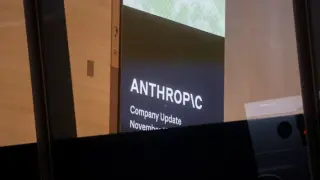
Anthropic sets $70-$78 IPO price amid AI market volatility
Anthropic will begin trading on the Nasdaq on November 19, 2026, after pricing its initial public offering (IPO) between $70 and $78 per share. CEO Dario Amodei stated the company is 'not super fussed' about current market volatility, aiming for a valuation of approximately $1.5 trillion. The offering includes 825 million shares and a concurrent $26 billion private placement with major tech firms. Despite aggressive spending plans, including $65 billion in projected burn for 2027, the company maintains a strong cash position and high revenue growth.
Source: Financial Times

Nscale IPO Filing Reveals $35B Valuation Target Amid $1.69B Loss and Financing Risks
Nscale updated its IPO prospectus, revealing a $1.69 billion net loss for the first nine months of 2026 against $307.5 million in revenue. The London-based neocloud faces significant financing challenges to meet a $45 billion contract with Anthropic, while the broader AI infrastructure sector experienced volatility following the resignation of Nvidia CEO Jensen Huang.
Source: CNBC

Early Black Friday Sales Slash SSD Prices as AI-Driven Memory Shortage Eases
Retailers are offering significant discounts on high-capacity solid-state drives ahead of Black Friday, with the Samsung 990 PRO 2TB dropping to $390 and the WD Black SN850P 2TB hitting $299.99. These price cuts follow a period of inflated costs driven by AI data center demand for memory, though experts warn that supply constraints may persist through 2028.
Source: Kotaku
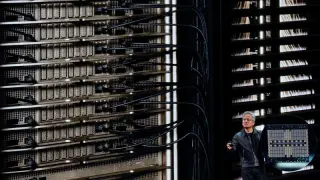
Nvidia names interim CEO after Huang’s resignation, raising questions for AI financing
Jensen Huang resigned as Nvidia CEO on November 12, 2026, following a board investigation into alleged extramarital affairs and a potential foreign intelligence target. Colette Kress, the company’s CFO, was appointed interim CEO, while Harvey C. Jones became the first board chair. Huang’s departure removes a central figure who personally guaranteed major AI infrastructure deals, including a $105 billion commitment for OpenAI. Analysts warn that his exit could destabilize the 'circular financing' model that underpins the AI boom, though some argue the industry’s fundamental demand remains strong.
Source: CNN

GTA 6 Presales Surpass $1 Billion as Take-Two Eyes $1.9B Target
Grand Theft Auto VI has generated over $1.09 billion in presale revenue from 11.27 million units sold worldwide, according to SensorTower. The game launches on November 19, 2026, with preloads available since November 10. While 75% of presales are for PlayStation 5, the title is also available for Xbox Series X|S. Take-Two Interactive faces pressure to meet investor expectations, with analysts suggesting the game needs to reach $1.9 billion in total sales to satisfy fiscal 2027 forecasts.
Source: USA Today

Synchron Halts Brain Implant Trials Over Cable Fault, Not Safety
Synchron has voluntarily paused enrollment for its second-generation Stentrode brain-computer interface trials in the US, Australia, and Canada. The pause stems from a performance issue with the lead cable connecting the implant to external electronics, not a safety defect. The company is upgrading the entire system and restructuring operations, including job cuts in New York and a new team in San Diego, before resuming trials.
Source: WIRED
Economy and Policy
U.S. Treasury yields surged on November 13, 2026, as traders priced in a near-certain Federal Reserve rate hike for December. The 10-year yield rose to 5.13%, while the 30-year reached 5.46%, driven by stubborn inflation, hawkish Fed rhetoric, and rising debt supply. Traders are pricing in 100% odds of a Federal Reserve rate hike at the December 9 meeting, with 87% odds of a 25-basis point increase and 13% odds of a 50-basis point hike.
Rising Treasury yields directly impact borrowing costs for mortgages, auto loans, and credit card debt, making them more expensive for consumers and businesses. A 100% probability of a December rate hike signals a shift toward tighter monetary policy, which could slow economic growth and increase financial stress for households and corporations. The 10-year yield at 5.13% and the 30-year yield at 5.46% are at or near multi-decade highs, which can trigger broader market volatility and affect global debt markets. For investors, this indicates that the bond market may not have bottomed out, and further rate hikes could lead to additional sell-offs in equities and other risk assets.

Science and Environment
A historic 'super' El Niño is causing record-high ocean temperatures and nutrient depletion along California's coast, leading to mass seabird deaths, kelp forest collapse, and the arrival of tropical species. Ocean temperatures in the thermocline layer off Monterey Bay have risen 8°C above average, rivaling equatorial El Niño intensities. Phytoplankton populations have plummeted by an order of magnitude, starving the base of the marine food web. Kelp forests are disintegrating due to heat and nutrient loss, with bull kelp populations in northern California losing over 90% of their cover since the last El Niño.
The collapse of kelp forests and the decline of phytoplankton threaten the entire marine food web, potentially leading to long-term biodiversity loss. The mass mortality of seabirds indicates a systemic failure in the ocean's ability to support its inhabitants. Furthermore, the arrival of tropical species signals a permanent shift in California's marine ecosystem, which could have economic and ecological consequences for fisheries and coastal communities. Restoration efforts, such as kelp cultivation, are critical to mitigating these impacts, but the scale of the current event poses significant challenges.
In quantum computing, researchers at Purdue University and LMU Munich have achieved key breakthroughs in scaling. Purdue engineers demonstrated methods for generating single photons and controlling them on chips, while LMU Munich created a platform linking atoms via light. These advances aim to solve issues with qubit stability, error correction, and large-scale integration. A new framework using machine learning predicts quantum decoherence patterns, potentially reducing errors by a factor of 20 and minimizing the number of qubits needed for error correction. These advancements address critical barriers to practical quantum computing, with significant implications for cryptography, materials science, and drug discovery.

Super El Niño Triggers Unprecedented Marine Die-offs and Species Shifts Along California Coast
A historic 'super' El Niño is causing record-high ocean temperatures and nutrient depletion along California's coast, leading to mass seabird deaths, kelp forest collapse, and the arrival of tropical species. Scientists warn that these changes, compounded by climate change, are creating a cascading crisis for marine ecosystems, though restoration efforts offer some hope for recovery.
Source: The Guardian
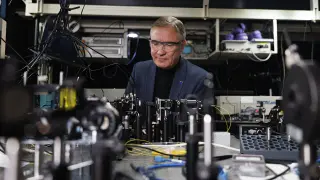
Purdue and LMU Munich advance scalable quantum computing via photonics and atomic networks
Researchers at Purdue University and LMU Munich have achieved key breakthroughs in scaling quantum computing. Purdue engineers demonstrated methods for generating single photons and controlling them on chips, while LMU Munich created a platform linking atoms via light. These advances aim to solve issues with qubit stability, error correction, and large-scale integration.
Source: Phys.org
Space and Exploration
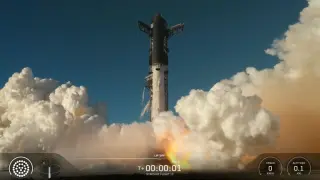
SpaceX’s 15th Starship test flight launched successfully on November 13, 2026, achieving orbital insertion for the upper stage and deploying 26 Starlink V3 satellites. However, the company aborted the planned catch of the Super Heavy booster, which splashed down in the Gulf of Mexico. This marks the first failed attempt to recover this stage after three previous successes. The upper stage, designated Ship 42, is now orbiting Earth and may attempt a historic landing at the launch site on November 14, marking the first recovery of a Starship upper stage.
The success of this flight is critical for SpaceX’s goal of full reusability, which is necessary for the economics of lunar and Mars missions. The failure to catch the booster is a setback, but the upper stage’s success in orbit and satellite deployment is a major milestone. The flight also tests critical technologies for NASA’s Artemis III mission, including in-orbit refueling and Starlink connectivity. The outcome will influence NASA’s decision on whether to use SpaceX’s Starship or Blue Origin’s lander for the Artemis IV moon landing in 2028. The flight also has implications for SpaceX’s plans to launch AI-computing satellites to orbit, which could circumvent environmental concerns about ground-based data centers.
The convergence of AI market volatility, rising interest rates, and environmental stressors highlights the interconnected risks facing global economies. While technological advancements in quantum computing and space exploration offer long-term solutions, immediate financial and ecological challenges require careful navigation. The coming weeks will test the resilience of both market structures and natural ecosystems.