
employment3.735 min read
UK Job Seekers Can Legally Refuse to Disclose Current Salary
8 days ago•Source: BBC

The latest employment stories, each synthesized from multiple sources with added background and context.

USA Today reports on strategies for Americans over 60 who face job loss, highlighting advice from ten individuals who navigated career transitions. Key recommendations include avoiding panic, reconsidering the need to replace previous roles, exploring diverse opportunities, and leveraging professional networks. Experts also suggest staying current with technology and maintaining confidence in one's experience.

BuzzFeed•11 months ago
Business Insider•2 years ago

Wind turbine repair technicians are in high demand, with an estimated 5,000 new roles by 2032, making it one of the fastest-growing jobs in the US. Technicians work in teams to maintain and repair turbines, often facing extreme weather conditions and physical challenges. The job requires a mechanical or electrical background and offers competitive wages, with opportunities for both owner-operator and traveling positions. Despite the labor-intensive nature of the work, those in the industry see great potential for career growth and are committed to advancing renewable energy.

Many employers have set arbitrary age cutoffs for hiring and working, but the reality is that older workers are a valuable and growing part of the workforce. With a significant number of older Americans remaining in or reentering the workforce, it's crucial for employers to recognize the value of age diversity and provide opportunities for older workers to continue working and advancing in their careers. While some progress has been made in considering older job applicants, there is still a need for more age-friendly workplace policies and programs to support older workers in staying employed and adapting to changing work environments.

Career experts emphasize the importance of a jobseeker's appearance in job interviews, especially for client-facing roles, following a viral story of a woman being turned down for a job due to her perceived lack of effort in her appearance. They advise jobseekers to consider how their appearance reflects the company they represent, and to be mindful of biases and hidden expectations. Additionally, they caution against sharing interview experiences on social media, as recruiters often research candidates' online presence. Ultimately, they recommend taking constructive feedback to heart and dressing for the job one wants.

A woman shared her experience of being turned down for a job after a recruiter said she hadn't put enough effort into her appearance, specifically for not wearing makeup. The viral TikTok video sparked a discussion on the importance of appearance in the workplace, with thousands of commenters criticizing the remark as discriminatory and sexist. While some advised seeking legal counsel, the woman clarified that she didn't want to shame the company and believed that companies in the U.S. can make hiring decisions based on appearance. She emphasized that her intention was to gather feedback on whether makeup is expected in the workplace.

Gen X workers are facing ageism in the job market, with many experiencing challenges in securing roles due to perceptions of being less adaptable to technological advancements. The confluence of mass layoffs, economic uncertainty, and rapid technological change has exacerbated the issue, leaving mid-career workers in a vulnerable position. Age discrimination, particularly against those aged 40 to 65, is prevalent, impacting career opportunities and advancement. Employers' biases are blinding them to the valuable skills and experience that older workers bring to the table, and there is a need for more age-inclusive practices in the workplace.

Despite the impressive job numbers, many Americans are struggling to find work as companies become more cautious about hiring, workers face increased competition for fewer job openings, and a significant portion of employees fear layoffs. The hiring slowdown is attributed to factors such as high interest rates, rising wages, and economic uncertainty. Job seekers are sending out more applications, with some facing hundreds of rejections, while companies are imposing stricter requirements and delaying hiring decisions. As a result, more workers are competing for fewer open jobs, leading to a highly competitive job market.

Many top companies are promoting degreeless jobs, but a new report suggests that actual hiring of non-degreed workers may not be following suit. The study found that while some companies are making tangible changes in their hiring practices, others are removing degree requirements from job postings without showing significant changes in actual hiring patterns. The move to hire people without degrees is important due to the large number of workers without degrees, and it can lead to higher pay for those who secure roles that previously required a degree. The study also provides an index for workers to compare companies based on factors such as hiring, pay, promotion, parity, and culture, and identifies common patterns among successful skill-based hiring companies.

Gen Z workers are increasingly ghosting potential employers, with 93% admitting to skipping out on interviews and 87% not showing up for their first day of work. This behavior is causing hiring difficulties for businesses, with over half reporting challenges due to ghosting. While Gen Z is the main culprit, other generations also engage in ghosting, but with more regret. The data suggests that higher pay and better benefits could help prevent ghosting, as the cost of living crisis exacerbates the issue. Employers are advised to be transparent about financial packages to prevent jobseekers from ghosting further along the hiring process.

Reddit users shared a variety of high-paying jobs, including mineral exploration geologist, doorman, safety coordinator, office manager, financial advisor, astronomer, flight attendant, product operations in tech, donut shop owner, information security professional, cancer scientist, paramedic, supply chain director, physical therapist, heavy equipment operator, travel agency owner, civil engineer, tech and consulting company owner, luxury wedding planner, IT architect, aircraft mechanic, factory process analyst, litigation attorney, technical support manager, digital media specialist, plant controller, airline pilot, commercial diesel mechanic, enlisted military, lead software engineer, special effects professional, camera operator for TV shows, industrial maintenance technician, and hospital pharmacist, with salaries ranging from $100K to $220K annually.
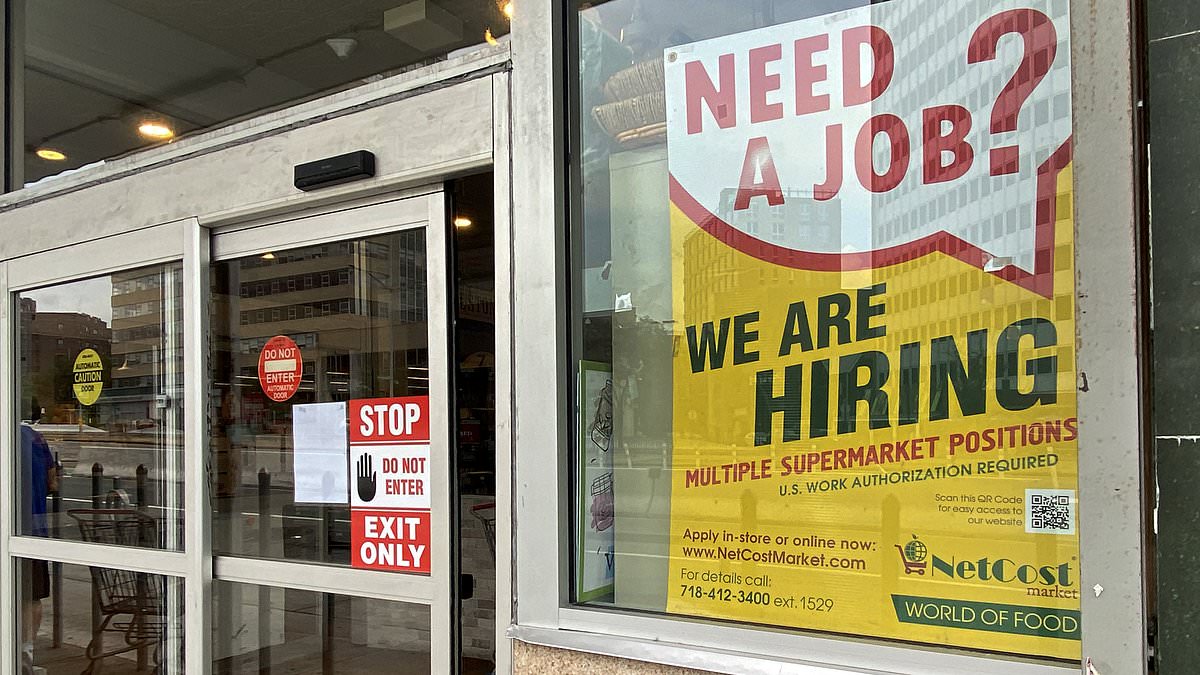
The job market varies across US states, with Nevada, Idaho, and South Dakota showing the highest job growth, while Mississippi experienced a decline. Despite a low national unemployment rate, some states face challenges in specific industries. Recent high-profile layoffs in companies like Tesla, Microsoft, PayPal, and UPS reflect ongoing shifts in the job market, with some sectors seeing gains while others, such as mining and oil extraction, are experiencing declines.