
law3.92 min read
Lawsuit Alleges Fox News Ignored Safety Warnings Before Fatal Ukraine Strike
6 days ago•Source: PetaPixel

The latest law stories, each synthesized from multiple sources with added background and context.
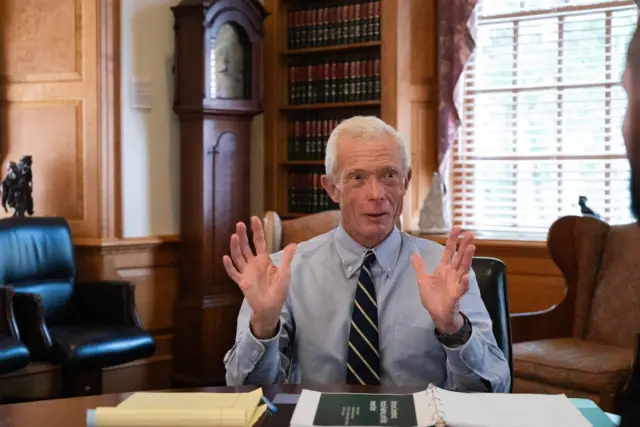
New Hampshire Chief Justice Gordon MacDonald resigned after a Judicial Conduct Committee settlement found he violated the code in handling a $50,000 payout to a close colleague, bypassing merit-based procedures and showing favoritism. He admitted the violations, agreed to resign effective immediately, and will pay the JCC’s legal fees. Four associate justices will handle his administrative duties as Ayotte’s office confirmed the resignation.

WMUR•27 days ago
The Guardian•1 month ago

Steven Avery and Brendan Dassey have applied to Wisconsin’s governor’s commutation advisory board for clemency in the 2005 Theresa Halbach murder; Avery’s county-initiated request must be approved by a judge before moving to the state board, while Dassey’s juvenile commutation was forwarded to the state after a judge’s review. The board is slated to meet again next week after hearing 12 cases last month.

The Massachusetts Supreme Judicial Court publicly reprimanded District Court Judge Shelley M. Richmond Joseph for creating an appearance of impropriety by ordering the courtroom audio system shut off during a sidebar about a plan to release an immigrant to a courthouse lockup to evade ICE; the court found she neither explicitly nor implicitly approved the plan and was unaware of the attorney's scheme, though a hearing officer had recommended discipline following the investigation into the 2018–2019 case. Joseph remains on administrative duties after prior federal proceedings related to the case.

Legal analyst Marty Lederman argues the Supreme Court should deny the government’s stay of the USPS Final Rule for the 2026 election, focusing on the balance of equities rather than resolving the merits. The Rule’s nine preconditions could delay or prevent ballot delivery and disenfranchise voters in many jurisdictions, while the government offers little evidence of irreparable harm, making denial the straightforward equitable outcome. He also notes that even if the Rule might be ultra vires on merits, the equities alone justify keeping the injunction in place for the 2026 election, consistent with precedents like California and Winter.

A U.S. appellate court in the Fifth Circuit upheld the dismissal of a 2022 Jackson residents’ suit alleging tainted drinking water violated constitutional rights, ruling that the Constitution does not guarantee a right to be free from contaminated water or to receive information from public officials. The court urged plaintiffs to pursue tort claims or elect representatives to address the water system, while acknowledging ongoing state and federal efforts to improve Jackson’s water quality. The decision also notes related civil-rights complaints, including allegations that federal drinking-water funds were diverted to white communities.
A federal appeals court (D.C. Circuit) refused to revive DHS's revamped Systematic Alien Verification for Entitlements (SAVE) database, ruling the department failed to raise central Social Security Act arguments in time and keeping the system disabled nationwide. The overhaul, intended to curb noncitizen voting, drew privacy and accuracy concerns. A separate Florida-led case by several states seeks to reinstate specific features, while the 11th Circuit review remains pending, leaving the broader legal battle over the database unresolved and with potential for further appeals, including to the Supreme Court.

A federal judge ordered the Trump administration to provide 48 hours’ notice before any activity on Memorial Circle related to the proposed 250-foot arch near Arlington National Cemetery, reinforcing a pause as opponents pursue a block on construction. Interior Secretary Burgum had announced imminent ground-breaking, but officials say the initial work is standard archaeological surveying (four test pits, restoration by Oct. 31). The project still awaits final approval from the National Capital Planning Commission and an exception to the 130-foot height limit.
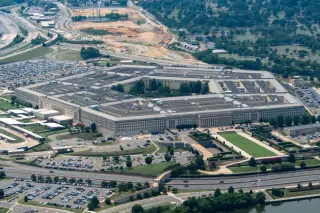
U.S. District Judge McFadden declined to block the Pentagon from firing Stars and Stripes staffers, allowing the lawsuit to move forward; the suit names the Defense Department and Defense Secretary Pete Hegseth, and plaintiffs say discovery will reveal facts and they expect to prevail.

New Jersey asks the Supreme Court to settle whether sports bets on Kalshi’s federally registered prediction markets can be regulated by states; a circuit split (3rd Circuit vs 9th Circuit) over whether such bets are 'swaps' under Dodd-Frank and fall under CFTC jurisdiction could decide if state sports‑gambling laws apply.

Law firms are moving from generic AI to bespoke platforms to differentiate themselves and protect intellectual property, with Kirkland & Ellis pledging hundreds of millions to an in‑house AI platform and Freshfields partnering with Anthropic to build specialized tools. The market is splitting between standard AI for routine tasks and tailored AI for high‑value work, while outsourcing and partnerships with vendors like Harvey, Legora and Anthropic remain common as firms weigh buy vs. build.

A Wisconsin federal judge dismissed charges against a man who used a text-to-image AI model to create thousands of AI-generated child sexual abuse material, citing First Amendment protections and noting the challenge AI evolution poses to existing obscenity and child-protection standards.