
mathematics10.275 min read
A New Recipe Unites Random Graphs, Solving a Decades-Old Sandwich Conjecture
21 days ago•Source: Quanta Magazine

The latest mathematics stories, each synthesized from multiple sources with added background and context.

OpenAI says its AI system has produced a solution to the Navier–Stokes equations—the central model of fluid motion and a Millennium Prize problem—claiming that under these equations fluids can exhibit finite-time blow-up, i.e., infinite speed in finite time. The announcement, supported by computational experiments using thousands of AI agents, has generated excitement but skepticism from other researchers who note parallel claims and emphasize that the physical interpretation remains controversial; the prize still awaits verification.

Quanta Magazine•2 months ago
Quanta Magazine•2 months ago

Eight decades after Erdős introduced the probabilistic method, researchers Ma, Shen, and Xie used the geometry of high-dimensional spheres to improve lower bounds on near-diagonal Ramsey numbers, reviving progress on a stubborn problem and signaling a new geometric twist on Erdős’s randomness-based approach.
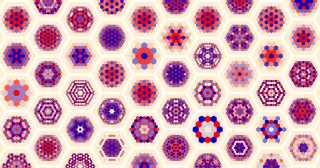
A new knot invariant designed to be both strong and fast to compute outputs hexagonal QR-code images for each knot, enabling reliable distinction even for knots with hundreds of crossings and offering potential insights into genus and other topological features, with the work tying to the Kontsevich integral's two-loop approximation.

Dedekind numbers are a sequence of mathematical values with complex growth, first studied by Richard Dedekind, and are extremely difficult to compute beyond the eighth term due to their exponential complexity. The ninth Dedekind number was only recently discovered through advanced computational methods, but finding the tenth may be impossible for the foreseeable future due to the astronomical computational power required.

The article highlights the artistic and exploratory nature of mathematics through stories of young prodigies like Hannah Cairo, breakthroughs in understanding infinity and quantum fractals, the legacy of Maryam Mirzakhani, and recent discoveries such as the Noperthedron and new types of infinity, illustrating the ongoing quest to understand the fundamental structures of math and the universe.
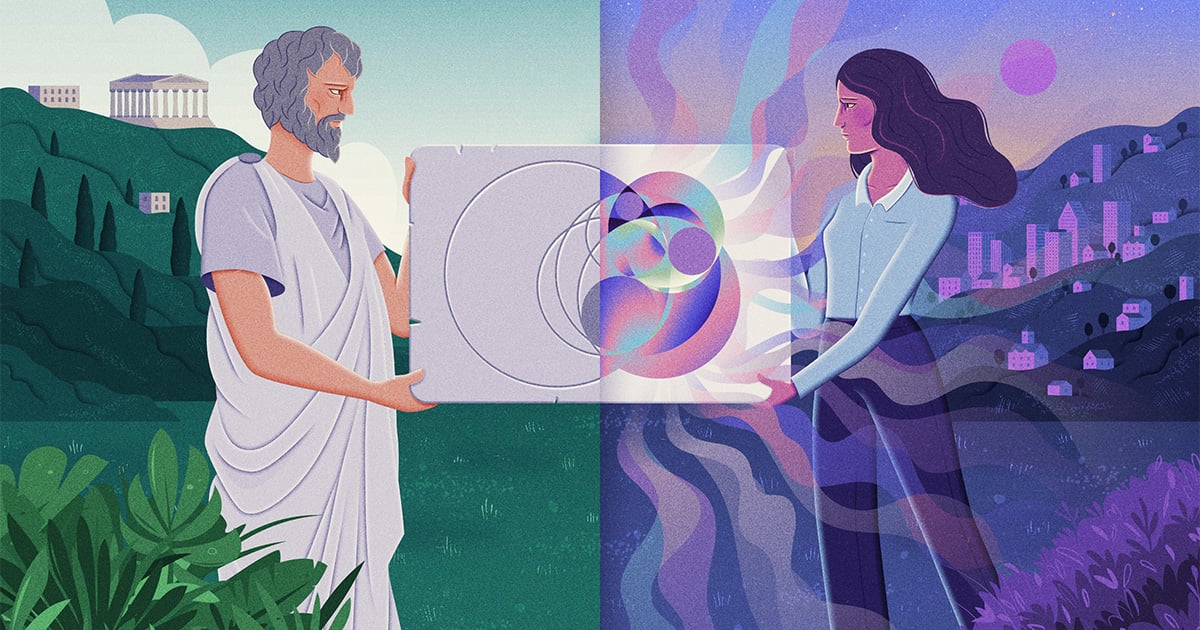
A team of mathematicians has revived interest in enumerative geometry by applying a decades-old theory called motivic homotopy theory to count solutions across various number systems, providing new insights and raising intriguing questions about the fundamental nature of numbers and geometric objects.

Mathematicians have disproved a long-standing conjecture in knot theory by finding a counterexample that shows the unknotting number is unpredictable, revealing greater complexity in the study of knots than previously thought.

A graduate student at the University of Oxford, Benjamin Bedert, has solved a long-standing problem about the limits of addition related to sum-free sets, confirming that in any set of integers, there exists a large sum-free subset, advancing understanding in a fundamental area of mathematics originally posed by Paul Erdős in 1965.
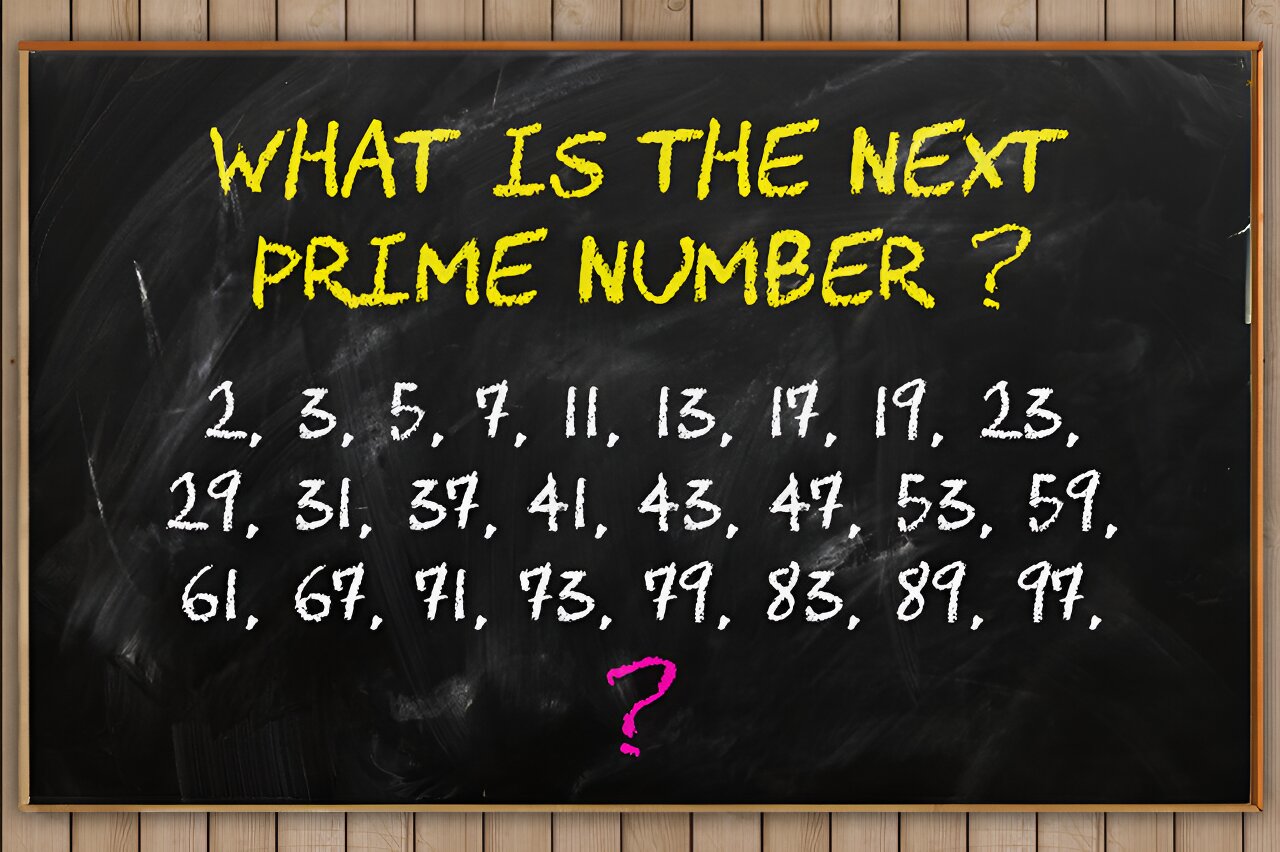
Researchers at City University of Hong Kong and North Carolina State University have made a groundbreaking discovery in prime number theory, challenging the long-held belief that prime numbers are unpredictable. Their research has led to the development of a Periodic Table of Primes (PTP) that can accurately predict the locations of prime numbers, with potential applications in fields such as cybersecurity. This breakthrough has the potential to significantly impact encryption and cryptography, making data more secure.

French mathematician Michel Talagrand has been awarded the Abel Prize for his groundbreaking work in probability theory and understanding random processes. His research has revolutionized the field, providing insights into the behavior of complex systems and developing techniques to analyze extreme outcomes and concentration phenomena. Talagrand's work has had a profound impact across various disciplines, from mathematics and physics to computer science and statistics, and he has dedicated himself to sharing his knowledge through textbooks and mentoring young researchers.

Researchers have made a breakthrough in spectral geometry by proving a special case of Pólya’s conjecture related to the eigenvalues of a disk, a problem in mathematics first formulated in 1954. This work not only highlights the universal value and artistic beauty of mathematical research but also has potential practical applications in computational mathematics and numerical computation. The researchers' achievement, published in the mathematical journal Inventiones Mathematicae, represents a significant advance in understanding the geometry of music and wave propagation.