The legal battle over Jimmy Buffett's estimated $275 million estate has intensified as his children, Cameron and Sarah Delaney Buffett, are questioned in court about their mother Jane Buffett's alleged drug use, specifically ketamine and marijuana, during discovery in the dispute over control of the estate.
A Nature Careers feature by Shea Andrews outlines a four-step, AI-aware approach to handling the ever-growing literature: Discovery (passive feeds and newsletters plus AI-assisted searches), Triage (filtering titles/abstracts and saving non-immediate work with topic tagging), Skimming (grasping the research question and main findings with minimal notes), and Deep Reading (detailed notes for papers used in research or teaching). It emphasizes using AI for literature management without letting it replace judgment, cautions about hallucinated citations, and suggests this framework as a model for training students and staying current.
A federal judge in Virginia has ordered the Trump administration to identify the people who drafted the nearly $1.8 billion “anti-weaponization fund” tied to an IRS settlement. The fund, criticized as a potential slush fund for those harmed by weaponization and lawfare (including some Jan. 6 defendants), was previously blocked and later labeled “dead” by Attorney General Todd Blanche, though a loophole in the agreement could allow revival. The ruling advances a plaintiff-led discovery bid seeking to halt the fund and underscores scrutiny around Blanche’s nomination and the Trump administration.
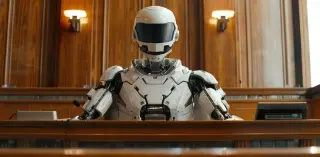
Private AI conversations are increasingly used as evidence in criminal and civil cases, exposing personal thoughts and disclosures but lacking the confidentiality protections enjoyed by lawyer‑client or doctor‑patient communications. The Washington Post identified 12 public court uses in two years, including a teen whose ChatGPT history was accessed in a suit against major platforms, and a Florida case where chats aided prosecutors in linking threats. Chats can be obtained via subpoenas, discovery, or phone searches, and OpenAI may report dangerous content to authorities as its data requests from government rise. Legal experts warn the trend could grow as AI tools hold more personal data, since courts have not established a privilege for AI-chat conversations.
A Florida judge paused the order forcing Trump to disclose his financial records to the BBC while the parties resolve amendments in a defamation case tied to a Jan. 6 documentary; the BBC wants the suit dismissed, arguing the program doesn’t meet defamation criteria and wasn’t released in the US, and Trump has dropped BBC Studios from the suit as part of ongoing disputes.
Trump asks for an emergency stay to block a court order requiring him to disclose financial details of hundreds of Trump entities to the BBC as part of a defamation lawsuit, arguing the revised filing should center on reputational damages. The BBC says the financial records are needed to assess damages, while Trump seeks to narrow the dispute and limit discovery. The judge has not ruled on the BBC’s dismissal motions, and Trump has proposed a deposition date, with a Thursday deadline still in play for initial disclosures.
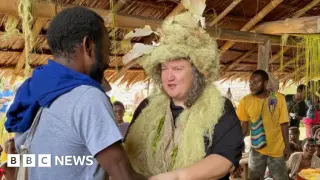
A bat expert who survived a traumatic brain injury retrained with support from the Daphne Jackson Trust, returned to research, and later identified a new fruit bat species in Papua New Guinea, originally nicknamed the 'Yoda' bat but renamed the 'happy tube-nosed fruit bat' to reflect local culture; she was later honored with an honorary doctorate for her sustainability and rainforest conservation work.
An amateur in Quebec spotted a circular feature on Google Maps that led scientists to confirm Uhackatik, a roughly 15.5-mile-wide meteorite impact crater dating to about 390 million years ago in Quebec’s Côte-Nord. Fieldwork uncovered shatter cones and impact-melt rock, making it one of the largest crater discoveries in recent years; researchers plan to present results at the Meteoritical Society meeting.
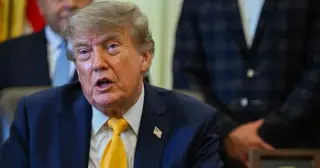
A federal judge ruled that Donald Trump must disclose detailed financial information from his business empire as part of his $10 billion defamation lawsuit against the BBC, enabling subpoenas to Trump insiders to probe his January 6 thoughts; Trump plans to amend the suit to focus on reputational damage, while the BBC argues the wealth of Trump has increased since the documentary aired.
A judge ordered Donald Trump to hand over financial records sought by the BBC in a defamation case. The BBC says it produced 87,000 pages, while Trump’s side released about 735 pages, calling theirs a 'sham production.' BBC lawyers described the discovery as uneven; Trump’s team labeled the BBC requests oppressive and a 'fishing expedition' via subpoenas to federal agencies and former officials. A BBC chairman’s letter apologizing for a Panorama clip is cited as a point of concession in the dispute.
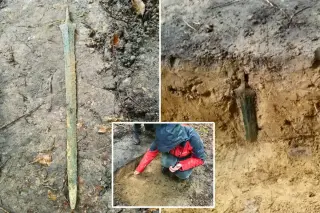
A hobbyist found a remarkably preserved 2,700-year-old bronze sword standing upright in sandy soil in Poland’s Gdańsk Forest District. Dating to the Late Bronze Age (900–700 BC), the weapon’s discovery has been reported to heritage officials with the museum destination yet to be decided; researchers expect more details after the artifact is studied, noting prior Bronze Age finds in the region.
Thai scientists announce Uragasaurus kalasinensis, a newly identified plant-eating dinosaur thought to have lived about 150 million years ago and about the length of a cricket pitch.
The New York Times and several outlets filed a 52-page motion in U.S. district court seeking sanctions against OpenAI, accusing the company of concealing its ability to search training datasets and output logs and of deleting logs in violation of preservation orders, after a deposition revealed such searches. The plaintiffs urge remedies including attorneys’ fees and other penalties; OpenAI denies wrongdoing. The move comes amid ongoing copyright and AI-use litigation involving OpenAI, Microsoft, and various news organizations.
Midjourney is pushing to force Disney, Universal and Warner Bros. to reveal internal AI tools, datasets, model weights, and AI business plans in its copyright lawsuit, arguing that such information could bolster its fair-use defense, while a magistrate previously limited discovery to consumer-facing AI applications.
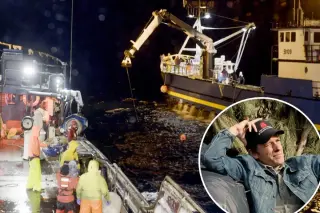
Dirty Jobs host Mike Rowe filed suit against Discovery Talent Services, claiming a 2020 pay-or-play deal required he be paid or used as narrator for Deadliest Catch and its spin-offs, and that he has not been paid for numerous episodes, amounting to more than $2 million (at least $2.04 million) across at least 51 episodes; Discovery has not commented.