
NASA’s X-Plane Revival: From Quiet Supersonic Tests to Blackbird Mysteries
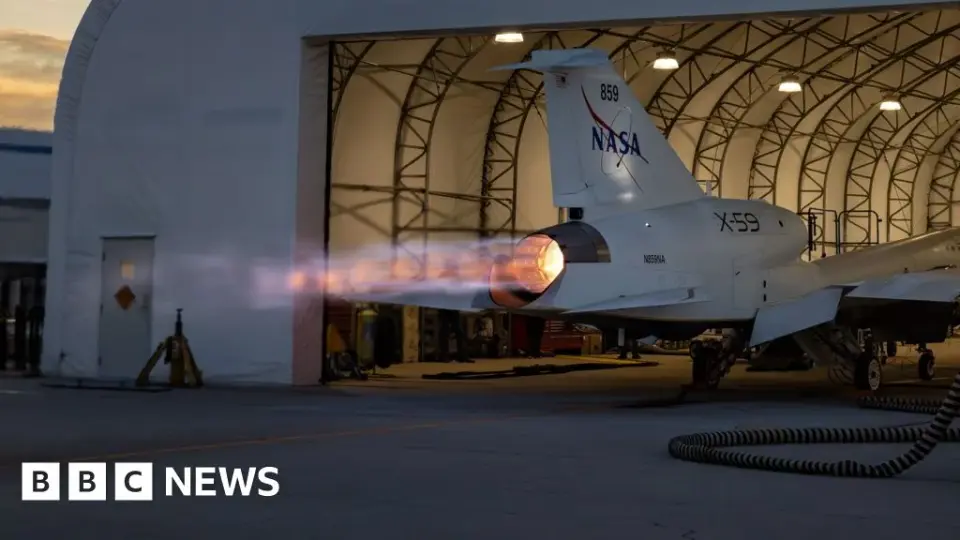
NASA is expanding its experimental aircraft program beyond the X-59 quiet supersonic jet, with Administrator Jared Isaacman hinting at a new high-speed X-plane. Concurrently, a retired SR-71 Blackbird has vanished from public display at Edwards Air Force Base, fueling speculation about a potential return-to-flight initiative or a new hypersonic testbed.
Key points
- The X-59, built by Lockheed Martin for NASA, is currently testing quiet supersonic flight to reduce sonic booms to the level of a 'car door closing', aiming to enable overland supersonic travel.
- NASA Administrator Jared Isaacman presented a slide at the All-In Summit showing a mysterious aircraft resembling the SR-71 Blackbird, stating NASA is 'rebuilding our X-plane portfolio' to fly higher and faster than in decades past.
- A Lockheed SR-71A (tail number 844), the last Blackbird to fly, was removed from public display at the Neil Armstrong Flight Research Center in May 2026, with its current location unknown.
- Isaacman criticized the use of NASA funds for incremental engine efficiency gains, advocating instead for radical airframe and propulsion research, potentially involving uncrewed or crewed hypersonic platforms.
- The UK is developing its own X-plane equivalent, a technology demonstrator for the Global Combat Air Programme, scheduled to fly in 2028 using Typhoon engines.
Background
NASA's X-plane lineage dates back to the Bell X-1 in 1947, which broke the sound barrier. The agency has historically used these aircraft to test new technologies, such as the X-15 rocket plane in the 1960s and the X-48 blended wing-body drone in 2007. The current push for new X-planes follows a May 2026 directive by Isaacman to review aeronautics investments and focus on high-technology readiness level (TRL) efforts rather than subsidizing mature industry projects.
How outlets are covering it
BBC emphasizes the X-59's role in democratizing supersonic travel by mitigating sonic booms, noting that while drones are cheaper, crewed X-planes remain vital for testing human-centric systems and complex aerodynamics. Aviation Week and The War Zone (TWZ) focus on the disappearance of the SR-71 and Isaacman's cryptic comments, suggesting a potential revival of high-speed testing or a new aircraft inspired by Blackbird technology. The Aviationist highlights Isaacman's criticism of NASA's current budget allocation, arguing that the agency should prioritize radical innovation over incremental improvements for large prime contractors. All sources agree that NASA is shifting toward more ambitious experimental flight, but they differ on whether this involves reviving existing hardware or building entirely new platforms.
Why it matters
The expansion of NASA's X-plane program signals a renewed focus on high-speed and hypersonic flight research, which has implications for both civilian aviation and national security. The potential return of the SR-71 or a new Blackbird-like aircraft could redefine the boundaries of atmospheric flight, while the X-59's success could lead to overland supersonic commercial routes. Additionally, the debate over crewed versus uncrewed test platforms highlights the ongoing tension between cost-effectiveness and the irreplaceable value of human feedback in experimental aviation.
What to watch
NASA is expected to provide more details on its new X-plane portfolio in the coming months, potentially including the status of the SR-71 or the development of a new hypersonic testbed. The X-59 will continue its community surveys to assess public tolerance for supersonic booms. The UK's technology demonstrator for the Global Combat Air Programme is scheduled to fly in 2028, and Isaacman has indicated that significant developments in high-speed flight could occur within the next few years.
- X-planes: Are they needed in the new era of drones? BBC
- NASA Quietly Removed SR-71 From Storage Amid X-Plane Push Aviation Week
- An SR-71 Blackbird Has Vanished (Updated) TWZ
- NASA Chief Teases Mysterious Aircraft as Agency Plans New X-Planes The Aviationist
- New SR-71? What we know about Nasa's mystery X-plane built to fly higher, faster than ever The Times of India
Want the full story? Read the original reporting
Read on BBC