Tag

Jared Isaacman

All articles tagged with #jared isaacman

science4 days ago

NASA Chief Disputes Harvard Astrophysicist Over Mystery Object 1998 KY26

NASA Administrator Jared Isaacman asserts that the mysterious space object 1998 KY26 is an asteroid, rejecting claims by Harvard astrophysicist Avi Loeb that it is a lost Soviet spacecraft. Loeb argues the object’s non-gravitational acceleration and lack of cometary tail support the theory that it is the Phobos 1 probe, a claim Isaacman dismisses as unsupported. While scientific consensus remains divided, a 2031 mission by Japan’s Hayabusa2 spacecraft is expected to provide definitive data on the object’s composition.


Harvard Scientist Defies NASA Chief, Claims Accelerating Asteroid Is Lost Soviet Probe
science9 days ago

Harvard Scientist Defies NASA Chief, Claims Accelerating Asteroid Is Lost Soviet Probe

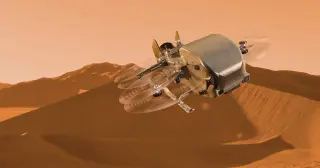
Harvard astrophysicist Avi Loeb publicly disputes NASA Administrator Jared Isaacman’s assertion that the accelerating space object 1998 KY26 is a standard asteroid. Loeb argues the object is actually the lost Soviet spacecraft Phobos 1, citing its non-gravitational acceleration and high reflectivity. While mainstream science leans toward a 'dark comet' or radiation-pressure explanation, new thermal models suggest the object is too warm to retain ice. The debate will be resolved in July 2031 when Japan’s Hayabusa2 spacecraft arrives for a direct rendezvous.

NASA Administrator Isaacman Skydives at MAX POWER, Unveils X-70 and 2028 CAPEWEEK Plans
space14 days ago

NASA Administrator Isaacman Skydives at MAX POWER, Unveils X-70 and 2028 CAPEWEEK Plans

NASA Administrator Jared Isaacman skydived into the agency’s inaugural MAX POWER air show at Kennedy Space Center, marking a new era of public engagement. The event featured fighter jet flyovers, the unveiling of the X-70 Fractal aircraft, and the announcement of a massive 2028 aerospace expo called CAPEWEEK. Isaacman framed the spectacle as a celebration of America’s 250th anniversary and a preview of the agency’s ambitious lunar and aeronautic goals.

NASA Administrator Isaacman Vows Annual SLS Launches to Outpace China in 2028 Lunar Race
space16 days ago

NASA Administrator Isaacman Vows Annual SLS Launches to Outpace China in 2028 Lunar Race

NASA Administrator Jared Isaacman has prioritized annual Space Launch System (SLS) launches to ensure the United States lands astronauts on the Moon by 2028, ahead of China’s 2029 target. Following the success of Artemis II, the agency is accelerating Artemis III, a 2027 low-Earth orbit test of SpaceX and Blue Origin landers, to de-risk the 2028 crewed lunar landing. Isaacman frames this as a critical geopolitical contest, warning that losing the race could undermine U.S. technological and security leadership globally.

NASA Unveils X-70 Fractal: A Modular Testbed for Advanced Flight Controls
aerospace19 days ago

NASA Unveils X-70 Fractal: A Modular Testbed for Advanced Flight Controls

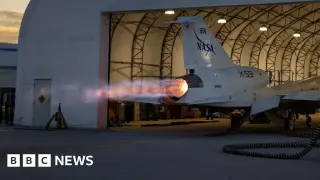
NASA has officially introduced the X-70 Fractal, a crewed experimental aircraft designed to test advanced, rapidly reconfigurable flight control systems. The platform, which features a modular payload capacity of 2,000 pounds, is intended to push the boundaries of maneuverability in crewed flight. NASA Administrator Jared Isaacman confirmed the aircraft’s debut at the UP.Summit in Florida, with the first flight under the NASA banner expected within two years. This announcement distinguishes the X-70 from the SR-71 Blackbird, which Isaacman clarified is currently undergoing maintenance rather than a flight restoration.

NASA Solicits Commercial Proposals to Rescue Hubble Before 2033 Reentry
space23 days ago

NASA Solicits Commercial Proposals to Rescue Hubble Before 2033 Reentry

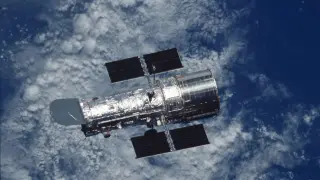
NASA issued a Request for Information on October 29, seeking commercial proposals to reboost, service, or safely dispose of the Hubble Space Telescope by 2032. Hubble, launched in 1990, is losing altitude and predicted to reenter the atmosphere in 2033-2034. The agency requires a target altitude of 600 km and notes no funding is currently allocated. Responses are due November 30.

NASA Overhauls Science Mission Selection with 'Competition Model 2.0' to Cut Timelines by 45%
space-policy1 month ago

NASA Overhauls Science Mission Selection with 'Competition Model 2.0' to Cut Timelines by 45%

NASA is implementing 'Competition Model 2.0' (CM 2.0) to accelerate the selection of science missions, aiming to reduce proposal timelines by up to 45%. The new system prioritizes scientific merit in early stages, delays detailed engineering requirements, and mandates the use of commercial space capabilities. NASA Administrator Jared Isaacman directed the change to improve efficiency, while Associate Administrator Nicola Fox announced the rollout via a virtual town hall on October 26, 2026.

NASA Commits $359M to Boeing Starliner as SpaceX Dragon Nears Retirement
space1 month ago

NASA Commits $359M to Boeing Starliner as SpaceX Dragon Nears Retirement

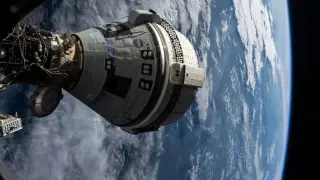
NASA Administrator Jared Isaacman announced a new roadmap for Boeing’s Starliner, committing an additional $359 million to fix thruster issues and certify the Vulcan Centaur rocket. An uncrewed test flight is scheduled for no earlier than December 2026, with a potential crewed mission by mid-2028. This move ensures a second U.S. crew transport option as SpaceX prepares to retire its Crew Dragon capsule by 2030.

aerospace1 month ago

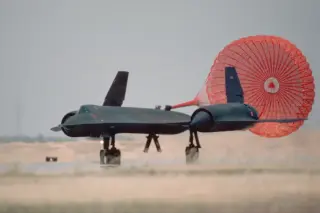
SR-71 Blackbird Vanishes from NASA Display Amid Hypersonic X-Plane Push

A retired SR-71 Blackbird has disappeared from public display at NASA’s Armstrong Flight Research Center, coinciding with Administrator Jared Isaacman’s recent announcement of a new high-speed experimental aircraft. While NASA confirms the agency is rebuilding its X-plane fleet to fly faster and higher, it has not confirmed whether the missing aircraft is being restored for flight or if the new silhouette represents a different design.

SR-71 Blackbird Vanishes from NASA Display Amid Hypersonic X-Plane Push
defense-and-technology1 month ago

SR-71 Blackbird Vanishes from NASA Display Amid Hypersonic X-Plane Push

A retired SR-71 Blackbird has disappeared from public display at NASA’s Armstrong Flight Research Center, fueling speculation about a return-to-flight program or a new hypersonic testbed. NASA Administrator Jared Isaacman recently hinted at rebuilding the X-plane fleet to fly 'higher and faster,' while the agency declined to confirm the aircraft's current status.

SR-71 Blackbird Vanishes from Edwards Base Amid NASA X-Plane Revival
aerospace1 month ago

SR-71 Blackbird Vanishes from Edwards Base Amid NASA X-Plane Revival

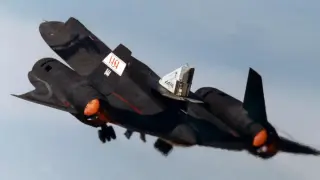
A retired SR-71 Blackbird has disappeared from public display at NASA’s Armstrong Flight Research Center in California. The aircraft, which was the last of its kind to fly, vanished from satellite imagery in May. This disappearance coincides with NASA Administrator Jared Isaacman’s recent unveiling of a new high-speed experimental aircraft silhouette, fueling speculation about a return-to-flight program or a new hypersonic testbed.

NASA Administrator Teases High-Speed X-Plane Silhouette, Igniting SR-71 Speculation
technology2 months ago

NASA Administrator Teases High-Speed X-Plane Silhouette, Igniting SR-71 Speculation

NASA Administrator Jared Isaacman displayed a silhouette resembling the SR-71 Blackbird at the All-In Summit, signaling a push to revive high-speed experimental flight. While he denied it is a Blackbird, he confirmed NASA is rebuilding its X-plane portfolio to fly faster and higher. The agency is already testing the X-59 for quiet supersonic travel and has outlined budget priorities for hypersonic research, though the specific status of the new aircraft remains unclear.

NASA’s X-Plane Revival: From Quiet Supersonic Tests to Blackbird Mysteries
aerospace-and-technology2 months ago

NASA’s X-Plane Revival: From Quiet Supersonic Tests to Blackbird Mysteries

NASA is expanding its experimental aircraft program beyond the X-59 quiet supersonic jet, with Administrator Jared Isaacman hinting at a new high-speed X-plane. Concurrently, a retired SR-71 Blackbird has vanished from public display at Edwards Air Force Base, fueling speculation about a potential return-to-flight initiative or a new hypersonic testbed.

Isaacman: China’s Lunar Delay Gives US Critical Window to Secure Moon’s South Pole
space-policy2 months ago

Isaacman: China’s Lunar Delay Gives US Critical Window to Secure Moon’s South Pole

NASA Administrator Jared Isaacman stated that the unexpected delay of China’s Chang’e 7 mission provides the United States with a strategic opportunity to establish a presence at the Moon’s south pole before Beijing. Speaking at the Off World conference in Houston, Isaacman described the slip as a chance to 'dodge a bullet,' noting that Chinese probes could have established exclusion zones in Shackleton Crater, a region rich in water ice. He emphasized that the US must accelerate its Artemis program to avoid being outpaced by China, which targets a crewed lunar landing by 2030. The delay allows NASA to potentially deploy Blue Origin’s Blue Moon Mark 1 lander in early 2027, securing key infrastructure before Chinese robotic probes arrive. Isaacman framed this race as a global security issue, arguing that technological leadership on the Moon influences which nations align with US or Chinese standards.

Isaacman Rejects Diplomatic Optics for 'Good Deals' in Lunar South Pole Race
space-policy2 months ago

Isaacman Rejects Diplomatic Optics for 'Good Deals' in Lunar South Pole Race

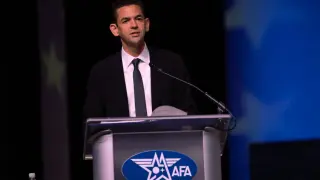
NASA Administrator Jared Isaacman has declared that the agency will only pursue international space partnerships that offer tangible, mission-critical contributions, rejecting previous models that prioritized diplomatic optics. Speaking at the Air, Space & Cyber Conference, Isaacman emphasized the urgency of securing positions at the lunar south pole before China and Russia can block access to water ice and power sources. He cited Italy and Japan as successful partners due to their significant financial and hardware commitments, while criticizing the European Space Agency for offering delayed or redundant capabilities. This shift aligns with a broader strategy to accelerate the 'Moon Base' program and pivot away from the canceled Gateway station to maintain a competitive edge in the new space race.