
FAA clears 737 Max software bug, but U.S. carriers stick with older, flawed versions
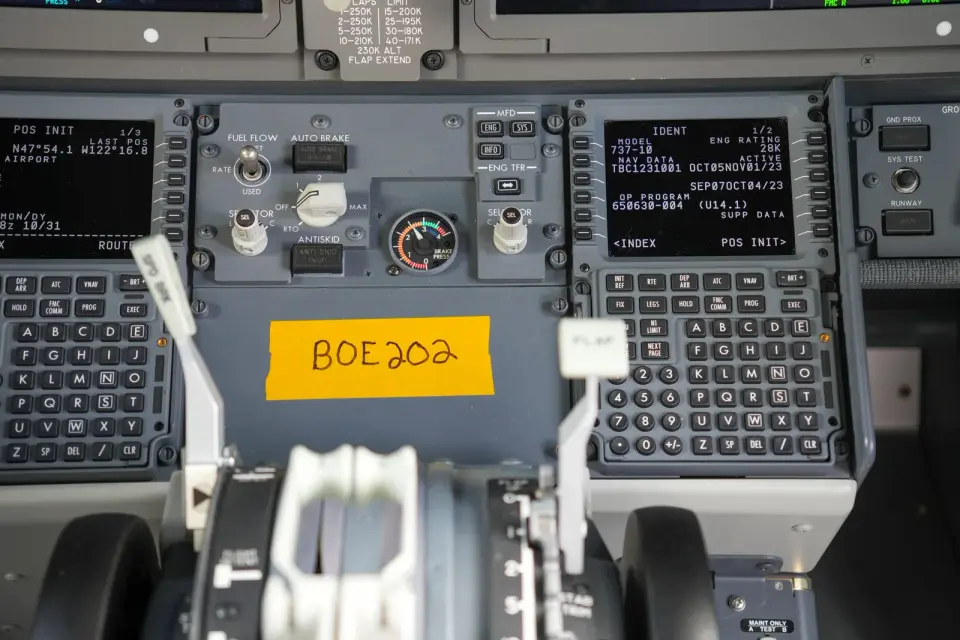
The FAA has determined that a vertical navigation glitch in the latest 737 Max flight management software is not a safety risk, clearing the path for the 737 Max 10 certification. However, major U.S. airlines continue to avoid the new software versions due to a history of other bugs, preferring older, less problematic updates despite their own known issues.
Key points
- FAA's Corrective Action Review Board ruled the VNAV glitch does not pose a safety risk because pilots retain full control and clear indications.
- The decision removes a certification hurdle for the 737 Max 10 and allows for the delivery of the 737 Max 7.
- U.S. airlines like United and Southwest have avoided installing the latest software (U14/U14.1) for years, preferring the older U13 version.
- The U14 software contains multiple other bugs, including issues with datalink communications and crew distractions during critical flight phases.
- Airlines are requesting older hardware configurations to allow rollback to the U13 software, which has its own low-risk safety issue.
Background
This issue follows a series of 737 Max software and safety concerns, including the 2018 and 2019 crashes. Recent weeks saw heightened scrutiny as the FAA reviewed the VNAV glitch, which first surfaced in November 2024. Airlines had already paused deliveries of aircraft with the new software, and the FAA's review delayed the certification of the 737 Max 10 and the first delivery of the 737 Max 7.
How outlets are covering it
The Air Current provides a detailed account of the long-standing reluctance of U.S. airlines to adopt the latest 737 Max software, citing multiple bugs in the U14 and U14.1 versions, including a 2022 United Airlines incident. CNBC focuses on the FAA's recent determination that the specific VNAV glitch is not a safety issue, highlighting the positive outcome for Boeing's certification and delivery schedules. The Air Current emphasizes the complex technical and operational tensions between Boeing, GE, airlines, and the FAA, while CNBC presents a more straightforward view of the FAA's decision and its implications for the 737 Max 10.
Why it matters
The FAA's decision clears a major hurdle for Boeing, potentially unlocking up to $2 billion in cash from 737 Max 10 deliveries. However, the ongoing reluctance of U.S. airlines to adopt the latest software highlights persistent concerns about the 737 Max's reliability and the complex interplay between software updates, hardware configurations, and airline safety protocols. This situation underscores the ongoing challenges Boeing faces in restoring confidence in its 737 Max fleet after years of safety and manufacturing crises.
What to watch
Boeing is expected to issue a bulletin to airlines on how to recognize and respond to the VNAV glitch, and the FAA will follow with a Special Airworthiness Information Bulletin. Airlines will continue to work with Boeing and the FAA to address the issue, and the FAA is preparing a notice of proposed rulemaking for an airworthiness directive to address a known bug in the older U13 software. The next software update, U14.2, is expected in 2028.
- Why U.S. airlines balked at adopting Boeing’s latest 737 Max software versions The Air Current
- FAA says Boeing 737 Max software glitch not a flight-safety issue CNBC
- WestJet first told Boeing about 737 MAX software glitch cleared by FAA, memo says Reuters
- US regulator details missed-approach conditions that could affect 737 vertical navigation FlightGlobal
- Boeing 737 Max Software Glitch Determined Not to Be Safety Issue Bloomberg.com
Want the full story? Read the original reporting
Read on The Air Current